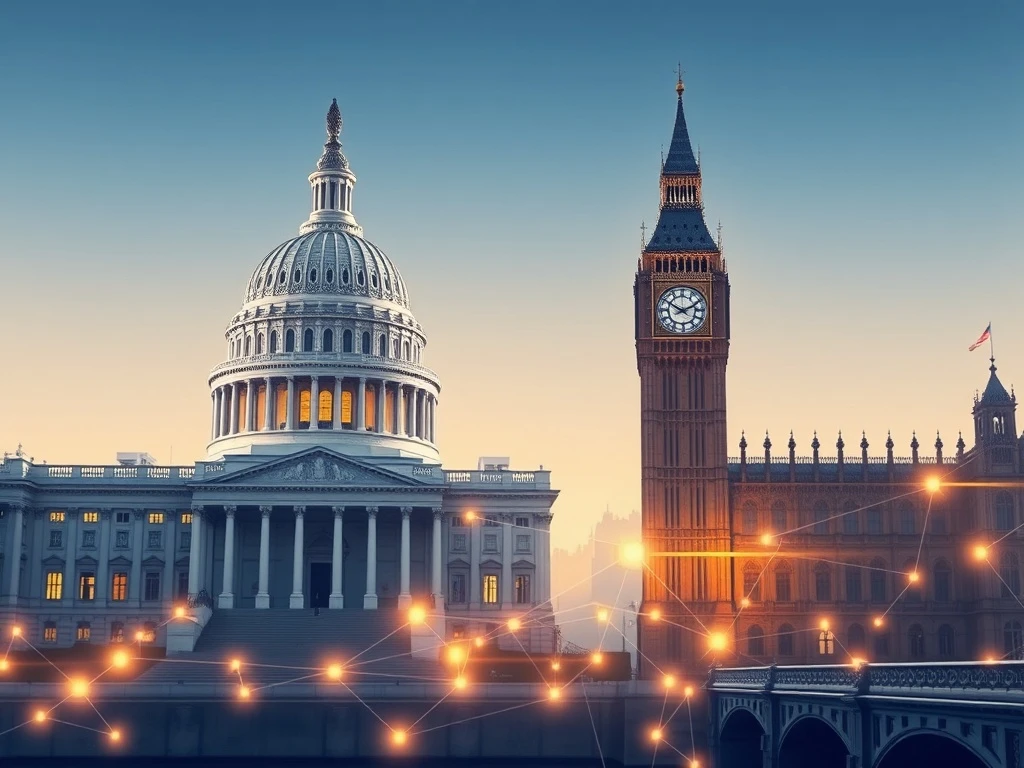
The world of digital assets constantly evolves. Consequently, governments worldwide seek effective ways to manage its growth. A significant development recently emerged. The United States and the United Kingdom have officially announced the formation of a joint taskforce. This powerful alliance aims to redefine global rules for **US UK digital assets** and their underlying technologies. This collaboration marks a crucial step. It seeks to establish a robust framework for an increasingly complex digital economy.
The US UK Digital Assets Taskforce Takes Shape
The newly formed taskforce represents a landmark commitment. Both nations recognize the need for coordinated action. High-level officials from the U.S. Treasury Department and the UK’s HM Treasury will lead this initiative. Their primary goal involves tackling the challenges and opportunities presented by digital assets. This includes cryptocurrencies, stablecoins, and non-fungible tokens (NFTs). Furthermore, the taskforce will focus on fostering innovation. It will also prioritize maintaining financial stability and protecting consumers. This collaborative effort signals a shared understanding. Digital assets transcend national borders. Therefore, international cooperation becomes essential for effective governance.
This initiative builds upon existing dialogues. Both countries have individually explored various approaches to **crypto regulation**. However, this joint venture elevates their efforts. It creates a unified front. The taskforce will share expertise and best practices. It will also work towards common standards. This will ensure a more harmonized global landscape for digital finance. The collaboration will likely set a precedent for other nations. They too grapple with similar regulatory dilemmas.
Redefining Global Crypto Regulation Standards
Current **crypto regulation** varies significantly across jurisdictions. This fragmentation creates challenges. It complicates compliance for businesses. It also opens avenues for illicit activities. The US-UK taskforce aims to address these inconsistencies. They plan to develop a shared vision for regulating digital assets. This vision will emphasize key principles. These include technological neutrality and risk-based approaches. The taskforce will explore areas such as:
- Consumer protection: Safeguarding users from fraud and market manipulation.
- Market integrity: Ensuring fair and transparent trading practices.
- Financial stability: Mitigating risks to the broader financial system.
- Illicit finance: Preventing money laundering and terrorist financing.
By focusing on these core tenets, the taskforce hopes to create a blueprint. This blueprint could inform future international standards. It will also provide clarity for innovators. Ultimately, it seeks to foster responsible growth within the digital asset ecosystem. This cooperative approach demonstrates a proactive stance. It acknowledges the rapid evolution of this sector.
Key Objectives of the Digital Asset Taskforce
The **digital asset taskforce** has several critical objectives. These objectives span a broad range of issues. Firstly, it will conduct a comprehensive review. This review will cover existing regulatory frameworks. It will also identify gaps and areas for improvement. Secondly, the taskforce will develop policy recommendations. These recommendations will aim to promote responsible innovation. They will also address systemic risks. Thirdly, it will engage with industry stakeholders. This engagement will gather diverse perspectives. It will ensure that policies are practical and effective.
Furthermore, a primary goal involves enhancing cross-border information sharing. This will improve oversight and enforcement. The taskforce will also focus on stablecoins. These digital currencies peg their value to traditional assets. Their regulation is a high priority. Similarly, the growth of Decentralized Finance (DeFi) presents unique challenges. The taskforce will consider appropriate regulatory responses for this sector. Overall, their work aims to create a predictable and secure environment. This environment will benefit both innovators and consumers in the digital asset space.
Navigating the Complexities of Blockchain Policy
Developing effective **blockchain policy** requires deep technical understanding. The distributed ledger technology (DLT) underpinning digital assets is complex. Therefore, the taskforce must balance several factors. It must encourage technological advancement. It must also mitigate potential risks. This involves careful consideration of:
- Technological neutrality: Regulations should focus on activities, not specific technologies.
- Interoperability: Ensuring different blockchain networks can communicate.
- Privacy and data security: Protecting user information within decentralized systems.
- Environmental impact: Addressing concerns related to energy consumption.
The taskforce’s approach will likely be iterative. They will adapt policies as the technology evolves. Their efforts will shape how governments perceive and interact with blockchain. This could lead to more nuanced and effective regulatory tools. Ultimately, their success hinges on their ability to understand and respond to technological innovation. This careful navigation will prove crucial for long-term stability.
Potential Impact on the Future of Digital Assets
This US-UK collaboration holds significant implications. It could profoundly impact the future of **digital assets**. A harmonized regulatory approach might boost institutional adoption. Major financial players often hesitate due to regulatory uncertainty. Clearer rules could provide the confidence they need. Consequently, this could lead to increased investment and liquidity in the market. Moreover, it could facilitate cross-border transactions. This would make digital assets more practical for international trade and remittances.
The taskforce’s work might also influence global standards bodies. Organizations like the Financial Stability Board (FSB) and the International Organization of Securities Commissions (IOSCO) could adopt similar frameworks. This would amplify the impact of the US-UK initiative. Furthermore, consumer trust could increase. Robust regulations often lead to greater confidence among retail investors. This fosters a more secure and reliable ecosystem for everyone involved. Ultimately, this taskforce could accelerate the mainstream integration of digital assets into the global financial system.
International Collaboration for Robust Global Crypto Rules
The formation of this taskforce underscores a critical point. Effective **global crypto rules** demand international cooperation. No single country can unilaterally regulate a global phenomenon. The US and UK, as leading financial hubs, are uniquely positioned. They can drive this collaborative effort. Their joint approach sets a powerful example. It demonstrates how major economies can work together. They can build a safer and more efficient digital financial landscape. This partnership could also encourage other nations to join similar initiatives. A network of interconnected regulatory frameworks could emerge. This would create a truly global standard.
This collaborative model prioritizes shared objectives. It also respects national interests. It aims to prevent regulatory arbitrage. This occurs when firms exploit differences in rules between countries. By working together, the US and UK reduce such opportunities. They create a more level playing field. This ensures that innovation thrives responsibly. This global perspective is vital. It will shape the trajectory of digital finance for decades to come.
Industry Reactions and Future Outlook for Digital Assets
The industry has largely welcomed the announcement of the **US UK digital assets** taskforce. Many stakeholders view it as a positive step. They see it as a move towards greater clarity and stability. Companies operating in the digital asset space crave regulatory certainty. This initiative offers a path towards that goal. However, some also express caution. They hope the regulations will not stifle innovation. Striking this balance remains a key challenge for the taskforce.
Looking ahead, the taskforce’s findings and recommendations will be closely watched. Their work could significantly influence future legislation in both countries. It could also provide a template for international bodies. The outcomes will shape how digital assets integrate into traditional finance. They will also determine how new technologies like DeFi evolve under regulatory scrutiny. The journey to redefine global rules is long. However, this US-UK taskforce represents a monumental stride forward. It aims to build a more secure, efficient, and equitable digital financial future.
Related News
- Upbit Revises Atletico Madrid Fan Token Circulation in Strategic Move
- Spot Ethereum ETF Outflow Stuns Market with $238.6M Single-Day Exodus
- Hong Kong Stablecoin License: A Groundbreaking Regulatory Leap for Asia’s Digital Finance Hub