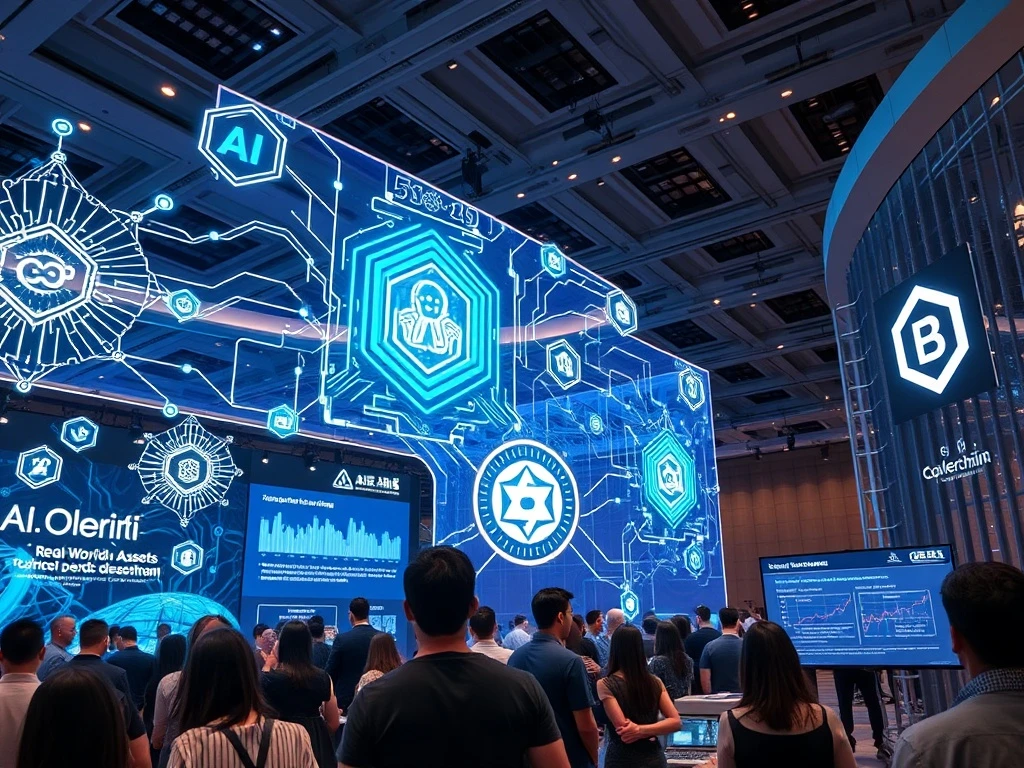
The cryptocurrency world constantly seeks the next big innovation. Indeed, a significant event recently highlighted a groundbreaking shift. GAIB, a pioneering crypto AI startup, successfully concluded its RWAiFi Summit Seoul 2025. This pivotal gathering explored the thrilling potential of AI DeFi convergence, signaling a new era for digital finance. The summit specifically focused on how artificial intelligence and decentralized finance can create unprecedented opportunities for investors.
Exploring the RWAiFi Summit in Seoul
The RWAiFi Summit took place on September 25 in Seoul’s vibrant Gangnam district. This event attracted over 400 attendees, demonstrating strong industry interest. Furthermore, representatives from more than 20 major projects participated. These included prominent names like Plume, OpenMind, Arbitrum, and BNB Chain. Global investment firms also showed their support. Amber Group and Faction VC, for instance, were among the notable attendees. Clearly, the summit brought together key players across the crypto and investment landscapes.
Discussions at the summit centered on new possibilities. These opportunities arise from the convergence of AI, robotics, and DeFi. Participants explored innovative ways these technologies can interact. The focus remained on practical applications and future growth. Therefore, the event served as a crucial platform for idea exchange and collaboration. It marked a significant step forward in integrating these advanced fields.
The Core of AI DeFi Convergence
The true highlight of the RWAiFi Summit was its deep dive into AI DeFi convergence. This concept merges the analytical power of artificial intelligence with the transparency and efficiency of decentralized finance. Consequently, it unlocks new financial instruments and investment strategies. AI algorithms can analyze vast datasets, identifying trends and optimizing returns. DeFi protocols then execute these strategies on a secure, permissionless blockchain. This powerful combination promises to revolutionize how we interact with financial markets.
Moreover, this convergence extends beyond simple data analysis. It involves using AI to enhance DeFi security, improve liquidity, and create more sophisticated financial products. Robotics infrastructure also plays a role. It provides the physical backbone for some of these advanced systems. Ultimately, this synergy aims to build a more intelligent and accessible financial ecosystem for everyone.
GPU Tokenization: A New Frontier
A major theme at the summit was the financialization of GPU and robotics infrastructure. Specifically, GAIB champions GPU tokenization. This innovative process transforms high-powered computing resources into tradable digital assets. Graphics Processing Units (GPUs) are essential for AI computations. By tokenizing them, GAIB allows broader participation in the AI economy. Individual investors can now own a piece of this critical infrastructure. This democratizes access to lucrative AI-based computing returns.
Furthermore, GPU tokenization addresses several market inefficiencies. It provides liquidity for expensive hardware assets. It also creates a transparent marketplace for computing power. Developers needing computational resources can access them more easily. Investors, conversely, gain exposure to the growing demand for AI processing. This system fosters a more equitable and efficient distribution of valuable computing resources. It opens up a new asset class within the crypto space.
Real World Assets (RWA) and On-Chain Investment
The summit also heavily emphasized Real World Assets (RWA). These assets, like real estate, commodities, or even GPU infrastructure, are tokenized on the blockchain. This process brings tangible value into the digital realm. On-chain investments based on these tokenized RWAs offer unique advantages. They provide transparency, liquidity, and fractional ownership. Investors can therefore gain exposure to diverse asset classes previously inaccessible to many.
Moreover, the integration of Real World Assets with DeFi protocols creates powerful new investment avenues. For instance, individuals can invest in fractional ownership of data centers or robotics fleets. This approach lowers entry barriers for many investors. It also diversifies portfolio options beyond traditional crypto assets. The RWAiFi Summit highlighted a clear path for individuals to generate real returns from these AI-based computing opportunities. This marks a significant evolution in investment possibilities.
GAIB’s Vision and Future Outlook for Crypto AI Startup
GAIB, as a leading crypto AI startup, stands at the forefront of these innovations. Its vision involves building an ecosystem where AI computing power and real-world assets seamlessly integrate with DeFi. The company’s focus on GPU and robotics infrastructure tokenization is pivotal. This strategy aims to create a robust and scalable foundation for future AI applications. GAIB believes in empowering individual investors. It wants to give them direct access to the economic benefits of AI advancement.
The RWAiFi Summit reinforced this vision. It showcased the strong interest from projects and investors alike. The discussions underscored the transformative potential of these converging technologies. Looking ahead, the synergy between AI, DeFi, and RWA will likely drive significant growth. GAIB is positioned to play a crucial role in this evolving landscape. The future of finance indeed appears more intelligent and inclusive, thanks to these advancements.
The RWAiFi Summit Seoul 2025 truly underscored a monumental shift. It confirmed the growing importance of AI and DeFi working together. GPU tokenization and Real World Assets are no longer theoretical concepts. They are becoming practical avenues for wealth generation. The event solidified GAIB’s position as a key innovator. It also charted a clear course for the future of decentralized, AI-driven finance. Investors and enthusiasts alike should watch this space closely for continued groundbreaking developments.
Frequently Asked Questions (FAQs)
What is the RWAiFi Summit?
The RWAiFi Summit is an annual event that brings together leaders and innovators in the crypto and AI sectors. It focuses on the convergence of Artificial Intelligence (AI), Decentralized Finance (DeFi), and Real World Assets (RWA) tokenization. The summit explores new possibilities for financial innovation and investment.
What is AI DeFi convergence?
AI DeFi convergence refers to the integration of Artificial Intelligence technologies with Decentralized Finance protocols. This synergy aims to enhance financial services through AI-driven analytics, automation, and improved security. It enables more intelligent and efficient on-chain investments and financial products.
How does GPU tokenization work?
GPU tokenization involves converting Graphics Processing Units (GPUs) and other computing infrastructure into digital tokens on a blockchain. These tokens represent ownership or access rights to the underlying computing power. This process allows investors to gain exposure to the AI computing market and provides liquidity for hardware owners.
What are Real World Assets (RWA) in the context of DeFi?
Real World Assets (RWA) are tangible or intangible assets from the traditional economy, such as real estate, commodities, or intellectual property, that are tokenized and brought onto a blockchain. This enables them to be used within DeFi protocols, offering new investment opportunities, liquidity, and transparency.
Who is GAIB?
GAIB is a crypto AI startup specializing in GPU tokenization. The company focuses on bridging the gap between AI computing infrastructure and decentralized finance. GAIB aims to create opportunities for individual investors to participate in and benefit from the growing AI economy.
What opportunities does this convergence offer individual investors?
The convergence of AI, DeFi, and RWA opens up new investment avenues for individuals. They can now invest in tokenized GPU infrastructure, fractional ownership of real-world assets, and participate in AI-driven investment strategies. This allows for diversified portfolios and the potential to generate real returns from advanced computing and asset financialization.