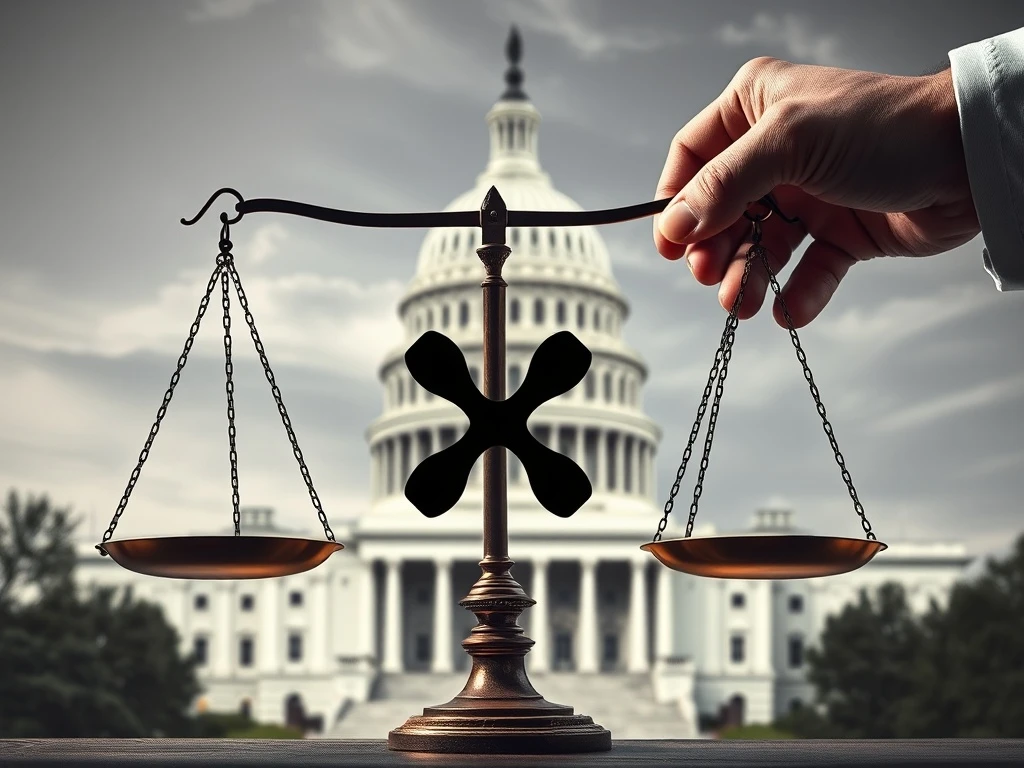
The cryptocurrency world closely watches regulatory developments. Recently, a significant shift appears on the horizon. A potential pick by former President Trump for the Commodity Futures Trading Commission (CFTC) could dramatically impact **XRP regulation**. This move signals a potential loosening of the Securities and Exchange Commission’s (SEC) long-standing grip on the crypto market. Consequently, the industry awaits changes with keen interest. Many stakeholders believe this appointment could redefine how digital assets are classified and governed in the United States. This development sparks considerable optimism among XRP holders and the broader crypto community.
Understanding the Current Regulatory Divide for **CFTC Crypto**
Currently, the regulatory landscape for cryptocurrencies in the U.S. remains fragmented. Both the SEC and the CFTC claim jurisdiction over various aspects of digital assets. However, their approaches differ significantly. The SEC primarily views many cryptocurrencies as securities. This classification subjects them to stringent disclosure requirements. On the other hand, the CFTC typically regulates commodities and derivatives. Therefore, it views certain digital assets, like Bitcoin and Ethereum, as commodities. This dual oversight creates confusion and uncertainty for innovators and investors alike.
The SEC’s Stance on Digital Assets
The SEC, under Chairman Gary Gensler, has pursued an aggressive enforcement strategy. It asserts that most cryptocurrencies fall under its purview as unregistered securities. This position led to numerous legal battles. The most prominent example involves Ripple Labs and its associated token, XRP. The SEC alleges that Ripple conducted an unregistered securities offering. This lawsuit has profoundly impacted **Ripple XRP**’s market performance and its perception within the industry. Moreover, the SEC’s broad interpretation has created a challenging environment for many crypto projects operating in the U.S. Companies often face compliance hurdles and legal risks.
Key points regarding the SEC’s approach:
- It classifies many tokens as investment contracts.
- It demands extensive disclosures from issuers.
- It has initiated numerous enforcement actions against crypto firms.
- Its stance often prioritizes investor protection through traditional securities laws.
Trump’s CFTC Pick: A Potential Game Changer for **Trump Crypto** Policy
The prospect of a new CFTC commissioner, potentially nominated by a future Trump administration, introduces a significant variable. Historically, Trump’s administration has shown a preference for deregulation. This approach could extend to the crypto sector. A CFTC pick aligned with a less interventionist philosophy might advocate for clearer, more favorable regulations. Such an appointment could empower the CFTC to take a more dominant role in crypto oversight. This shift would consequently reduce the SEC’s influence. This possibility generates considerable excitement among industry participants. They hope for a more innovation-friendly regulatory environment.
CFTC’s Evolving Role in Crypto
The CFTC has long positioned itself as a potential lead regulator for the digital asset space. Its commissioners have often expressed a desire for clear definitions. They advocate for a framework that supports technological advancement. A new, pro-crypto CFTC appointee could accelerate this agenda. For example, they might push for legislation classifying most cryptocurrencies as commodities. This reclassification would bring them under the CFTC’s jurisdiction. Consequently, this would provide a more predictable regulatory path for many digital assets. Furthermore, it could foster greater institutional adoption. The CFTC’s approach generally focuses on market integrity and preventing manipulation, which differs from the SEC’s securities-centric view.
**XRP Regulation**: At the Crossroads
The ongoing legal battle between the SEC and Ripple Labs has kept **XRP regulation** in a precarious position. The lawsuit has cast a long shadow over XRP. It raised questions about its legal status. A more commodity-friendly regulatory environment, spearheaded by the CFTC, could offer a lifeline to XRP. If the CFTC were to gain primary jurisdiction over assets like XRP, it might pave the way for a definitive classification. This clarity would resolve much of the uncertainty. Many analysts suggest this could unlock significant growth potential for XRP. Investors are keenly watching these developments. They understand the profound impact regulatory clarity can have on market value.
Ripple’s Legal Battle and Market Impact
Ripple Labs has vigorously defended itself against the SEC’s allegations. They argue that XRP does not meet the criteria of a security. Partial victories for Ripple in court have already shown the complexities of applying existing laws to novel digital assets. For instance, a court ruling clarified that programmatic sales of XRP do not constitute securities offerings. This decision provided some relief to the market. However, the overall legal status remains contested. A new CFTC direction could provide the legislative clarity that the courts have struggled to achieve. This clarity is crucial for Ripple’s business model and for XRP’s future. It would also set a precedent for other tokens.
Broader Implications for the Crypto Industry with Loosening **SEC Crypto** Grip
A shift in regulatory power from the SEC to the CFTC would have widespread implications. Firstly, it could lead to a more harmonized regulatory approach. This would reduce the current patchwork of rules. Secondly, it might encourage more innovation within the U.S. crypto sector. Companies might feel more confident launching new products and services. They would operate under clearer guidelines. Furthermore, a less restrictive environment could attract more capital and talent. This would solidify the U.S. as a leader in blockchain technology. The entire digital asset ecosystem stands to benefit from such a positive regulatory change. This potential shift creates a sense of renewed hope.
Potential positive outcomes include:
- Increased institutional investment in digital assets.
- Development of new crypto products and services.
- Greater legal certainty for token issuers and exchanges.
- A more competitive U.S. crypto market globally.
Navigating Future Regulatory Frameworks
While the exact contours of future **Trump crypto** policy remain to be seen, the potential for a regulatory overhaul is clear. The industry must prepare for these changes. Engaging with policymakers will be essential. Advocacy for sensible, forward-thinking regulations will help shape the outcome. A collaborative approach between industry leaders and government agencies could lead to a robust framework. This framework would protect investors while fostering innovation. Ultimately, a clearer regulatory path benefits everyone. It ensures stability and encourages responsible growth. The stakes are incredibly high for the future of digital finance.
In conclusion, the potential appointment of a Trump-backed CFTC commissioner marks a pivotal moment. It could signal a significant rebalancing of power between the SEC and the CFTC. This development holds particular importance for **XRP regulation**. It offers a glimmer of hope for a more commodity-centric approach to digital assets. The crypto community eagerly awaits further developments. They anticipate a future where regulatory clarity paves the way for unprecedented growth and innovation. This period represents a crucial turning point for the entire crypto ecosystem in the United States.
Related News
- Crypto Futures Liquidated: Staggering $652 Million Evaporates in One Hour Amid Market Turmoil
- Crypto Futures Liquidated: Staggering $525 Million Wiped Out in One Hour Amid Market Turmoil
- Bitcoin Plummets Below $80,000: Analyzing the Sudden Market Correction and 2025 Outlook