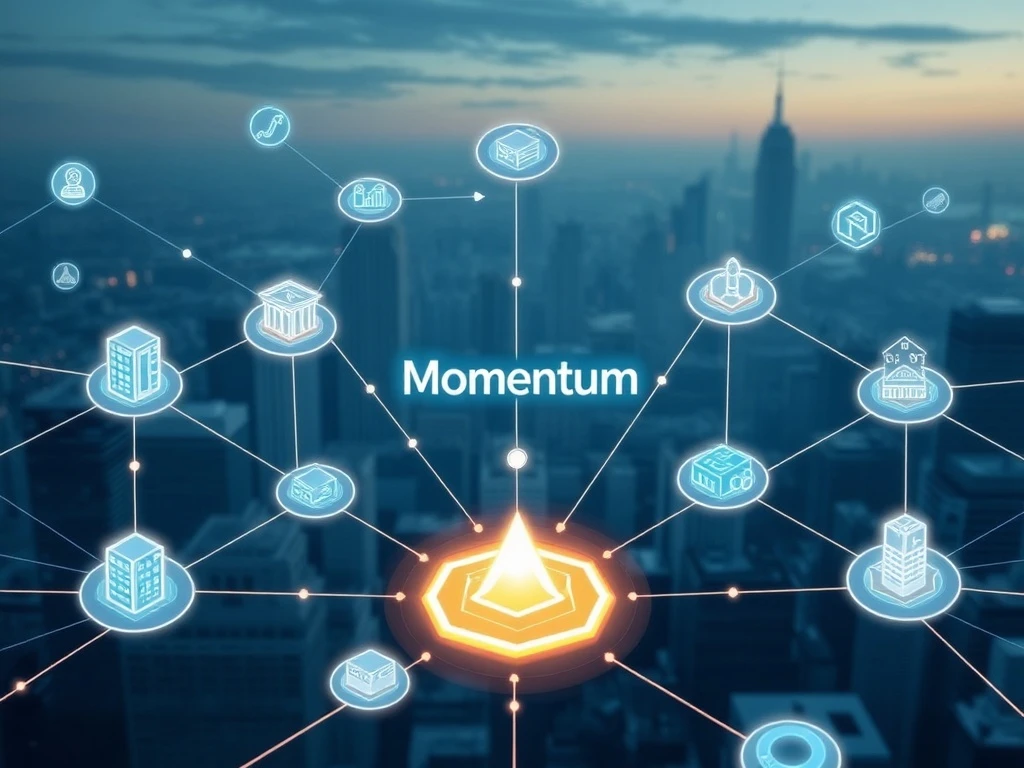
The cryptocurrency landscape constantly evolves. Innovation drives new paradigms. Momentum (MMT) recently stepped into the spotlight. It announced an ambitious vision. The project aims to become core financial infrastructure for all assets. This vision extends far beyond a simple trading platform. Momentum MMT seeks to redefine how we interact with tokenized assets, leveraging the powerful Sui blockchain.
Momentum MMT: Building the Future of Financial Infrastructure
Nick Lee, head of marketing at Momentum (MMT), shared insights during a Crypto News Room Night Live (CNL) AMA session. He clarified Momentum’s core identity. It functions as a liquidity and trading engine. The project builds directly on the Sui blockchain. This design enables the trading of all assets. Lee stressed that Momentum intends to be comprehensive. It aims to serve as foundational financial infrastructure for the coming era of asset tokenization. This distinguishes it from merely another exchange. Momentum’s approach is multi-faceted. It addresses key challenges in the digital asset space.
The project’s innovative framework relies on three critical components. Each component plays a vital role. Together, they create a robust ecosystem. These layers ensure security, compliance, and efficient trading. Consequently, Momentum positions itself at the forefront of digital finance. The platform promises institutional-grade solutions. It also fosters a regulation-friendly environment. Furthermore, it facilitates dynamic liquidity cycles. This integrated approach ensures a holistic solution for the market.
Unpacking the Security Layer with MSafe
Security remains paramount in digital finance. Momentum understands this fundamental need. Therefore, its first component focuses on institutional-grade security. This is achieved through the Move-based multi-signature wallet, MSafe. MSafe provides robust protection for assets. It ensures that transactions require multiple authorizations. This significantly reduces risks. Consequently, it builds trust for both retail and institutional users. The Move programming language, native to Sui, enhances this security. Move’s design prioritizes asset safety. It prevents common vulnerabilities found in other smart contract languages. This technical foundation underpins Momentum’s commitment. It offers a secure environment for all participants. Furthermore, MSafe’s multi-signature capabilities are crucial. They allow for shared control over digital assets. This feature is particularly attractive for organizations. They often require stringent internal controls. Thus, MSafe strengthens Momentum’s overall reliability.
The Compliance Layer: Connecting RWAs via Momentum X
The second crucial component addresses compliance. This is a significant hurdle for mainstream adoption. Momentum introduces Momentum X to bridge this gap. Momentum X connects real-world assets (RWAs) with a regulation-friendly framework. This layer is essential for the future of asset tokenization. It ensures that digital representations of physical assets comply with existing laws. This includes properties, commodities, and traditional securities. Momentum X facilitates their seamless integration into the blockchain ecosystem. By providing a compliant pathway, Momentum X lowers barriers. It encourages traditional finance participants to enter the digital asset space. Regulators also find comfort in structured compliance. This framework paves the way for broader institutional engagement. It helps legitimize the tokenization movement. Ultimately, Momentum X fosters trust and transparency. This is vital for the growth of regulated digital markets.
Momentum DEX: Fueling the Trading Layer and Liquidity
The third pillar is the trading layer. This is powered by the Momentum DEX. This decentralized exchange facilitates efficient asset trading. It aims to create a virtuous cycle of liquidity. This means that increased trading activity attracts more liquidity. More liquidity, in turn, enhances trading efficiency. The Momentum DEX offers a user-friendly interface. It supports a wide range of assets. Its design focuses on speed and low transaction costs. These are key advantages of the Sui blockchain. Traders can execute orders quickly. They benefit from minimal fees. This makes the platform attractive for frequent trading. The DEX also incorporates advanced features. These include various order types and analytics. Such tools empower users. They make informed decisions. Consequently, the Momentum DEX is more than just a place to trade. It is a dynamic marketplace. It supports the growth and vibrancy of the tokenized asset ecosystem.
The Strategic Choice: Why Sui Blockchain Powers Momentum MMT
Momentum’s decision to build on the Sui blockchain is strategic. Sui offers several compelling advantages. Firstly, its architecture provides unparalleled scalability. It processes transactions in parallel. This results in high throughput and low latency. Such performance is critical for a global financial infrastructure. Secondly, Sui utilizes the Move programming language. As discussed, Move enhances security. It also simplifies smart contract development. This reduces the likelihood of bugs and exploits. Thirdly, Sui boasts a vibrant and growing ecosystem. This provides Momentum with a strong foundation. It offers access to developer tools and community support. The network’s design also ensures predictable gas fees. This is a significant benefit for users. It contrasts with networks experiencing volatile transaction costs. Therefore, Sui aligns perfectly with Momentum’s vision. It supports a high-performance, secure, and cost-effective trading environment.
Driving the Era of Asset Tokenization with Momentum MMT
The global financial system is undergoing a transformation. Asset tokenization is at its core. This process converts rights to an asset into a digital token on a blockchain. It offers numerous benefits. These include increased liquidity, fractional ownership, and enhanced transparency. Momentum MMT positions itself as a key enabler of this revolution. By providing robust infrastructure, it accelerates adoption. It makes tokenized assets more accessible. Momentum’s integrated approach tackles fragmentation. It addresses the lack of interoperability. Traditional finance and DeFi can converge. This creates new opportunities for investors. It also opens up new funding avenues for asset owners. The project aims to unlock trillions of dollars. These assets currently sit in illiquid markets. Momentum provides the tools. It offers the framework. This allows these assets to thrive in a digital economy.
The Broader Impact: Reshaping Digital Finance
Momentum’s vision extends beyond individual trades. It aims to reshape the broader digital finance landscape. By focusing on fundamental financial infrastructure, it creates a robust foundation. This benefits various participants. Developers can build new applications. Institutions can onboard digital assets securely. Retail investors gain access to a wider array of investment opportunities. The integration of security, compliance, and a powerful decentralized exchange sets a new standard. It demonstrates a commitment to sustainable growth. This comprehensive approach is crucial. It ensures the longevity and integrity of the tokenized asset market. Momentum’s efforts contribute to a more efficient, inclusive, and transparent global financial system. The project’s development on the Sui blockchain further solidifies its potential for widespread impact.
Conclusion: Momentum MMT’s Bold Path Forward
Momentum (MMT) presents a compelling vision. It seeks to establish itself as essential financial infrastructure. This infrastructure supports all assets. It operates on the high-performance Sui blockchain. Nick Lee articulated a clear strategy. Momentum will facilitate the widespread adoption of asset tokenization. Its three core components—security via MSafe, compliance through Momentum X, and efficient trading on the Momentum DEX—form a powerful synergy. These elements collectively address critical industry needs. Momentum MMT is not just building an exchange. It is constructing a foundational layer. This layer will empower the next generation of digital finance. The project’s comprehensive approach and strategic technological choices position it for significant influence in the evolving crypto ecosystem.
Frequently Asked Questions (FAQs)
What is Momentum (MMT)?
Momentum (MMT) is a liquidity and trading engine. It is built on the Sui blockchain. Its primary goal is to serve as core financial infrastructure for all assets. It aims to enable the trading of tokenized assets globally.
How does Momentum MMT ensure security?
Momentum MMT ensures institutional-grade security through MSafe. MSafe is a Move-based multi-signature wallet. It requires multiple approvals for transactions. This protects assets and reduces risks.
What is the role of Momentum X?
Momentum X provides the compliance layer. It connects real-world assets (RWAs) with a regulation-friendly framework. This helps integrate traditional assets into the blockchain ecosystem in a compliant manner.
What are the benefits of the Momentum DEX?
The Momentum DEX is the trading layer. It facilitates efficient asset trading. It aims to create a virtuous cycle of liquidity. Users benefit from high speed, low transaction costs, and advanced trading features on the Sui blockchain.
Why did Momentum choose the Sui blockchain?
Momentum chose the Sui blockchain for its scalability, high throughput, and secure Move programming language. Sui offers predictable gas fees and a growing ecosystem. These features are ideal for robust financial infrastructure.
How does Momentum MMT support asset tokenization?
Momentum MMT supports asset tokenization by providing the necessary infrastructure. This includes security, compliance, and trading layers. It aims to make tokenized assets more accessible and liquid. This bridges traditional finance with the digital economy.
Related News
- Crypto Futures Liquidations Unleash $440M Storm as Bitcoin Longs Bear Brutal Brunt
- XRP Plummets: Devastating Support Break Triggers Major Sell-Off Amid Crypto Market Carnage
- Crypto Market Structure Framework: Ripple’s Hopeful Outlook as Senate Considers Landmark Legislation