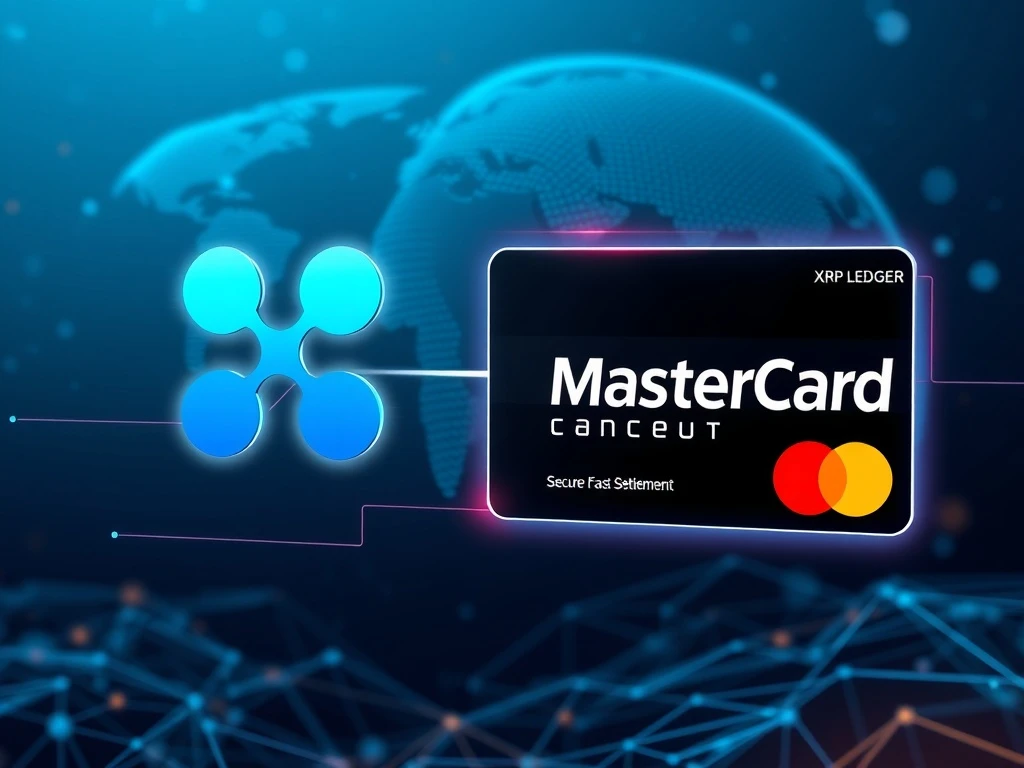
The world of finance constantly evolves. Now, a groundbreaking development is set to redefine how we perceive traditional banking and digital assets. This significant step involves a major collaboration between key players. Indeed, Ripple and Mastercard are joining forces to explore innovative solutions. They are testing credit card settlements directly on the Ripple XRP Ledger, marking a pivotal moment for the industry.
The Landmark Announcement at Ripple Swell 2025: Revolutionizing Mastercard Settlements
A significant announcement recently captured headlines from the Ripple Swell 2025 event. According to CoinDesk, Ripple, in partnership with Mastercard, WebBank, and Gemini, is actively testing a new system. This system aims to settle credit card transactions on the Ripple XRP Ledger. This move represents a substantial shift in how traditional financial processes might integrate with blockchain technology. Furthermore, it highlights a growing acceptance of digital ledgers for high-volume transactions. Therefore, this initiative could pave the way for more efficient and cost-effective settlement methods globally.
The collaboration specifically focuses on leveraging the XRP Ledger’s capabilities. Historically, credit card settlements involve complex, multi-day processes. These often rely on legacy infrastructure. However, blockchain technology offers a compelling alternative. It promises near-instantaneous finality and reduced operational costs. This partnership, therefore, signifies a major step forward. It brings blockchain closer to mainstream financial applications. Consequently, consumers and businesses could experience faster transaction processing. This also means improved liquidity management for financial institutions. Indeed, the implications for the future of Mastercard Settlements are profound.
Unpacking the Partnership: Ripple, Mastercard, WebBank, and Gemini
This initiative involves a powerful consortium of financial and technology leaders. Each partner brings unique expertise to the table. Ripple provides the underlying blockchain technology, the XRP Ledger. This ledger is known for its speed and efficiency. Mastercard, a global payments giant, offers its vast network and deep understanding of credit card processing. This collaboration combines their strengths. Thus, they aim to create a more streamlined settlement process. It’s a powerful combination of established finance and cutting-edge tech.
- Ripple: Provides the high-performance XRP Ledger, ideal for fast, low-cost transactions.
- Mastercard: Offers its extensive global payment network and expertise in credit card operations.
- WebBank: Acts as the issuing bank, providing the necessary banking infrastructure.
- Gemini: Likely facilitates the issuance and management of the RLUSD stablecoin.
This multi-party collaboration ensures a comprehensive approach. It covers technological infrastructure, regulatory compliance, and market adoption. Each entity plays a critical role. For instance, WebBank’s involvement addresses crucial banking requirements. Meanwhile, Gemini’s expertise in digital asset management is invaluable. Together, these partners are building a robust framework. They aim to integrate digital assets into traditional payment rails. This ensures the project has a strong foundation for success. Ultimately, this synergy drives innovation in financial services.
The Power of the XRP Ledger and RLUSD Stablecoin for Faster Transactions
At the core of this innovative system lies the RLUSD stablecoin. Stablecoins are cryptocurrencies pegged to a stable asset, like the US dollar. This peg minimizes price volatility. Therefore, they are ideal for financial transactions. The RLUSD stablecoin will operate on the XRP Ledger. This ledger is specifically designed for enterprise-grade payments. It offers rapid transaction speeds and extremely low fees. These characteristics make it highly suitable for high-volume credit card settlements. The plan involves onboarding RLUSD to the XRP Ledger within the next few months. However, this is pending necessary regulatory approval.
The choice of the XRP Ledger is strategic. It processes transactions in mere seconds. This contrasts sharply with traditional settlement systems. These systems can take days to finalize payments. Furthermore, the XRP Ledger boasts high scalability. It handles thousands of transactions per second. This capacity is essential for managing the vast volume of Credit Card Transactions globally. Utilizing a stablecoin like RLUSD provides several advantages. It combines the stability of fiat currency with the efficiency of blockchain technology. Consequently, this hybrid approach offers the best of both worlds. It ensures reliability and speed for financial operations.
RLUSD Stablecoin: Bridging Fiat and Digital Currencies
The introduction of the RLUSD stablecoin is a game-changer. It represents Ripple’s commitment to bridging the gap between traditional finance and the digital economy. This stablecoin will provide a reliable medium for value transfer. It leverages the inherent benefits of blockchain. These benefits include transparency, immutability, and programmability. Moreover, using a regulated stablecoin helps address concerns about volatility often associated with other cryptocurrencies. This focus on stability and compliance is crucial. It encourages broader institutional adoption of digital assets. Therefore, RLUSD could become a cornerstone for future payment innovations.
The integration of RLUSD onto the XRP Ledger simplifies the settlement process significantly. Instead of multiple intermediaries and delayed transfers, funds can move directly. They move from the card network to the merchant’s bank in near real-time. This efficiency translates into tangible benefits. Merchants gain faster access to their funds. Banks can optimize their liquidity management. Overall, the entire payment ecosystem becomes more agile and responsive. This innovative approach promises to set a new standard for efficiency. It impacts global financial operations profoundly. Indeed, the future of Crypto Payments is being shaped right now.
Revolutionizing Credit Card Transactions with Blockchain Technology
The current system for Credit Card Transactions involves numerous parties. These include cardholders, merchants, acquiring banks, issuing banks, and card networks. Each transaction undergoes multiple verification and settlement steps. This often leads to delays and increased costs. However, integrating the XRP Ledger and RLUSD stablecoin streamlines this entire process. It offers a more direct and efficient path for funds. This directness reduces the need for multiple intermediaries. Therefore, it can significantly cut down transaction times and fees.
Imagine a world where credit card payments settle almost instantly. This is the promise of Ripple and Mastercard’s initiative. Faster settlements mean better cash flow for businesses. They also reduce the risk of fraud through real-time verification. Furthermore, the transparency of blockchain technology provides an immutable record of every transaction. This enhances auditing and compliance efforts. Such improvements are not merely incremental. They represent a fundamental shift in payment infrastructure. Ultimately, this benefits everyone involved in the credit card ecosystem. The implications for the global financial landscape are truly exciting.
The Broader Landscape of Crypto Payments and Financial Innovation
This partnership between Ripple and Mastercard extends beyond just credit card settlements. It signifies a broader trend towards the integration of blockchain into mainstream finance. Many financial institutions are exploring how digital assets can enhance their services. Crypto Payments offer advantages like cross-border efficiency and lower operational costs. This collaboration validates the potential of blockchain for high-stakes financial applications. It also encourages other industry players to explore similar innovations. Therefore, this move could accelerate the adoption of digital currencies in various sectors.
The financial industry is at a crossroads. Traditional systems face increasing pressure to modernize. Meanwhile, blockchain technology offers compelling solutions. Ripple and Mastercard are demonstrating how these two worlds can converge effectively. Their initiative could set a precedent for future collaborations. It shows how established financial giants can embrace decentralized technologies. This integration is crucial for building a more resilient and efficient global financial system. Consequently, the future of Crypto Payments looks increasingly bright and integrated.
Navigating Regulatory Approvals and Market Readiness for Widespread Adoption
While the technological advancements are impressive, regulatory approval remains a critical hurdle. The plan to onboard RLUSD to the XRP Ledger is contingent on these approvals. Financial regulators worldwide are still developing frameworks for digital assets and stablecoins. Therefore, compliance with these evolving regulations is paramount. Ripple and its partners are likely working closely with authorities. They aim to ensure their system meets all legal and security requirements. This proactive approach is essential for gaining trust and widespread adoption.
The successful integration of the RLUSD stablecoin into traditional payment networks depends on regulatory clarity. Clear guidelines provide certainty for businesses and consumers. They also protect against potential risks. This collaborative effort could also influence future regulatory policies. It demonstrates a responsible approach to innovation within the digital asset space. Furthermore, market readiness involves educating users and ensuring seamless integration with existing systems. Overcoming these challenges will pave the way for a new era of financial transactions. This ensures the future of Mastercard Settlements is secure and compliant.
Strategic Implications for Traditional Finance and Blockchain Integration
This collaboration holds immense strategic importance. For Ripple, it solidifies the XRP Ledger’s position as a leading platform for institutional payments. For Mastercard, it demonstrates a commitment to innovation and staying ahead in the evolving payments landscape. It also highlights a growing trend. Traditional financial institutions are increasingly recognizing the value of blockchain. They see its potential to enhance efficiency, reduce costs, and create new services. This partnership, therefore, serves as a powerful case study. It showcases successful integration between legacy systems and distributed ledger technology. The synergy between these entities is undeniable.
The long-term implications are vast. We might see more traditional payment networks exploring blockchain for various applications. These include cross-border payments, supply chain finance, and asset tokenization. The success of this initiative could inspire similar projects globally. It could accelerate the digital transformation of the financial industry. Ultimately, this partnership is not just about settling credit card transactions. It is about building a foundation for a more interconnected and efficient global financial ecosystem. The landscape of Crypto Payments is undergoing a profound transformation.
The collaboration between Ripple, Mastercard, WebBank, and Gemini marks a significant milestone. Their joint effort to test credit card settlements on the Ripple XRP Ledger using the RLUSD stablecoin is truly pioneering. This initiative promises to bring unprecedented speed and efficiency to Credit Card Transactions. It highlights the growing importance of blockchain technology in mainstream finance. As regulatory approvals progress, this partnership could fundamentally reshape the future of Mastercard Settlements and the broader landscape of Crypto Payments. Indeed, the financial world watches with keen interest.
Frequently Asked Questions (FAQs)
1. What is the main goal of the Ripple and Mastercard partnership?
The primary goal is to test and implement a system for settling credit card transactions on the XRP Ledger using the RLUSD stablecoin. This aims to improve efficiency, speed, and reduce costs compared to traditional settlement methods.
2. Which companies are involved in this testing initiative?
The initiative involves Ripple, Mastercard, WebBank, and Gemini. Each company contributes specific expertise, from blockchain technology and payment networks to banking infrastructure and stablecoin management.
3. What is the RLUSD stablecoin and why is it being used?
RLUSD is a stablecoin, likely pegged to the US dollar, which minimizes price volatility. It is being used because stablecoins offer the stability of fiat currency combined with the efficiency, speed, and transparency of blockchain technology, making them ideal for settlements.
4. How will this initiative impact credit card transactions?
This initiative aims to make credit card settlements faster, potentially near-instantaneous, and more cost-effective. It could also enhance transparency and reduce the complexity involved in current multi-day settlement processes.
5. What is the significance of using the XRP Ledger for these settlements?
The XRP Ledger is chosen for its high speed, low transaction fees, and scalability, making it well-suited for handling the large volume and rapid finality required for credit card settlements. It offers a robust infrastructure for enterprise-grade payments.
6. What is the timeline for the RLUSD stablecoin onboarding?
The plan is to onboard the RLUSD stablecoin to the XRP Ledger within the next few months, contingent upon receiving the necessary regulatory approvals.
Related News
- Bitcoin Long-Term Holders Reveal Crucial Signal: Slowing Sell-Offs Hint at Imminent Breakthrough Toward Record Highs
- NYSE 24/7 Trading Launch: The Revolutionary On-Chain Tokenization Shift
- Tether’s Strategic Partnership with Bitqik Accelerates Laos’ Cryptocurrency Revolution