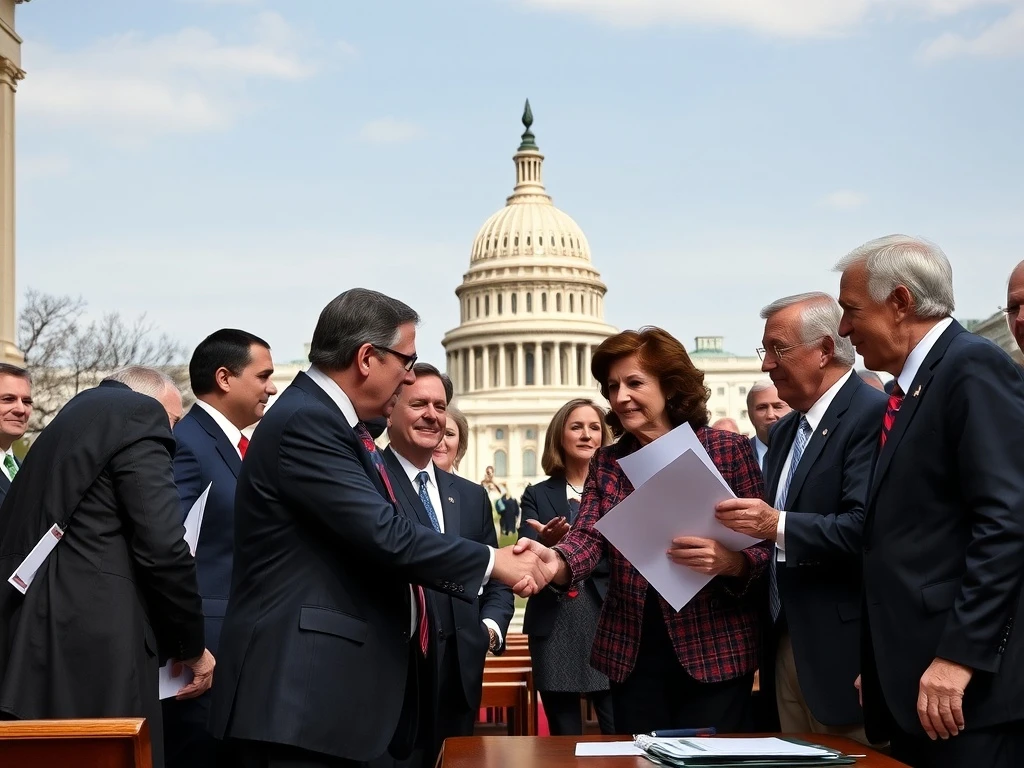
The stability of global markets, including the burgeoning cryptocurrency sector, often hinges on the smooth functioning of major economies. Therefore, recent news from Washington D.C. carries significant weight. A potential **US government shutdown** has loomed large, threatening economic disruption. However, a glimmer of hope has emerged. Reports indicate that U.S. senators have reached a partial agreement. This breakthrough aims to avert a full-blown crisis, signaling a positive step for fiscal stability.
Understanding the Partial **Senate Deal**
U.S. senators have reportedly forged a crucial partial agreement. This development seeks to end the ongoing government shutdown. Politico first reported this news, citing multiple reliable sources. Furthermore, the deal involved key figures. Senators Angus King, Jeanne Shaheen, and Maggie Hassan played a significant role. They collaborated with a group of Republican senators. This bipartisan effort underscores a commitment to resolving the impasse. Consequently, the agreement marks a pivotal moment in the legislative process.
This initial accord lays a foundation. It aims for a broader resolution to the budget stalemate. Importantly, it provides immediate relief. Millions of Americans awaited this outcome. The deal demonstrates a willingness to compromise. Both sides showed flexibility. This approach is essential for effective governance. Ultimately, it prioritizes national interests over partisan divides.
The Proposed **Temporary Spending Bill**
Under this new arrangement, the Senate is poised to vote. They will consider a temporary spending bill. The House of Representatives already passed this bill on Sunday. Moreover, this bill serves a critical purpose. It acts as a stopgap measure. Its goal is to keep government operations funded. This temporary solution prevents further disruption. It allows essential services to continue.
The bill is not a permanent fix. Instead, it offers a pathway. It provides a basis for a larger budget deal. Lawmakers gain crucial time. They can negotiate a more comprehensive agreement. This strategic move buys valuable weeks. It avoids the immediate consequences of a full shutdown. Thus, it prevents widespread economic ripple effects. Many stakeholders will closely watch this vote. Its passage is vital for ongoing stability.
Commitments on **Affordable Care Act Subsidies**
A key component of this agreement addresses Democratic priorities. Senate Majority Leader John Thune made a significant promise. He assured Senate Democrats a vote in December. This vote concerns extending subsidies for the Affordable Care Act (ACA). Such subsidies are vital. They help millions afford health insurance. This commitment was crucial for securing Democratic support. It shows a concession from the Republican side.
Democrats will also gain another opportunity. They can decide on votes for other policy extensions. This ensures their legislative priorities are heard. Consequently, it creates a more balanced negotiation. The ACA subsidies remain a contentious issue. However, this agreement offers a path forward. It provides a dedicated legislative window. This ensures a fair hearing for these critical provisions.
Relief for **Federal Employees Unpaid Wages**
If this agreement is finalized, significant relief is on the horizon. Furloughed federal employees will soon return to work. They faced uncertainty for too long. Furthermore, they will receive any unpaid wages. This provision is a crucial element of the deal. It addresses the financial hardship faced by thousands. Many families rely on these salaries. The shutdown caused immense stress for them.
Returning to work means stability. It allows employees to resume their duties. Essential government services can fully restart. This includes agencies across the spectrum. From national parks to regulatory bodies, operations will normalize. The commitment to back pay is also vital. It restores financial security. It acknowledges the sacrifices made by these dedicated public servants. Therefore, this aspect of the deal brings immediate, tangible benefits.
Navigating the Path to Long-Term Budget Stability
While this partial agreement offers immediate relief, the journey continues. It represents a crucial step. However, it is not the final destination. Lawmakers still face the challenge of a larger budget deal. This requires ongoing negotiation and compromise. Both parties must work together. They need to find common ground. This ensures sustained fiscal health for the nation.
The political climate remains complex. Various factions hold differing views. Yet, this recent **Senate deal** provides a hopeful precedent. It shows that agreement is possible. It underscores the importance of dialogue. Ultimately, a long-term budget solution is paramount. It will prevent future shutdown threats. It also provides certainty for the economy. This stability benefits everyone, from businesses to individual citizens.
Conclusion: A Cautious Step Forward for the US Government
The reported partial **Senate deal** to end the **US government shutdown** marks a significant positive development. It brings immediate relief to **federal employees unpaid wages** and restores vital government functions. The agreement, centered around a **temporary spending bill** and commitments regarding **Affordable Care Act subsidies**, reflects a bipartisan effort to avoid a deepening crisis. While a larger budget resolution is still needed, this breakthrough demonstrates a capacity for legislative compromise. It offers a period of stability, allowing for continued negotiations towards a comprehensive and lasting solution for the nation’s fiscal challenges.
Frequently Asked Questions (FAQs)
Q1: What is the main outcome of the US Senate deal?
The main outcome is a partial agreement to end the ongoing **US government shutdown**. It allows furloughed federal employees to return to work and ensures they receive any unpaid wages.
Q2: Which senators were involved in striking this partial agreement?
Senators Angus King, Jeanne Shaheen, and Maggie Hassan reportedly struck the deal with a group of Republican senators, demonstrating a bipartisan effort.
Q3: What is the purpose of the temporary spending bill mentioned in the agreement?
The **temporary spending bill**, which already passed the House, will serve as a foundation for a larger budget deal. It provides short-term funding to keep government operations running and prevent further disruption.
Q4: What commitment was made regarding Affordable Care Act subsidies?
Senate Majority Leader John Thune promised Senate Democrats a vote in December on extending subsidies for the **Affordable Care Act subsidies**. This was a key part of securing Democratic support for the overall agreement.
Q5: How does this deal impact federal employees?
If the agreement is finalized, furloughed **federal employees unpaid wages** will be resolved. They will return to work and receive all their unpaid wages, providing much-needed financial relief and stability.
Q6: Is this a permanent solution to the budget issues?
No, this is a partial agreement and a temporary spending bill. It serves as a foundation for a larger budget deal. Lawmakers will still need to negotiate a comprehensive, long-term solution to prevent future government shutdowns.
Related News
- Privacy Coins Revolution: The Critical Shift from Anonymity to Selective Disclosure
- Crypto Banking Revolution: Old Glory Financial’s Historic Integration Inside Chartered US Bank
- XRP Demand Shock Looms as Ripple and UC Berkeley Forge Revolutionary Real-World Blockchain Applications