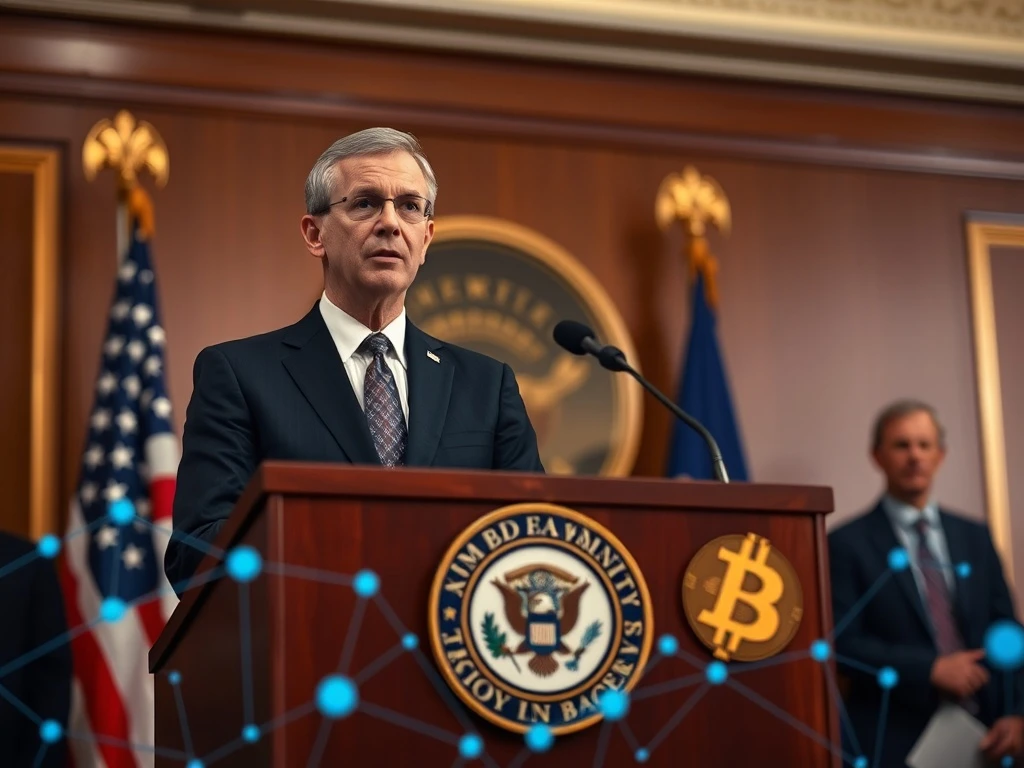
A pivotal moment for the cryptocurrency market has arrived. U.S. Treasury Secretary Scott Besent recently announced a groundbreaking development. The Treasury Department, in collaboration with the IRS, has released new guidance for cryptocurrency ETFs. This significant move addresses a critical area within the evolving digital asset landscape. It specifically provides a clear and defined path for retail investor staking and subsequent reward sharing. This announcement marks a crucial step toward mainstream adoption and regulatory clarity in the United States.
Understanding the New US Treasury Guidance on Crypto ETF Staking
The announcement from Secretary Besent brings much-needed clarity. Investors and institutions alike have awaited comprehensive guidelines. Previously, the regulatory framework around digital assets, particularly staking within investment vehicles, remained ambiguous. This uncertainty often deterred traditional financial players and everyday investors. Now, however, the US Treasury guidance aims to demystify these complex areas. It establishes specific parameters for how crypto ETF staking operations should function. Furthermore, it outlines how the rewards generated from staking will be handled. This includes crucial details on their distribution to investors. The guidance essentially bridges the gap between traditional finance and the innovative world of decentralized networks. It ensures a more predictable and compliant environment for all participants. Therefore, this development could unlock substantial growth within the sector.
The new rules offer a structured approach. They cover various aspects of staking. For instance, they define eligible staking activities. They also clarify the mechanisms for reward allocation. These definitions are vital for transparency. Moreover, they build trust among investors. The guidance reflects a commitment from U.S. financial authorities. They seek to integrate digital assets responsibly into the existing financial system. Consequently, market participants can now operate with greater confidence. They can better understand their obligations and opportunities. This regulatory clarity is a cornerstone for sustainable market development.
The Clear Path for Retail Investor Staking
One of the most impactful aspects of the new guidance centers on retail investor staking. Previously, individual investors faced significant hurdles. These included complex technical requirements and regulatory uncertainties. Direct staking often demanded a certain level of technical expertise. It also carried inherent risks. The new guidance, however, simplifies this process significantly. By allowing cryptocurrency ETFs to engage in staking, retail investors gain indirect access. They can participate in staking rewards through regulated investment products. This removes many barriers to entry. Therefore, more individuals can now benefit from the growth of proof-of-stake networks. They no longer need to manage their own staking infrastructure.
This development democratizes access to staking. It transforms a previously niche activity into a more accessible investment strategy. ETFs provide a familiar and regulated wrapper for crypto exposure. Investors can thus leverage their existing brokerage accounts. They can access staking yields without direct custody of their digital assets. This enhances security and convenience. Furthermore, it reduces the operational complexities associated with individual staking. The guidance explicitly supports this pathway. It ensures that the benefits of staking are not confined to large institutions. Instead, it extends these opportunities to a broader investor base. Ultimately, this fosters greater participation in the digital asset economy. It aligns with the goal of financial inclusion.
Key Benefits for Retail Investors:
- **Simplified Access:** Invest in staking through traditional brokerage accounts.
- **Reduced Complexity:** No need to manage private keys or staking nodes.
- **Enhanced Security:** ETFs often have robust security protocols.
- **Diversification:** Gain exposure to a basket of staked assets.
- **Regulatory Clarity:** Operate within a defined legal framework.
Navigating IRS Crypto Rules and Reward Sharing
The involvement of the IRS is particularly noteworthy. The new guidance directly addresses IRS crypto rules concerning staking rewards. For a long time, the tax treatment of staking income remained a grey area. This created compliance challenges for investors. The new framework provides explicit instructions. It clarifies how staking rewards should be reported and taxed. This is crucial for both investors and ETF providers. They can now ensure proper compliance. Furthermore, it eliminates much of the guesswork previously involved. This regulatory clarity is a significant win for the entire ecosystem. It promotes greater transparency and accountability.
The guidance outlines specific methods for reward sharing. It ensures fairness and transparency in distribution. ETF providers must clearly communicate how staking rewards are calculated. They also need to detail how these rewards are passed on to shareholders. This transparency builds investor confidence. It also prevents potential misunderstandings. Therefore, investors can make more informed decisions. They can better assess the after-tax returns of their crypto ETF staking investments. The clarity on tax implications is a major step forward. It removes a significant barrier to wider adoption of crypto investment products. Ultimately, this integration into the existing tax system validates digital assets as legitimate investment vehicles.
Secretary Besent emphasized the importance of a robust tax framework. He highlighted its role in fostering responsible innovation. The IRS will provide detailed instructions. These will guide both ETF managers and individual investors. They will learn how to accurately report staking income. This includes guidance on the timing of income recognition. It also covers the fair market value of rewards. Consequently, compliance becomes more straightforward. This systematic approach reduces the risk of errors. It also minimizes potential audits for taxpayers. The coordinated effort between the Treasury and IRS ensures a holistic regulatory solution. It addresses both investment and taxation aspects comprehensively.
The Broader Impact on Cryptocurrency ETFs and the Market
This announcement carries profound implications for cryptocurrency ETFs. The ability to engage in staking fundamentally changes their investment profile. Previously, many crypto ETFs focused solely on price exposure. They often held the underlying assets without generating additional yield. Now, staking allows these ETFs to offer a yield component. This makes them more attractive to a wider range of investors. It appeals particularly to those seeking income-generating assets. Furthermore, it enhances the competitive landscape. Crypto ETFs can now rival traditional income-generating investments. They offer a unique blend of growth potential and passive income.
The guidance also paves the way for new product innovation. ETF issuers can now design more sophisticated products. These might include ETFs focused on specific proof-of-stake networks. They could also offer diversified staking portfolios. This expanded capability fosters greater market efficiency. It provides investors with more choices. Moreover, it encourages institutional participation. Large financial institutions often prefer regulated, yield-bearing products. This guidance makes crypto ETF staking a viable option for them. Consequently, we could see a significant influx of institutional capital into the crypto market. This would further legitimize digital assets. It would also stabilize their market valuations over time.
The market reaction to this guidance is expected to be positive. Increased clarity typically reduces perceived risk. This, in turn, can attract more capital. The enhanced functionality of cryptocurrency ETFs could drive demand. This applies to both the ETFs themselves and the underlying staked assets. Ultimately, this regulatory milestone positions the U.S. as a leader. It establishes a forward-thinking approach to digital asset regulation. This fosters innovation while protecting investors. It ensures the integrity of the financial system. This balance is crucial for long-term growth and stability.
The Future Landscape of Digital Asset Regulation
The release of this guidance signals a maturing regulatory environment. It suggests a more proactive stance from U.S. authorities. They are moving beyond reactive enforcement. Instead, they are developing comprehensive frameworks. This approach is essential for the sustainable growth of the digital asset industry. It provides a blueprint for future regulations. We can anticipate further guidance on other complex areas. These might include decentralized finance (DeFi) or stablecoins. The Treasury and IRS are demonstrating a willingness to engage. They are actively working to integrate crypto into the established financial system. This is a positive sign for market participants.
This development also has global implications. Other jurisdictions often look to the U.S. for regulatory leadership. The clear stance on crypto ETF staking could influence international frameworks. It might encourage other countries to develop similar guidelines. This would create a more harmonized global regulatory landscape. Such harmonization is beneficial for cross-border innovation. It also reduces regulatory arbitrage. Ultimately, a consistent global approach fosters greater stability. It also promotes wider adoption of digital assets. The U.S. has taken a significant step forward. It ensures that innovation can thrive within a secure and compliant ecosystem. This balanced approach is vital for the industry’s future.
Furthermore, this guidance highlights the collaborative effort between government agencies. The Treasury Department and the IRS worked together. They combined their expertise to address a complex issue. This inter-agency cooperation is critical. It ensures that regulations are comprehensive and effective. It also minimizes regulatory gaps. As the digital asset space continues to evolve, such collaboration will be increasingly important. It ensures that policy keeps pace with technological advancements. This proactive and collaborative approach benefits all stakeholders. It creates a more predictable and robust market environment.
Addressing Challenges and Looking Ahead
While this guidance offers significant advantages, challenges remain. The dynamic nature of the crypto market requires continuous monitoring. Regulators must adapt to new technologies and use cases. For example, future innovations in staking mechanisms might require updated guidance. Furthermore, educating investors remains a priority. Understanding the nuances of crypto ETF staking and its tax implications is crucial. Financial literacy initiatives will be vital. They will ensure retail investor staking decisions are well-informed. The industry must also work closely with regulators. This collaboration will help refine existing rules. It will also develop new ones as needed.
The implementation of these new IRS crypto rules will be closely watched. ETF providers must ensure their operations comply fully. They need to update their internal processes and reporting mechanisms. This requires significant effort and investment. However, the long-term benefits of regulatory clarity outweigh these initial challenges. The market will undoubtedly adjust to the new framework. We can expect a period of adaptation. During this time, firms will align their practices with the new standards. Ultimately, this comprehensive guidance sets a strong foundation. It promotes responsible innovation within the U.S. digital asset market. It fosters a more mature and resilient ecosystem for all participants.
In conclusion, Secretary Besent’s announcement marks a watershed moment. The new US Treasury guidance on crypto ETF staking is a game-changer. It provides clarity for both institutions and retail investor staking. By addressing the complexities of staking and IRS crypto rules, the U.S. has solidified its commitment to integrating digital assets. This move promises to unlock new opportunities. It also fosters greater confidence in the burgeoning cryptocurrency market. The path ahead appears brighter and more defined, signaling a new era for digital finance.
Frequently Asked Questions (FAQs)
What is crypto ETF staking?
Crypto ETF staking involves a cryptocurrency ETF holding proof-of-stake digital assets. These assets are then “staked” on a blockchain network. Staking helps secure the network and validate transactions. In return, the ETF earns rewards, which can be shared with its investors. This process allows investors to gain exposure to staking yields through a regulated investment vehicle.
How does the new US Treasury guidance impact retail investors?
The new US Treasury guidance creates a clear path for retail investor staking. It enables individual investors to access staking rewards indirectly through cryptocurrency ETFs. This removes the need for direct asset custody or technical expertise. Consequently, it simplifies participation in the staking economy for a broader audience, making it more accessible and secure.
What are the tax implications of staking rewards under the new IRS rules?
The new IRS crypto rules provide much-needed clarity on the tax treatment of staking rewards. They specify how these rewards should be reported as income. The guidance outlines the timing of income recognition and the valuation of rewards. This helps both ETF providers and individual investors ensure proper tax compliance, reducing previous uncertainties.
Will this guidance lead to more cryptocurrency ETFs offering staking?
Yes, it is highly probable. The clear regulatory framework reduces risk for ETF issuers. It also makes crypto ETF staking a more attractive proposition. The ability to generate yield through staking enhances the competitiveness of these products. Therefore, we anticipate more cryptocurrency ETFs will incorporate staking features, expanding options for investors.
How does this guidance benefit the broader crypto market?
This guidance brings increased legitimacy and stability to the crypto market. Regulatory clarity reduces uncertainty, which often deters institutional capital. By integrating crypto ETF staking into a regulated framework, the U.S. fosters responsible innovation. This can attract more investment, encourage new product development, and ultimately support the long-term growth and maturation of the digital asset ecosystem.
Is this guidance the final word on crypto regulation in the U.S.?
No, this guidance represents a significant step but not the final word. The digital asset space is rapidly evolving. Regulators will likely issue further guidance on other complex areas, such as DeFi, stablecoins, and various token classifications. This announcement, however, sets a strong precedent for future regulatory developments and demonstrates a proactive approach from U.S. authorities.
Related News
- Crypto Market Structure Framework: Ripple’s Hopeful Outlook as Senate Considers Landmark Legislation
- Crypto Money Laundering: Shocking $107.5M South Korean Plastic Surgery Scheme Exposed
- Aster Buyback Program Expands Dramatically, Allocating Up to 40% of Daily Fees to Token Value Enhancement