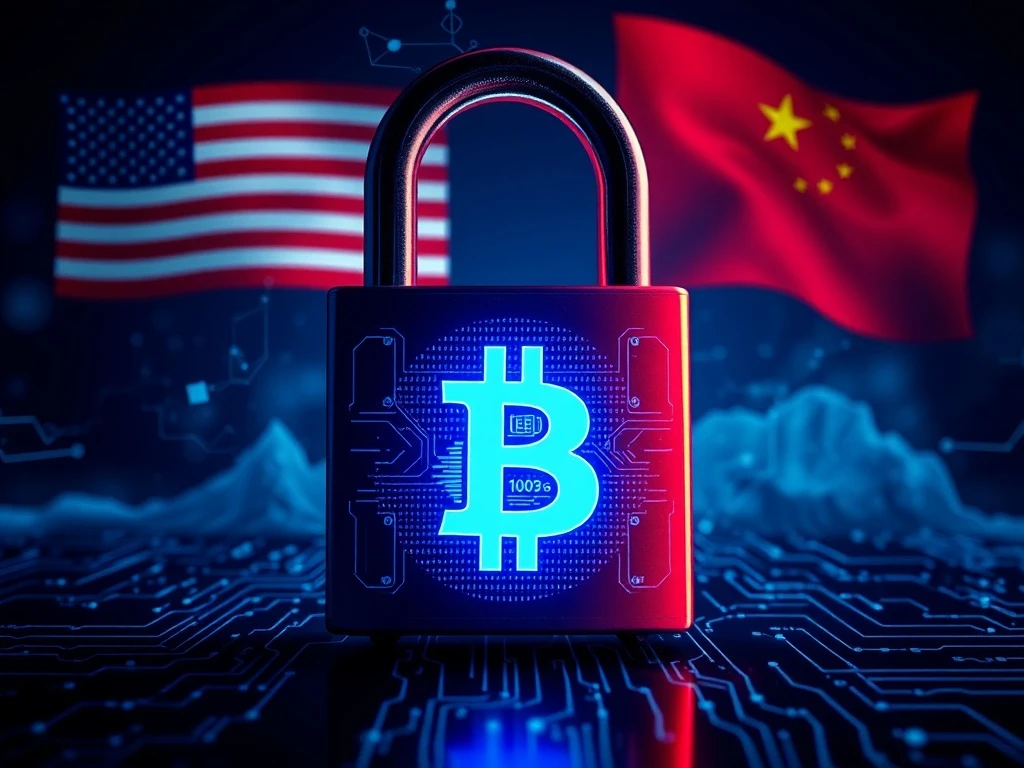
The cryptocurrency world recently witnessed a startling development. China’s National Computer Virus Emergency Response Center (CVERC) has leveled a significant accusation. They suggest the U.S. government may be linked to a major 2020 Bitcoin hack. This incident targeted the LuBian Bitcoin mining pool, resulting in the theft of a staggering 127,000 BTC. This massive amount of cryptocurrency remained untouched for four years. Then, it suddenly moved to a new wallet. Arkham, a prominent blockchain analytics firm, later identified this wallet as belonging to the U.S. government. This revelation sends shockwaves through both the crypto community and international relations. It raises critical questions about cyber warfare and government conduct in the digital age.
Unraveling the 2020 LuBian Bitcoin Hack
The LuBian mining pool hack in 2020 represented a monumental cybercrime. Attackers managed to compromise the system. Consequently, they siphoned off 127,000 BTC. At the time, this represented a substantial sum. Its value has only grown exponentially since then. For four years, these stolen funds remained dormant. They showed no activity on the blockchain. This long period of inactivity is highly unusual for stolen crypto assets. Typically, hackers attempt to launder or move funds quickly. The prolonged dormancy fueled speculation. Many wondered about the hackers’ identity and intentions. Now, CVERC’s report brings a new, explosive dimension to this mystery. They point directly to state-level involvement.
Furthermore, the U.S. government recently announced a major development. It indicted Chen Zhi, the chairman of the Prince Group. Chen Zhi is also the alleged operator of LuBian. Simultaneously, the U.S. government confirmed the seizure of 127,271 BTC. This amount closely matches the stolen funds. The timing of these announcements is critical. It coincides with China’s allegations. This situation creates a complex narrative. Two global powers offer differing accounts of a high-stakes crypto theft.
China’s Allegations: A Case of China Cyber Espionage?
CVERC’s report meticulously details their findings. They emphasize that their analysis of the hacking methods revealed multiple signs of government-level technological involvement. This suggests a sophisticated operation. It goes beyond typical criminal enterprises. The tools and techniques employed indicate state sponsorship. Moreover, CVERC raised a provocative possibility. They theorize that the U.S. government’s plan may have been two-fold. First, support the hackers in stealing the funds. Second, confiscate them later. This strategy would effectively remove a significant amount of Bitcoin from circulation. It would also potentially disrupt a rival’s operations. Such an accusation highlights deep-seated mistrust between the two nations.
China has consistently accused the U.S. of cyber espionage. This new report adds another layer to those claims. CVERC did not provide explicit proof of direct U.S. government involvement in the initial hack. However, their technical analysis strongly implies it. They cite specific digital footprints and methodologies. These align with known state-sponsored hacking groups. If true, this represents an unprecedented move. A sovereign nation allegedly orchestrating a large-scale crypto theft. Then, it publicly claims a seizure of the very same assets. This situation has significant international implications. It challenges norms of cyber warfare and legal jurisdiction.
The US Government Crypto Seizure: A Confiscation or a Recovery?
The U.S. government’s narrative presents a stark contrast. They frame the seizure of the 127,271 BTC as a law enforcement victory. They claim to have successfully tracked down stolen funds. This action aligns with their ongoing efforts. They combat illicit activities in the cryptocurrency space. The indictment of Chen Zhi supports this view. It suggests a direct link between the alleged operator and the stolen assets. U.S. authorities often confiscate assets derived from criminal enterprises. This practice is standard. It aims to disrupt criminal networks. It also aims to recover funds for victims or the state.
However, CVERC’s allegations complicate this picture. They transform a seemingly straightforward law enforcement action. It becomes a potential act of state-sponsored cyber theft. The U.S. government has not yet publicly responded to China’s specific claims. Their silence, or eventual rebuttal, will be closely watched. The seized 127,000 BTC now sits in U.S. government wallets. This fact remains undisputed. The question shifts from *who* stole it to *how* it ended up there. The U.S. Department of Justice regularly announces crypto seizures. These often relate to drug trafficking, ransomware, or other illicit activities. This particular seizure, however, carries unique geopolitical weight. It involves a direct accusation from a rival nation.
127,000 BTC: A Digital Treasure at the Heart of Conflict
The sheer volume of 127,000 BTC makes this case extraordinary. At current market prices, this represents billions of dollars. Such a large sum impacts the global Bitcoin market. Its movement alone can cause ripples. The fact that it remained dormant for so long is intriguing. Its sudden transfer, followed by Arkham’s identification, adds to the drama. Arkham’s role in identifying the wallet is crucial. Their blockchain analytics provide transparency. They offer an immutable record of transactions. This helps trace the flow of funds. It lends credibility to the U.S. government’s current possession. Yet, it does not fully explain the origin of the hack itself.
This massive amount of Bitcoin represents more than just monetary value. It symbolizes a new frontier in geopolitical power struggles. Control over such significant digital assets offers strategic advantages. It can influence markets. It can fund operations. Or it can simply serve as a powerful statement. The U.S. government’s claim to these funds positions them as a major holder of Bitcoin. This further intertwines national security with the volatile world of cryptocurrency. The implications extend beyond a simple theft. They touch upon digital sovereignty and economic warfare.
The Broader Implications for Global Cyber Governance
This incident transcends a typical criminal investigation. It highlights the growing tension between nation-states in cyberspace. Both the U.S. and China are formidable cyber powers. They frequently accuse each other of state-sponsored hacking. These allegations often involve intellectual property theft. They also involve critical infrastructure espionage. The LuBian Bitcoin mining pool case, however, introduces a new dimension. It suggests direct state involvement in financial cybercrime. If China’s allegations hold any truth, it sets a dangerous precedent. It blurs the lines between law enforcement, intelligence operations, and outright theft.
Furthermore, this case will undoubtedly fuel debates about cryptocurrency regulation. Governments worldwide grapple with how to control digital assets. They aim to prevent their use in illicit activities. Yet, if governments themselves are implicated in such activities, trust erodes. It complicates international cooperation. It also makes it harder to establish unified global cyber governance frameworks. The lack of transparency surrounding the initial hack remains a significant concern. The competing narratives from Washington and Beijing further deepen this uncertainty. The crypto community watches closely. They seek clarity and accountability. This event could reshape how nations interact with decentralized digital currencies.
The Future of Crypto Seizures and International Relations
The situation remains fluid. Further details from both sides are anticipated. The U.S. government will likely issue a formal response to CVERC’s report. This response will be crucial. It could either dismiss the claims or offer a counter-narrative. Meanwhile, China will likely continue to press its case. They may seek international condemnation. This incident will undoubtedly strain already tense U.S.-China relations. It adds another layer of complexity to their ongoing competition. This competition spans trade, technology, and military influence.
Moreover, the legal ramifications are significant. Who truly owns the 127,000 BTC? Is it stolen property recovered by legitimate means? Or is it illicitly acquired by one state from another? These questions lack clear international legal precedents. The decentralized nature of Bitcoin complicates traditional legal frameworks. This case could establish new norms. It might set new challenges for international law. It certainly underscores the need for greater transparency. It also highlights the need for robust international dialogue on cyber ethics. The future of crypto seizures by governments will be heavily influenced by this unfolding saga.
In conclusion, the accusation from China’s CVERC marks a critical moment. It pits two global powers against each other over a massive Bitcoin hack. The U.S. government’s seizure of 127,000 BTC is now viewed through a controversial lens. This situation demands careful scrutiny. It also requires clear, verifiable information from all parties. The implications for cybersecurity, international law, and the cryptocurrency market are profound. This developing story will continue to shape discussions on digital sovereignty and global power dynamics for years to come.
Frequently Asked Questions (FAQs)
What is the core accusation made by China regarding the Bitcoin hack?
China’s CVERC alleges that the U.S. government may have been linked to the 2020 hack of the LuBian Bitcoin mining pool. They suggest the U.S. supported hackers in stealing 127,000 BTC and then confiscated the funds.
Which specific Bitcoin mining pool was targeted in the 2020 hack?
The hack specifically targeted the LuBian Bitcoin mining pool, resulting in the theft of 127,000 BTC.
How did the U.S. government come into possession of the 127,000 BTC?
The U.S. government announced that it had indicted Chen Zhi, the alleged operator of LuBian, and subsequently seized and is currently holding 127,271 BTC. Blockchain analytics firm Arkham identified the wallet holding these funds as belonging to the U.S. government.
What evidence does China’s CVERC present for government-level involvement in the Bitcoin hack?
CVERC emphasized that its analysis of the hacking methods uncovered multiple signs of sophisticated government-level technological involvement, indicating a high degree of technical expertise beyond typical criminal groups.
What are the broader implications of these allegations for US-China relations and cryptocurrency?
These allegations could significantly escalate cyber tensions between the U.S. and China, potentially impacting international cooperation on cybercrime and setting new precedents for how governments interact with and regulate decentralized cryptocurrencies. It also raises questions about digital sovereignty and the ethics of state-sponsored cyber operations.
Has the U.S. government responded to China’s specific allegations?
As of the initial reports, the U.S. government has not yet publicly responded to China’s specific claims of its involvement in the initial hack or the alleged scheme to support hackers and then confiscate the funds.
Related News
- Gold Price Prediction: Stunning Momentum Analysis Forecasts $8,500 Gold and $300 Silver Targets
- Steak ‘n Shake Boldly Expands Bitcoin Treasury to $10M, Doubling Down on Digital Reserve Strategy
- Trump’s Shocking Tariff Threat Over Greenland Annexation Opposition Sends Global Shockwaves