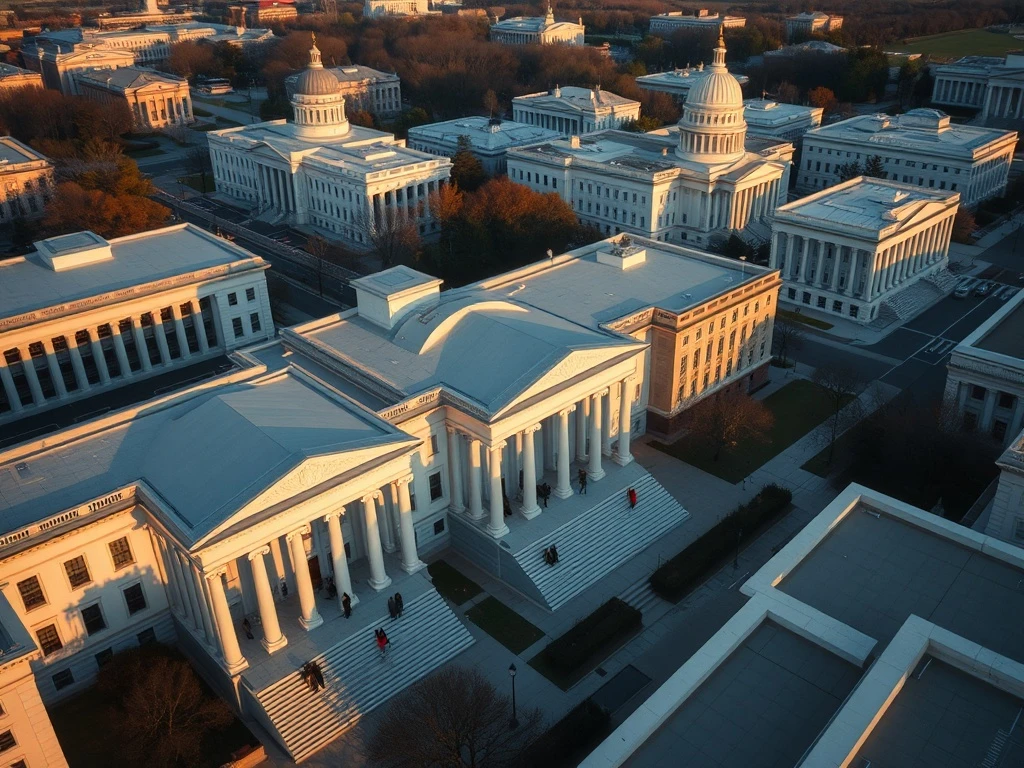
WASHINGTON, D.C. – November 13 marks a pivotal deadline for thousands of federal employees across multiple departments as they receive official orders to return to their workplaces following the conclusion of a government shutdown. This directive comes immediately after President Donald Trump signed a temporary budget bill, effectively reopening shuttered government operations and setting in motion a complex transition back to normalcy for the federal workforce.
Federal Employees Return to Work: The November 13 Directive
Several major federal departments have issued identical return-to-work instructions specifying November 13 as the mandatory reporting date. The Department of the Interior, the Department of Housing and Urban Development, and the Department of Justice represent just three of the affected agencies. Consequently, these departments have activated their recall procedures to ensure a smooth transition. Meanwhile, other agencies are expected to follow similar protocols throughout the week.
The temporary funding bill provides financial support through December 20, creating a narrow window for congressional negotiations. Therefore, federal managers must prioritize critical functions during this period. Additionally, the Office of Personnel Management has released guidance on handling administrative matters related to the shutdown period. This guidance covers leave requests, timekeeping adjustments, and payroll processing for affected employees.
Government Shutdown End: Timeline and Immediate Impacts
The recent government shutdown lasted approximately 35 days, making it one of the longest in modern U.S. history. President Trump signed the continuing resolution on November 12, just hours before the return-to-work orders circulated through official channels. Subsequently, department heads began notifying their staff through multiple communication methods including email, official websites, and automated phone systems.
The shutdown’s conclusion triggers several immediate operational requirements:
- Backlog Processing: Agencies must address accumulated work during the closure period
- System Restoration: IT departments are reactivating secured systems and networks
- Facility Preparation: Building managers are ensuring workspaces meet safety standards
- Payroll Activation: Financial systems are processing retroactive pay for furloughed workers
Federal employee unions have welcomed the resolution while expressing concerns about future stability. Notably, the American Federation of Government Employees has emphasized the need for permanent budgetary solutions. Similarly, the National Treasury Employees Union has highlighted the financial strain caused by delayed paychecks during the closure.
Expert Analysis: Workforce Management Perspectives
Government workforce specialists note that November returns present unique challenges compared to previous shutdown recoveries. Dr. Eleanor Vance, a public administration professor at Georgetown University, explains the situation clearly. “The proximity to holiday seasons complicates workforce planning significantly,” she states. “Agencies must balance catch-up work with seasonal demands while managing employee morale after financial uncertainty.”
Historical data from the Congressional Research Service reveals important patterns. Previous shutdown recoveries typically required two to three weeks for full operational restoration. However, this timeframe varies considerably by agency size and mission complexity. For instance, regulatory agencies often face longer recovery periods than administrative departments.
| Year | Duration | Departments Affected | Full Recovery Time |
|---|---|---|---|
| 2013 | 16 days | All non-essential | 2-3 weeks |
| 2018-2019 | 35 days | Partial (9 departments) | 3-4 weeks |
| 2025 | 35 days | Multiple major departments | Projected 3-5 weeks |
Budget Bill Provisions and Federal Workforce Implications
The temporary funding measure contains specific provisions affecting federal operations. First, it guarantees back pay for all furloughed employees within specified timeframes. Second, it authorizes agencies to use existing funds for recall activities. Third, it maintains essential services during the funding period through December 20.
Department spokespersons have outlined their implementation strategies. The Interior Department will prioritize national park operations and land management functions. Meanwhile, Housing and Urban Development will focus on housing assistance programs and community development grants. The Justice Department will emphasize court operations and law enforcement coordination.
Transportation and security screening operations at airports have already resumed normal patterns. However, some passport processing and visa services may experience continued delays. Consequently, travelers should verify processing times before making international plans. Similarly, national museum and monument operations will phase in throughout the week.
Economic and Community Impacts Beyond Government
The shutdown’s resolution brings relief to businesses surrounding federal complexes. Restaurant owners, childcare providers, and transportation services near government centers report immediate improvements. For example, Metro ridership statistics show noticeable increases on November 13 compared to shutdown periods.
Contractor communities face different challenges though. Many government contractors operate under different payment structures than federal employees. Therefore, their financial recovery may follow different timelines. Industry associations are advocating for contractor compensation provisions in future budget discussions.
Conclusion
The November 13 return to work deadline represents a critical milestone for federal employees and government operations. This transition follows President Trump’s signing of a temporary budget bill ending the recent government shutdown. Multiple departments including Interior, HUD, and Justice have activated their recall procedures. Consequently, thousands of workers are resuming their public service duties while agencies address operational backlogs. The coming weeks will test the federal government’s recovery capacity as Congress negotiates longer-term funding solutions before the December 20 deadline.
FAQs
Q1: Which federal departments have confirmed November 13 return dates?
The Department of the Interior, Department of Housing and Urban Development, and Department of Justice have officially confirmed November 13 return dates. Other departments are expected to announce similar timelines throughout the week.
Q2: Will federal employees receive back pay for the shutdown period?
Yes, the temporary budget bill guarantees back pay for all furloughed federal employees. Payment processing typically occurs within one to two pay periods following the shutdown’s conclusion.
Q3: How long will the temporary funding last?
The continuing resolution provides funding through December 20, 2025. Congress must pass additional appropriations legislation before that date to avoid another potential shutdown.
Q4: Are all federal employees returning simultaneously on November 13?
While November 13 serves as the official return date, some agencies may implement phased returns based on operational needs. Essential personnel who worked during the shutdown continue their normal schedules.
Q5: What should federal employees do if they haven’t received return instructions?
Employees should check official department communication channels including email, agency websites, and designated phone lines. They should also contact their immediate supervisors through established communication methods.
Q6: How does this shutdown compare to previous government closures?
At approximately 35 days, this shutdown matches the duration of the 2018-2019 partial shutdown. However, it affects different departments and occurs within a distinct political and economic context.
Related News
- Bitcoin’s Public Ledger Paradox: The Critical Barrier Preventing Central Bank Adoption
- Strategic Expansion: H100 Group’s Ambitious Acquisition of Future Holdings to Conquer Swiss Market
- Cryptocurrency ETFs Reveal Stark Divergence: Bitcoin and Ethereum Struggle While Solana and XRP Show Remarkable Resilience