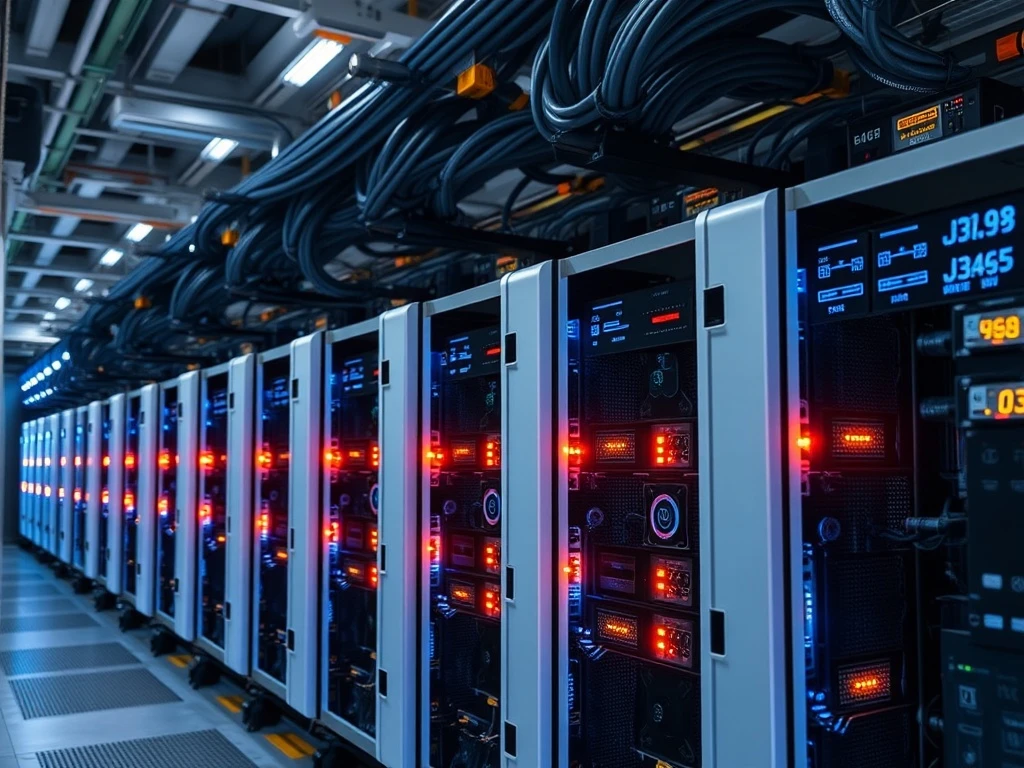
In a groundbreaking development for cryptocurrency mining, Auradine has officially unveiled its Teraflux mining series, achieving unprecedented efficiency metrics of under 10 joules per terahash while delivering a remarkable 50% power boost. This announcement, made in Silicon Valley on March 15, 2025, represents the most significant advancement in Bitcoin mining hardware efficiency since the transition from 16nm to 7nm chip technology. The Teraflux miners promise to reshape mining economics globally, potentially altering profitability calculations for operations of all sizes.
Auradine Teraflux Miners Redefine Mining Efficiency Standards
Auradine’s Teraflux series achieves what industry analysts previously considered impossible before 2026. The sub-10 joules per terahash efficiency represents a 35% improvement over the previous generation of leading miners. For context, the Bitcoin network currently consumes approximately 150 terawatt-hours annually. Consequently, widespread adoption of this technology could reduce global Bitcoin mining energy consumption by an estimated 40-50 terawatt-hours per year. This reduction equals the annual electricity consumption of countries like Portugal or Hungary.
The 50% power boost accompanies this efficiency breakthrough. Each Teraflux unit now delivers substantially higher hash rates without increasing power draw proportionally. Mining operations can therefore achieve greater computational output while maintaining or reducing their energy budgets. This development arrives at a critical juncture for the cryptocurrency mining industry, which faces increasing scrutiny regarding environmental impact and energy consumption.
Technical Specifications and Competitive Landscape Analysis
Auradine’s engineering team utilized several innovations to achieve these results. First, they implemented a proprietary 5nm chip architecture with enhanced thermal management. Second, they developed advanced power delivery systems that minimize conversion losses. Third, they incorporated machine learning algorithms for dynamic power optimization based on real-time mining conditions. These technical advancements collectively enable the sub-10 joules per terahash milestone.
Comparative Performance Analysis
The following table illustrates how Auradine’s Teraflux miners compare to current market leaders:
| Miner Model | Efficiency (J/TH) | Hash Rate (TH/s) | Power Consumption (W) |
|---|---|---|---|
| Auradine Teraflux T3 | 9.8 | 320 | 3,136 |
| Bitmain Antminer S21 | 15.0 | 200 | 3,000 |
| MicroBT Whatsminer M60 | 14.5 | 280 | 4,060 |
| Canaan Avalon A13 | 16.2 | 180 | 2,916 |
As demonstrated, the Teraflux T3 delivers 60% more hash rate than the Antminer S21 while consuming only marginally more power. This efficiency translates directly to improved profitability, especially in regions with higher electricity costs. Mining operations in areas like Germany or California, where industrial electricity rates exceed $0.15 per kWh, could see profitability improvements exceeding 40% with these new units.
Industry Impact and Mining Economics Transformation
The introduction of sub-10 joules per terahash technology will fundamentally alter Bitcoin mining economics. First, it extends the viable lifespan of existing mining facilities by improving their efficiency without requiring complete infrastructure overhauls. Second, it potentially lowers the Bitcoin production cost, which could influence market dynamics during periods of price volatility. Third, it enables mining operations in regions previously considered economically unviable due to higher electricity costs.
Industry experts have responded positively to this announcement. Dr. Elena Rodriguez, Director of Cryptocurrency Research at Stanford University, noted, “This efficiency breakthrough represents the most significant hardware advancement since ASIC miners replaced GPU mining. The implications extend beyond mere profitability—they address legitimate environmental concerns while strengthening network security through more distributed mining participation.”
Several key impacts will likely emerge:
- Renewed Mining Profitability: Operations facing marginal profitability may become sustainable again
- Reduced Environmental Footprint: Lower energy consumption per hash supports sustainability goals
- Increased Network Security: More efficient mining could lead to greater hash rate distribution
- Hardware Market Disruption: Competitors must accelerate their own efficiency developments
Manufacturing and Availability Timeline
Auradine plans to begin shipping Teraflux miners in Q3 2025, with initial production capacity allocated to pre-orders placed during the first quarter. The company has secured manufacturing partnerships with leading semiconductor foundries to ensure adequate supply. Pricing details remain confidential, but industry sources suggest the Teraflux T3 will carry a premium of 15-20% over current-generation miners, justified by the substantial efficiency improvements and rapid return on investment.
The company has also announced a trade-in program for older mining equipment, allowing operations to upgrade their fleets while responsibly recycling outdated hardware. This program addresses growing concerns about electronic waste from cryptocurrency mining, further enhancing Auradine’s environmental credentials. The recycling initiative partners with certified e-waste processors who recover valuable materials like silicon, copper, and rare earth elements.
Geographic Distribution Strategy
Auradine will prioritize shipments to regions with renewable energy sources, aligning with their corporate sustainability initiatives. This strategy supports the growing trend of “green mining” operations that utilize solar, wind, hydroelectric, or geothermal power. By deploying the most efficient hardware in renewable energy regions, the Bitcoin network can further reduce its carbon footprint while maintaining robust security through proof-of-work consensus.
Regulatory and Environmental Considerations
The timing of this efficiency breakthrough coincides with increasing regulatory attention on cryptocurrency mining’s energy consumption. Several jurisdictions, including the European Union and certain U.S. states, have proposed or implemented regulations targeting mining operations based on their energy intensity. Auradine’s technology provides a practical solution for miners facing such regulatory pressures, potentially allowing continued operation in regions that might otherwise restrict mining activities.
Environmental organizations have cautiously welcomed the development. The Crypto Climate Accord, an industry-led initiative to achieve net-zero emissions from cryptocurrency mining by 2040, has acknowledged that efficiency improvements like Auradine’s represent crucial steps toward their goals. However, they emphasize that efficiency alone cannot address all environmental concerns, noting that absolute energy consumption may still increase if more miners join the network or if hash rates continue rising.
Conclusion
Auradine’s Teraflux miners achieving under 10 joules per terahash with a 50% power boost represents a watershed moment for cryptocurrency mining. This technological breakthrough addresses multiple industry challenges simultaneously—improving profitability, reducing environmental impact, and extending operational viability. As these efficient Auradine Teraflux miners enter production in 2025, they will likely accelerate the ongoing transformation of Bitcoin mining toward greater sustainability and economic resilience. The sub-10 joules per terahash milestone sets a new benchmark that will drive innovation across the mining hardware sector for years to come.
FAQs
Q1: What does “under 10 joules per terahash” mean for Bitcoin miners?
This efficiency metric means the miner consumes less than 10 joules of energy to perform one terahash of computational work. For miners, this translates to significantly lower electricity costs per Bitcoin mined, improving profitability especially in regions with high energy prices.
Q2: How does the 50% power boost affect mining operations?
The power boost allows miners to achieve higher hash rates without proportionally increasing energy consumption. Operations can either increase their total computational power within existing energy budgets or maintain current hash rates while reducing electricity consumption by approximately one-third.
Q3: When will Auradine Teraflux miners be available for purchase?
Auradine plans to begin shipping Teraflux miners in the third quarter of 2025. Pre-orders are currently being accepted through authorized distributors, with priority given to existing customers and operations in renewable energy regions.
Q4: How does this efficiency compare to previous mining hardware generations?
The sub-10 joules per terahash efficiency represents approximately a 35% improvement over the previous most efficient miners, which typically operated at 14-16 joules per terahash. This is the largest single-generation efficiency improvement since ASIC miners replaced GPU mining.
Q5: Will these efficiency improvements affect Bitcoin’s network difficulty?
Yes, as more efficient miners like the Auradine Teraflux enter the network, the overall hash rate will likely increase, causing the network difficulty to adjust upward. This maintains Bitcoin’s approximately 10-minute block time while making the network more secure against potential attacks.
Related News
- Exodus Q3 Revenue Soars 51% to $30.3M, Showcasing Remarkable Crypto Wallet Profitability
- Bitcoin Whale Transaction: Stunning $246 Million Transfer from Kraken Sparks Market Analysis
- Bitcoin ETP Breakthrough: 21Shares’ Revolutionary BOLD Product Launches on London Stock Exchange with Stellar 122.5% Returns