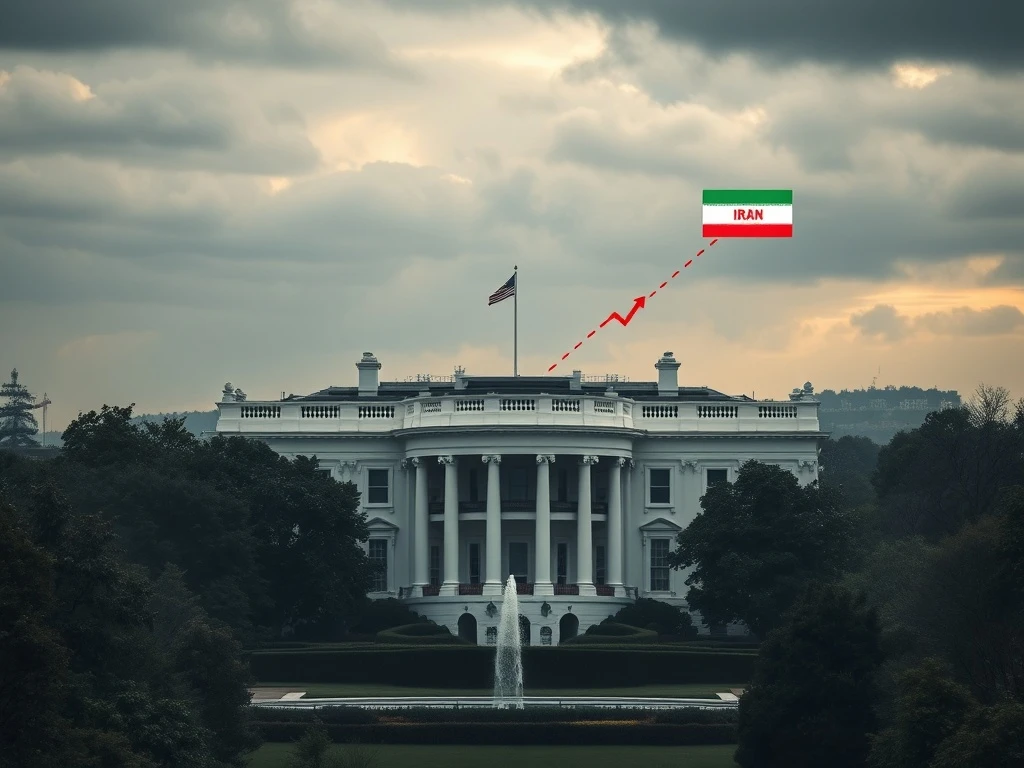
WASHINGTON, D.C., January 15, 2025 – In a bold move reshaping international economic relations, President Donald Trump has issued a sweeping executive order imposing a 25% tariff on all nations engaging in trade with Iran. This decisive action, first reported by Walter Bloomberg, represents a significant escalation in the United States’ economic pressure campaign against Tehran. Consequently, global markets are reacting to this unprecedented tariff policy that targets third-party countries rather than Iran directly.
Trump’s Iran Tariff Executive Order: Key Provisions and Immediate Effects
The executive order establishes comprehensive trade restrictions against countries maintaining commercial relationships with Iran. Specifically, the 25% tariff applies to all goods imported from nations that continue trading with Tehran despite existing sanctions. Furthermore, the policy includes several critical components that distinguish it from previous economic measures.
First, the tariff mechanism operates through a certification system. Countries must demonstrate they have ceased all prohibited trade with Iran to avoid the additional duties. Second, the order grants the Treasury Department authority to identify violators and implement tariff adjustments. Third, the policy includes a 60-day grace period for nations to adjust their trade relationships accordingly.
Immediate market reactions have been significant. Oil prices surged 8% following the announcement, reflecting concerns about potential supply disruptions. Additionally, shipping companies have begun rerouting vessels to avoid complications. Meanwhile, diplomatic channels are experiencing unprecedented activity as trading partners seek clarification on implementation details.
Historical Context of US-Iran Economic Relations
This executive order represents the latest development in a complex economic relationship spanning decades. Previously, the Trump administration withdrew from the Joint Comprehensive Plan of Action (JCPOA) in 2018. Subsequently, the administration reimposed comprehensive sanctions against Iran. However, the current approach marks a strategic shift by targeting third countries rather than focusing exclusively on Iranian entities.
Several key events preceded this decision. In 2024, intelligence reports indicated increased Iranian trade with several US allies. Additionally, Tehran expanded its nuclear program beyond JCPOA limits. These developments prompted the administration to consider more aggressive economic measures. Therefore, this tariff policy emerges from escalating tensions rather than isolated considerations.
Global Economic Impact and Market Reactions
The 25% tariff on Iran trade partners creates immediate economic consequences across multiple sectors. Major trading nations face difficult decisions about maintaining commercial relationships with Tehran. Moreover, global supply chains must adapt to these new economic realities. Several specific impacts are already materializing in international markets.
Energy markets are experiencing particular volatility. Iran exports approximately 1.5 million barrels of oil daily to various international partners. Consequently, alternative suppliers are adjusting production to meet potential demand shifts. Simultaneously, shipping costs are increasing as companies navigate complex compliance requirements. Insurance premiums for Middle Eastern trade routes have risen by approximately 15% since the announcement.
| Region | Primary Trade with Iran | Estimated Tariff Impact |
|---|---|---|
| European Union | Machinery, Industrial Equipment | $4.2 billion annually |
| East Asia | Crude Oil, Petrochemicals | $8.7 billion annually |
| South Asia | Agricultural Products, Textiles | $1.8 billion annually |
| Middle East | Food Products, Consumer Goods | $3.1 billion annually |
Financial institutions are implementing new compliance protocols. Banking systems must identify transactions connected to Iranian trade. Additionally, currency markets show increased volatility in regional currencies. The Iranian rial has depreciated 12% against major currencies since the announcement. Meanwhile, gold prices have increased as investors seek safe-haven assets.
Diplomatic Responses and International Relations
International reactions to the tariff policy reveal significant diplomatic divisions. Several traditional US allies have expressed concerns about the unilateral nature of the decision. The European Union has announced it will review potential countermeasures. Similarly, China has criticized the policy as economic coercion. However, some regional partners have welcomed the increased pressure on Iran.
Diplomatic efforts are intensifying behind the scenes. The United Nations Security Council has scheduled emergency consultations. Additionally, the International Monetary Fund is assessing potential economic disruptions. Multinational corporations are lobbying their respective governments for clarity and transition periods. Consequently, diplomatic channels are experiencing unprecedented activity across multiple international organizations.
Legal Framework and Implementation Mechanisms
The executive order operates within existing legal authorities while expanding their application. Primarily, it utilizes provisions of the International Emergency Economic Powers Act (IEEPA). This legislation grants the president broad authority during declared national emergencies. Additionally, the order references the National Emergencies Act for its procedural foundation.
Implementation will occur through several government agencies. The Treasury Department’s Office of Foreign Assets Control (OFAC) will oversee compliance monitoring. Meanwhile, Customs and Border Protection will enforce tariff collections at ports of entry. The Department of Commerce will provide guidance to affected industries. Consequently, businesses must navigate multiple regulatory frameworks simultaneously.
Legal challenges are anticipated from various stakeholders. Constitutional questions about presidential trade authority may reach federal courts. Additionally, international trade organizations might review the policy’s compatibility with existing agreements. Previous similar actions have faced lengthy legal proceedings. Therefore, the ultimate implementation may evolve through judicial and administrative processes.
Expert Analysis on Economic and Strategic Implications
Economic analysts highlight several potential consequences of this tariff policy. Dr. Evelyn Chen, senior fellow at the Peterson Institute for International Economics, notes the precedent-setting nature of the approach. “This represents a novel application of secondary sanctions,” Chen explains. “By imposing tariffs rather than direct prohibitions, the administration creates different economic incentives for trading partners.”
Strategic experts emphasize the geopolitical dimensions. General James McAllister (Ret.), former CENTCOM commander, observes the military implications. “Economic pressure complements strategic objectives in the region,” McAllister states. “However, the policy’s effectiveness depends on international cooperation that may not materialize.” Regional specialists also note potential unintended consequences, including increased Iranian reliance on non-traditional partners.
Sector-Specific Impacts and Business Considerations
Different economic sectors face unique challenges under the new tariff regime. Energy companies must reassess supply chains and contractual obligations. Manufacturing firms using Iranian components need alternative sourcing strategies. Agricultural exporters to Iran must identify new markets for their products. Each sector requires specific adaptations to the changing trade landscape.
Key considerations for affected businesses include:
- Supply chain diversification – Identifying alternative suppliers and transportation routes
- Contract review – Assessing force majeure provisions and renegotiation options
- Compliance systems – Implementing enhanced due diligence and monitoring procedures
- Market diversification – Developing strategies to replace Iranian market access
- Financial planning – Accounting for potential tariff costs and currency fluctuations
Small and medium enterprises face particular challenges. These businesses often lack resources for rapid international adjustments. Consequently, industry associations are developing guidance materials. Government agencies are establishing help desks for affected companies. Meanwhile, legal firms are experiencing increased demand for international trade expertise.
Historical Precedents and Comparative Analysis
This tariff approach differs from previous economic measures against Iran. Historically, US policy utilized direct sanctions against Iranian entities. The current strategy represents an evolution toward indirect pressure mechanisms. Comparative analysis with other international situations reveals both similarities and distinctions.
The policy shares characteristics with previous US actions against Cuba. Both approaches employ economic pressure to influence foreign behavior. However, the tariff mechanism represents a more flexible tool than comprehensive embargoes. Similarly, the policy differs from recent trade actions against China. Those measures focused on bilateral trade imbalances rather than third-country behavior modification.
International precedents also provide relevant context. The European Union’s approach to Russian sanctions utilized different methodologies. Those measures focused on sectoral restrictions rather than tariff mechanisms. United Nations sanctions against North Korea employed multilateral frameworks. Therefore, the current policy represents a distinctive combination of unilateral action and indirect pressure.
Regional Dynamics and Middle Eastern Implications
The tariff policy significantly affects Middle Eastern geopolitical dynamics. Regional powers are reassessing their relationships with both Iran and the United States. Traditional allies face difficult balancing acts between economic interests and strategic partnerships. Meanwhile, Iran’s regional proxies may respond to increased economic pressure through alternative means.
Several specific regional developments merit attention. Gulf Cooperation Council members are coordinating their responses to the new policy. Iraq, as a major trading partner with both Iran and the United States, faces particular challenges. Turkey must balance its NATO commitments with substantial economic ties to Iran. Israel has welcomed the increased pressure while monitoring potential escalation risks.
Energy markets in the region are experiencing immediate effects. Alternative suppliers are increasing production to compensate for potential Iranian reductions. Shipping routes through the Strait of Hormuz require enhanced security considerations. Regional stock markets have shown mixed reactions reflecting different national exposures. Consequently, economic planners across the Middle East are developing contingency strategies.
Long-Term Strategic Considerations and Future Scenarios
Policy analysts are developing multiple scenarios for long-term outcomes. The effectiveness of the tariff approach depends on several variables. International compliance levels will determine economic pressure on Iran. Iranian domestic responses will influence political stability in Tehran. Additionally, global economic conditions may affect the policy’s sustainability.
Potential future developments include:
- Negotiation scenarios – Conditions under which Iran might return to diplomatic discussions
- Enforcement evolution – Possible adjustments to implementation mechanisms
- International coordination – Potential for multilateral support or opposition development
- Economic adaptation – Iranian strategies to mitigate pressure effects
- Regional escalation – Possibility of non-economic responses from Iran or proxies
Historical patterns suggest economic pressure alone rarely achieves comprehensive policy objectives. Therefore, most analysts anticipate complementary diplomatic initiatives. The administration has indicated openness to negotiations under certain conditions. However, substantial differences remain between US demands and Iranian positions. Consequently, the tariff policy represents one component of a broader strategic approach.
Conclusion
President Trump’s executive order imposing a 25% tariff on countries trading with Iran represents a significant evolution in US foreign economic policy. This approach utilizes indirect pressure mechanisms to influence Iranian behavior through third-country economic relationships. Immediate effects include market volatility, diplomatic tensions, and business uncertainty. Long-term implications will depend on international compliance, Iranian responses, and potential diplomatic developments. The Trump Iran tariff policy will likely shape global trade patterns and Middle Eastern dynamics for the foreseeable future. Consequently, businesses, governments, and international organizations must adapt to this new economic reality while monitoring potential policy evolutions.
FAQs
Q1: What specific authority allows President Trump to impose these tariffs?
The executive order primarily utilizes the International Emergency Economic Powers Act (IEEPA), which grants the president broad authority during declared national emergencies to regulate international economic transactions.
Q2: How will the US government determine which countries are subject to the 25% tariff?
The Treasury Department, through OFAC, will establish certification criteria and monitoring mechanisms to identify countries engaging in prohibited trade with Iran, with determinations based on verifiable trade data and intelligence assessments.
Q3: Are any countries exempt from these new tariff requirements?
The executive order does not specify country exemptions but includes provisions for case-by-case waivers based on national security considerations or substantial progress toward ceasing Iranian trade.
Q4: How does this tariff policy differ from existing sanctions against Iran?
Unlike traditional sanctions that directly target Iranian entities, this approach imposes costs on third countries that continue trading with Iran, creating different economic incentives and enforcement mechanisms.
Q5: What is the expected timeline for full implementation of these tariffs?
The order includes a 60-day grace period for countries to adjust their trade relationships, with full implementation expected by mid-March 2025, though legal challenges and diplomatic negotiations may affect this timeline.
Related News
- CLARITY Act Unveiled: Senate Banking Committee Releases Landmark 278-Page Crypto Regulation Framework
- Coinbase Texas Relocation: Strategic Move Unlocks Economic Freedom for Crypto Giant
- Binance: Crypto’s Remarkable Evolution as Institutions Secure Strategic Long-Term Positions