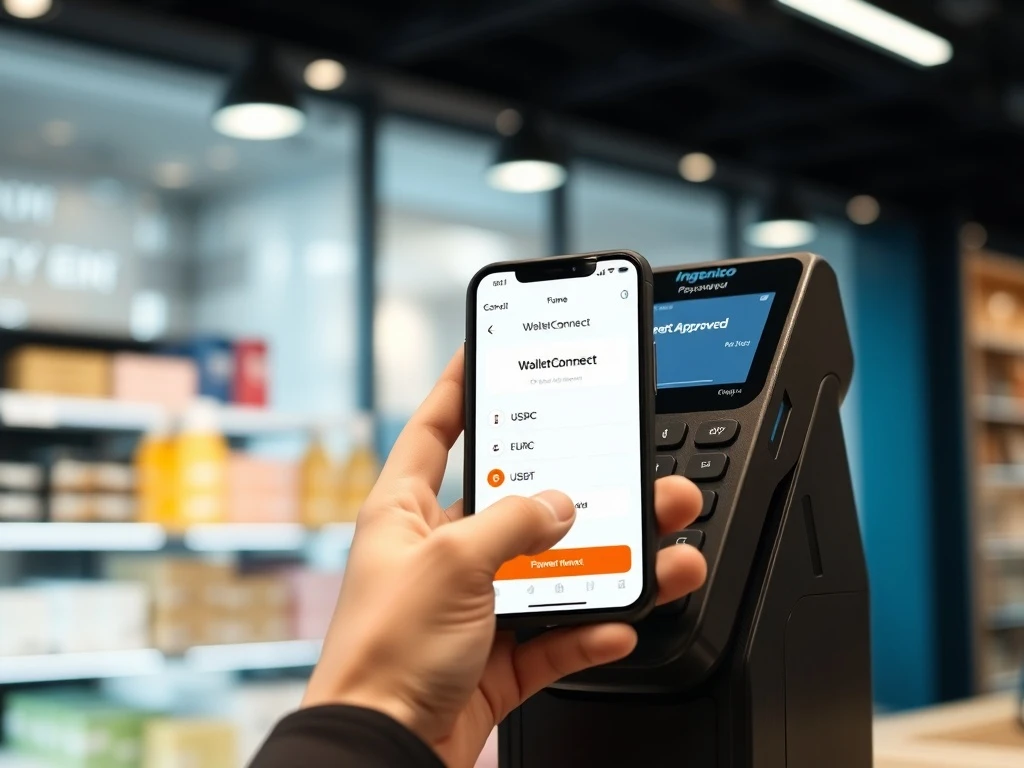
In a landmark move for digital asset adoption, global payment solutions leader Ingenico has announced a transformative partnership with WalletConnect Pay, fundamentally reshaping how consumers interact with physical commerce. This strategic collaboration, confirmed in early 2025, enables direct in-store payments using major stablecoins like USDC, EURC, and USDT at any retail location equipped with Ingenico’s extensive network of payment terminals. Consequently, this integration bridges a critical gap between decentralized finance and mainstream retail, offering consumers unprecedented payment flexibility while providing merchants with access to new customer bases and settlement efficiencies.
Ingenico and WalletConnect Pay Forge New Payment Frontier
The partnership represents a significant convergence of traditional finance infrastructure and Web3 technology. Ingenico, a French multinational with decades of experience in point-of-sale systems, processes billions of transactions annually across millions of merchant locations worldwide. Meanwhile, WalletConnect has established itself as the essential interoperability protocol for connecting decentralized applications (dApps) with crypto wallets. Their WalletConnect Pay service specifically facilitates secure, user-friendly cryptocurrency transactions. By integrating these systems, the partnership creates a seamless bridge. Users can now initiate payments from supported wallets—including popular options like MetaMask and Trust Wallet—by simply scanning a QR code displayed on an Ingenico terminal. The transaction then settles almost instantly using the selected stablecoin.
This development arrives amid accelerating institutional adoption of digital assets. Major financial entities have increasingly embraced stablecoins for their price stability and blockchain efficiency. For instance, the European Central Bank’s digital euro pilot and ongoing regulatory frameworks like the EU’s Markets in Crypto-Assets (MiCA) regulation have created a more predictable environment. Therefore, Ingenico’s decision signals a calculated, evidence-based move into an asset class gaining legitimate traction. The company’s vast merchant network provides the perfect testing ground for real-world, high-volume crypto payment use cases.
The Technical Architecture Behind the Integration
The integration leverages WalletConnect’s established protocol to create a secure communication channel between the user’s mobile wallet and the merchant’s Ingenico terminal. During checkout, the terminal generates a dynamic QR code containing the payment request. After scanning with their wallet app, the user reviews the amount and selects their preferred stablecoin for payment. Subsequently, the wallet constructs and signs the transaction, broadcasting it to the respective blockchain network—be it Ethereum, Polygon, or another supported chain. The Ingenico system, connected to a node or oracle service, confirms the on-chain settlement within seconds before approving the sale. This process eliminates the need for merchants to directly handle private keys or manage crypto volatility, as settlements occur in stable-value digital currencies.
Stablecoins USDC, EURC, and USDT Take Center Stage
The initial rollout supports three leading stablecoins, each serving distinct geographic and use-case purposes. USDC (USD Coin), a fully-reserved dollar digital currency issued by Circle, is renowned for its transparency and regulatory compliance. EURC, also from Circle, provides a euro-denominated equivalent, crucial for European merchants seeking to avoid foreign exchange exposure. USDT (Tether) remains the most liquid and widely used stablecoin globally. Supporting this trio ensures broad coverage for both consumers and merchants. Importantly, these assets mitigate the price volatility typically associated with cryptocurrencies like Bitcoin or Ethereum, making them far more suitable for daily transactions.
Adoption drivers for merchants are compelling. Firstly, transaction settlement can be faster than traditional card networks, improving cash flow. Secondly, fees associated with blockchain transactions may undercut those of credit card interchange, especially for cross-border sales. Thirdly, it opens a store to the growing demographic of crypto-native consumers. For consumers, benefits include using their digital asset holdings directly for goods, enhanced privacy compared to card payments in some implementations, and the potential for integrated loyalty or token rewards within the wallet ecosystem.
- Reduced Settlement Risk: Blockchain confirmation provides near-instant proof of payment.
- Lower Cross-Border Cost: Stablecoins bypass traditional correspondent banking networks.
- Financial Inclusion: Provides payment access to unbanked populations with smartphone access.
- Programmability: Enables future integration with smart contracts for automated loyalty or warranties.
Impact on the Broader Payments and Retail Landscape
This partnership exerts pressure on other point-of-sale providers and payment processors to develop similar capabilities. Competitors like Verifone, PAX, and Clover now face a first-mover disadvantage in the crypto-POS space. Furthermore, it validates the utility of public blockchains for retail micropayments at scale. The move also influences consumer behavior, gradually normalizing the use of digital wallets for purposes beyond speculative investment. Retailers in sectors like electronics, luxury goods, and e-commerce—which already see higher crypto purchaser demographics—are likely early adopters.
Regulatory compliance remains a cornerstone of the rollout. Ingenico and WalletConnect have designed the system to align with financial regulations, including Anti-Money Laundering (AML) and Know Your Customer (KYC) requirements. Typically, these checks are handled at the wallet or exchange level where users onboard fiat currency. The transaction itself, being a peer-to-peer transfer of a digital asset, falls under existing frameworks for value transfer. Ongoing dialogue with regulators in key markets like the EU, UK, and parts of Asia has been a reported priority to ensure sustainable expansion.
Expert Analysis on Market Trajectory
Industry analysts view this partnership as a tipping point. “The integration of a stalwart like Ingenico with WalletConnect’s decentralized protocol is not an experiment; it’s a commercialization strategy,” notes a fintech research director at a major advisory firm. “It provides the necessary trust and scale infrastructure that has been missing for crypto payments to move beyond niche online stores.” Evidence from pilot programs in select European cities in late 2024 showed increased average transaction values when customers paid with crypto, suggesting use for higher-value purchases. The roadmap reportedly includes support for additional blockchain networks and a direct fiat off-ramp for merchants, allowing them to receive settlement in their local currency automatically if desired.
Conclusion
The Ingenico and WalletConnect Pay partnership marks a definitive step toward the maturation of cryptocurrency as a practical payment tool. By enabling stablecoin payments at physical points of sale, it solves key usability challenges that have long hindered crypto’s retail adoption. This collaboration leverages Ingenico’s unparalleled merchant distribution and WalletConnect’s robust connectivity protocol to create a seamless, secure, and efficient payment alternative. Ultimately, it empowers consumers with more choice and provides merchants with access to faster settlements and new customer segments. As regulatory clarity improves and consumer familiarity grows, this integration could very well become a standard payment option, fundamentally reshaping the transaction landscape for years to come.
FAQs
Q1: Which wallets can I use to pay with this new system?
You can use any cryptocurrency wallet that supports the WalletConnect Pay protocol. This prominently includes MetaMask, Trust Wallet, Rainbow, and Coinbase Wallet. The wallet must hold a balance of one of the supported stablecoins: USDC, EURC, or USDT.
Q2: Do merchants receive cryptocurrency or traditional fiat money?
The initial system settles payments to the merchant in the chosen stablecoin. However, Ingenico is expected to offer integrated services where merchants can automatically convert stablecoin receipts to their local fiat currency through partnered exchanges, minimizing volatility exposure.
Q3: How does the transaction fee compare to using a credit card?
Fees will vary based on blockchain network congestion and the specific wallet used. Generally, stablecoin transaction fees on networks like Polygon are fractions of a cent, potentially lower than typical credit card interchange fees (1.5%-3.5%). The merchant may choose to absorb or pass on these network fees.
Q4: Is this payment method available worldwide?
Availability will roll out regionally, starting with jurisdictions where regulations are clearest for crypto payments, such as parts of the European Union, Switzerland, Singapore, and certain U.S. states. Expansion depends on local regulatory approval and partner bank support.
Q5: What happens if the blockchain network is slow or congested?
The payment terminal waits for a confirmed on-chain transaction. For user experience, the system is optimized for networks with fast block times and low fees, like Polygon or Solana versions of these stablecoins, to ensure confirmation within seconds. The terminal will display payment status in real-time.
Related News
- Ethereum Wallet Creation Shatters Records with 327,000 Daily Surge, Fueled by Game-Changing Upgrade
- Upexi Raises $36M in Strategic Deal to Expand SOL Holdings, Signaling Major Corporate Crypto Confidence
- Solana Prediction Market Platform Fors Launches Transformative Beta Service for Global Forecasting