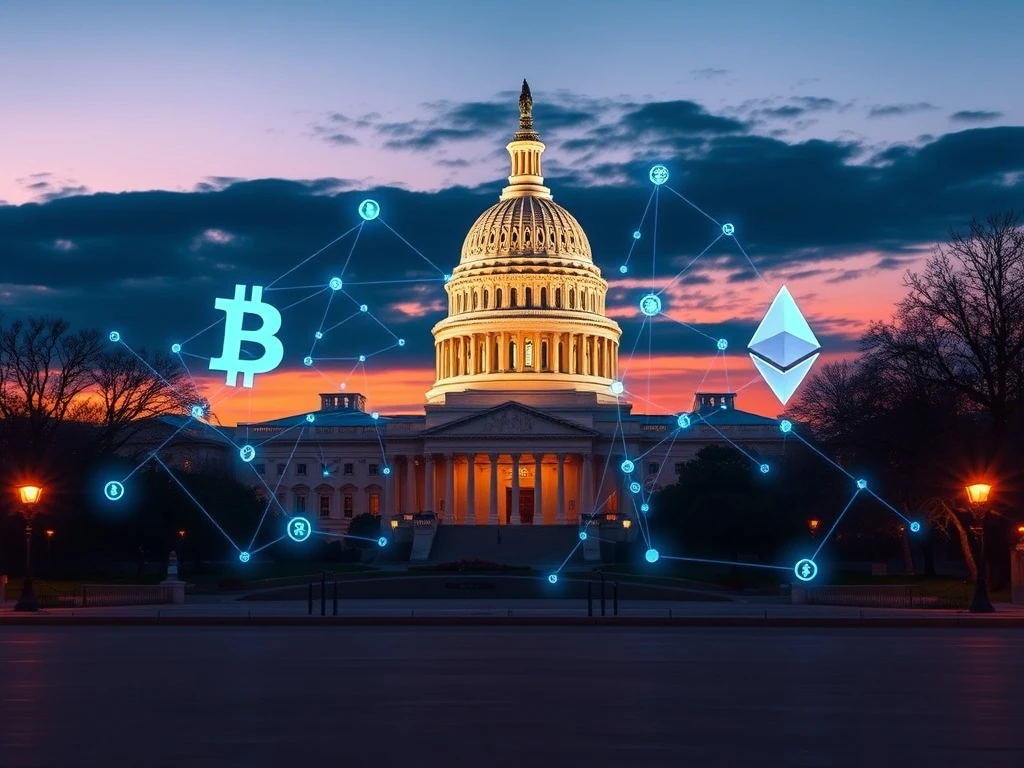
WASHINGTON, D.C., March 2025 – A significant crypto policy shift is gaining momentum in legislative chambers as bipartisan lawmakers introduce groundbreaking proposals to shield non-custodial blockchain builders from regulatory uncertainty that has stifled innovation for years. This legislative movement represents a pivotal moment for the cryptocurrency industry, potentially reshaping how decentralized technologies develop within the United States regulatory framework. The proposed measures specifically address the legal status of developers who create open-source software without controlling user assets, a distinction that could determine the future trajectory of blockchain innovation globally.
Crypto Policy Shift Addresses Regulatory Gray Areas
The proposed legislation, officially titled the “Blockchain Developer Clarification Act of 2025,” marks a substantial crypto policy shift from previous regulatory approaches. For context, regulatory agencies have historically struggled to categorize non-custodial software within existing financial frameworks. Consequently, developers faced potential liability for how others might use their open-source code. This uncertainty created what industry experts call a “chilling effect” on innovation. The new bill explicitly states that individuals who develop, publish, or distribute non-custodial blockchain software shall not be treated as financial service providers or money transmitters. This clarification provides much-needed legal certainty for developers working on decentralized protocols.
Transitioning from regulatory ambiguity to legislative clarity represents a monumental shift. Previously, the Securities and Exchange Commission and the Commodity Futures Trading Commission applied traditional financial regulations to blockchain technologies with varying interpretations. Meanwhile, the Treasury Department’s Financial Crimes Enforcement Network focused on anti-money laundering compliance. These overlapping jurisdictions created confusion. The new legislation establishes clear boundaries, distinguishing between custodial services that hold customer assets and non-custodial software that merely provides tools. This distinction aligns with technological reality rather than forcing blockchain systems into outdated regulatory categories.
Historical Context and Legislative Timeline
The path to this crypto policy shift began with the 2022 Infrastructure Investment and Jobs Act, which contained controversial cryptocurrency reporting requirements. Following that, multiple court cases challenged regulatory overreach, particularly the SEC’s application of the Howey Test to software developers. In 2023, the House Financial Services Committee advanced the Digital Asset Market Structure Discussion Draft. Subsequently, 2024 saw increased bipartisan cooperation on crypto legislation. The current 2025 proposals build directly on these foundations, incorporating lessons from international approaches in the European Union’s MiCA framework and Singapore’s Payment Services Act.
Understanding Non-Custodial Blockchain Technology
Non-custodial blockchain systems represent a fundamental innovation in digital infrastructure. Unlike traditional financial services where institutions control customer assets, non-custodial protocols enable users to maintain direct control of their digital assets through cryptographic keys. This technological approach underpins major blockchain networks including Bitcoin, Ethereum, and numerous decentralized finance applications. The proposed legislation specifically defines non-custodial blockchain software as systems where developers cannot unilaterally execute transactions, reverse transactions, or prevent access to user funds. This technical distinction forms the legal foundation for the new protections.
Several key characteristics differentiate non-custodial systems from their custodial counterparts:
- User Control: Individuals maintain exclusive control of private keys
- Developer Limitations: Creators cannot access or freeze user funds
- Transparency: All transactions are publicly verifiable on distributed ledgers
- Permissionless Innovation: Anyone can build upon open-source protocols
- Decentralized Governance: No single entity controls network operations
These technical attributes create unique regulatory challenges that traditional financial frameworks cannot adequately address. The legislation acknowledges this technological reality by creating tailored legal categories rather than forcing blockchain systems into existing regulatory boxes. This approach represents a more sophisticated understanding of decentralized technologies than previous regulatory attempts.
Impact on Blockchain Innovation and Development
The proposed crypto policy shift carries significant implications for technological advancement within the United States. Industry analysts predict several immediate effects once the legislation becomes law. First, legal certainty will likely attract increased venture capital investment in non-custodial blockchain projects. Second, academic institutions may expand blockchain research programs with clearer regulatory guidelines. Third, existing blockchain developers may accelerate protocol development without fear of unexpected regulatory actions. Finally, the United States could regain competitive positioning in blockchain innovation relative to jurisdictions with clearer regulatory frameworks.
Transitioning to a more supportive regulatory environment could yield substantial economic benefits. According to Blockchain Association research, the cryptocurrency industry already supports over 400,000 American jobs. Furthermore, blockchain development firms have contributed approximately $7 billion in economic activity annually. With regulatory clarity, these numbers could increase significantly as developers focus on innovation rather than compliance uncertainty. The legislation specifically protects American innovation while maintaining appropriate oversight of custodial services that present greater consumer protection concerns.
Expert Perspectives on the Legislative Approach
Industry experts have largely praised the legislative approach while noting important considerations. Dr. Sarah Chen, Director of the Stanford Blockchain Research Initiative, states, “This legislation represents a sophisticated understanding of blockchain architecture. By distinguishing between custodial and non-custodial systems, lawmakers acknowledge technological reality rather than applying one-size-fits-all regulations.” Meanwhile, Michael Rodriguez, General Counsel for the DeFi Education Fund, notes, “The proposed protections align with First Amendment principles regarding code as speech while addressing legitimate regulatory concerns about financial services.” These expert perspectives highlight the balanced approach embodied in the legislation.
Comparative Analysis with International Frameworks
The United States crypto policy shift occurs within a global context of evolving blockchain regulation. Comparing approaches reveals distinct philosophical differences. The European Union’s Markets in Crypto-Assets regulation takes a comprehensive approach with uniform rules across member states. Conversely, Singapore’s Payment Services Act employs an activity-based licensing framework. Meanwhile, Switzerland employs a principle-based approach through its Distributed Ledger Technology Act. The American legislation differs by specifically protecting non-custodial innovation while maintaining stricter oversight of custodial services. This bifurcated approach recognizes that different technological architectures warrant different regulatory treatments.
The following table illustrates key differences in international regulatory approaches:
| Jurisdiction | Regulatory Framework | Approach to Non-Custodial Systems | Implementation Status |
|---|---|---|---|
| United States (Proposed) | Blockchain Developer Clarification Act | Explicit protections for developers | Legislative proposal |
| European Union | Markets in Crypto-Assets (MiCA) | Comprehensive rules with some exemptions | Fully implemented 2024 |
| Singapore | Payment Services Act | Activity-based licensing | Operational since 2020 |
| Switzerland | DLT Act | Principle-based regulation | Implemented 2021 |
This comparative analysis demonstrates that the American approach represents a distinct path rather than following international precedents. The focus on protecting non-custodial innovation while regulating custodial services creates a unique regulatory environment that could position the United States as a leader in decentralized technology development.
Consumer Protection Considerations
While protecting blockchain builders, the legislation maintains robust consumer protection mechanisms. The proposed crypto policy shift does not eliminate existing securities laws, anti-fraud provisions, or anti-money laundering requirements for custodial services. Instead, it creates a clearer distinction between regulated financial activities and software development. This approach allows regulators to focus enforcement resources on areas with greater consumer risk while reducing uncertainty for legitimate innovators. Consumer advocacy groups have expressed cautious support for this balanced approach, noting that clear rules benefit both developers and users by reducing regulatory ambiguity.
Transitioning to this new framework requires careful implementation. Regulatory agencies must develop specific guidelines for distinguishing between custodial and non-custodial systems. Additionally, enforcement priorities may shift toward fraudulent schemes rather than legitimate software development. The legislation includes provisions for regular congressional review to ensure the framework adapts to technological developments. This adaptive approach recognizes that blockchain technology continues evolving rapidly, requiring regulatory frameworks that can accommodate innovation while protecting consumers.
Conclusion
The proposed crypto policy shift represents a watershed moment for blockchain innovation in the United States. By providing clear protections for non-custodial blockchain builders, lawmakers address longstanding regulatory uncertainty that has hindered technological advancement. This legislative approach balances innovation with consumer protection, distinguishing between software development and financial services appropriately. As the legislation progresses through congressional committees, its potential impact extends beyond immediate legal clarifications to long-term technological leadership. The crypto policy shift could ultimately determine whether the United States leads or follows in the next generation of decentralized technologies, making this legislative effort crucial for both the blockchain industry and broader technological innovation.
FAQs
Q1: What exactly does “non-custodial blockchain” mean?
A non-custodial blockchain system allows users to maintain direct control of their digital assets through private cryptographic keys, unlike custodial services where a third party controls assets on users’ behalf.
Q2: How will this legislation affect existing cryptocurrency regulations?
The legislation clarifies rather than replaces existing regulations, specifically distinguishing non-custodial software development from regulated financial services while maintaining consumer protections for custodial activities.
Q3: What prompted lawmakers to propose these protections now?
Increasing regulatory uncertainty for blockchain developers, multiple court cases challenging regulatory overreach, and competitive pressure from clearer international frameworks have all contributed to the legislative timing.
Q4: Does this mean blockchain developers have no regulatory responsibilities?
Developers of non-custodial software gain protection from being classified as financial service providers, but they remain subject to other applicable laws including those prohibiting fraud and intellectual property violations.
Q5: How might this legislation impact decentralized finance applications?
DeFi protocols built on non-custodial principles would operate with greater legal certainty, potentially accelerating innovation and adoption while maintaining appropriate distinctions from regulated financial services.
Q6: What happens next in the legislative process?
The bill will proceed through committee hearings, possible amendments, floor votes in both chambers, and potential reconciliation before reaching the President for signature, a process typically taking several months.
Related News
- Decentralized GPU Cloud Infrastructure Pioneers Revolutionary Partnership Between Salad.com and Golem Network
- MEVerse Launches Critical 5-Hour Maintenance to Resolve Urgent Mainnet Network Error
- Crypto Whale’s Shocking Pivot: Secures $14.5M Profit, Bets $35M Against BTC, ETH, and SOL