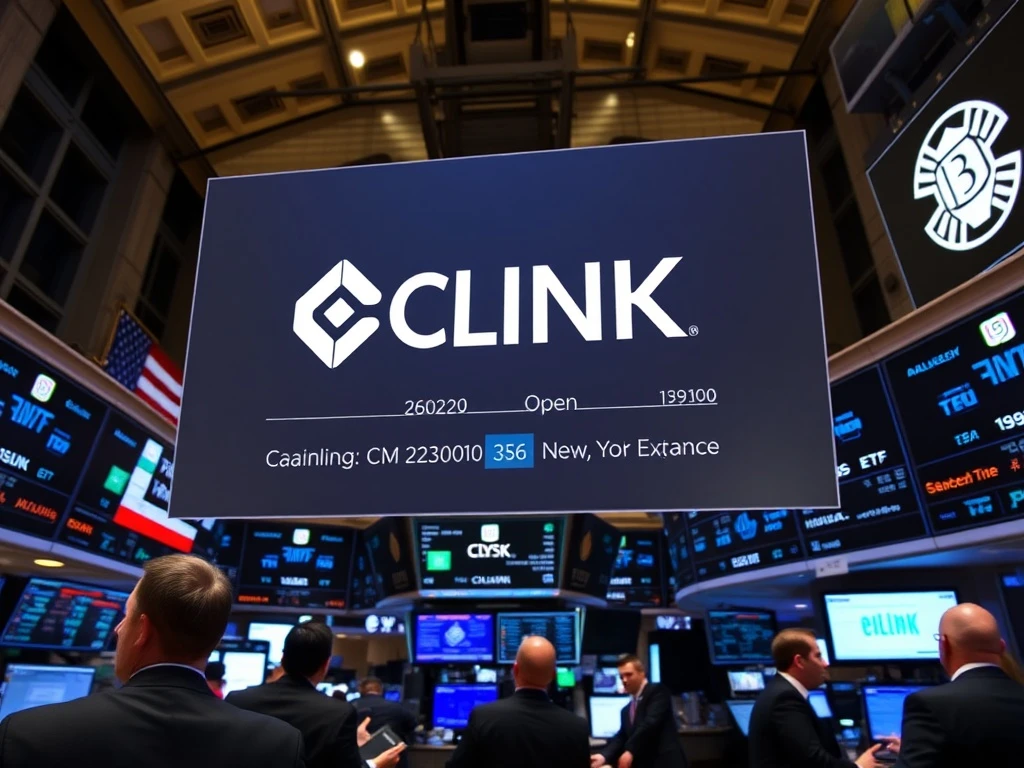
NEW YORK, January 14, 2025 – The cryptocurrency investment landscape achieves another historic milestone tomorrow as Bitwise Asset Management’s Chainlink spot exchange-traded fund, trading under the ticker CLNK, commences trading on NYSE Arca. This pivotal development follows the U.S. Securities and Exchange Commission’s formal approval on January 6, 2025, fundamentally expanding institutional and retail access to the blockchain oracle network’s native token through regulated traditional markets. Consequently, market observers anticipate significant capital inflows and enhanced liquidity for the decentralized finance infrastructure sector.
Bitwise Chainlink Spot ETF Receives SEC Green Light
The Securities and Exchange Commission delivered its decisive approval for the Bitwise Chainlink Trust on January 6, 2025. This regulatory clearance represents a critical validation for cryptocurrency-based financial products. Moreover, the approval follows an extensive review process that examined custody solutions, market surveillance, and investor protection mechanisms. The SEC’s decision specifically authorizes the listing and trading of shares on the NYSE Arca platform. Therefore, this establishes a new precedent for altcoin-focused investment vehicles seeking mainstream acceptance.
Bitwise, a leader in crypto index and asset management funds, will serve as the sponsor for the Chainlink ETF. The firm’s rigorous approach to compliance and transparency proved instrumental in securing regulatory approval. Additionally, the fund will provide direct exposure to LINK tokens held in secure, institutional-grade custody. This structure ensures that share prices closely track the underlying asset’s market value. Consequently, investors gain a straightforward, regulated pathway to Chainlink investment without managing private keys.
CLNK Trading Mechanics and Market Implications
Trading under the succinct ticker CLNK, the Bitwise Chainlink spot ETF begins its market journey on January 15. NYSE Arca, a premier electronic exchange, will host the fund’s daily transactions. This venue specializes in listing exchange-traded products and offers robust liquidity. Furthermore, the launch timing strategically follows the successful introduction of Bitcoin and Ethereum spot ETFs in previous years. Market analysts project that CLNK could attract substantial attention from both crypto-native investors and traditional finance portfolios seeking diversified blockchain exposure.
The ETF’s structure requires Bitwise to hold actual LINK tokens in reserve for every share issued. This ‘spot’ model differs significantly from futures-based products. Importantly, it creates direct market demand for the underlying cryptocurrency. Industry experts suggest this could positively influence LINK’s market dynamics. For instance, reduced circulating supply on exchanges may contribute to price stability. Simultaneously, the enhanced visibility could drive broader adoption of Chainlink’s oracle services across various industries.
Chainlink’s Oracle Network: The Foundation for CLNK
Chainlink operates as a decentralized oracle network that securely connects smart contracts with real-world data. This infrastructure enables blockchain applications to access external information reliably. The network’s native LINK token facilitates node operator payments and network security. Since its inception, Chainlink has established partnerships with numerous enterprises and blockchain projects. These collaborations demonstrate the protocol’s utility beyond speculative trading. Accordingly, the ETF investment thesis extends beyond token appreciation to encompass the growing adoption of decentralized oracle services.
Financial analysts highlight Chainlink’s established position within the Web3 ecosystem. The network supports critical functions across decentralized finance, insurance, gaming, and supply chain management. This real-world utility provides a fundamental value proposition distinct from purely monetary cryptocurrencies. Consequently, the Bitwise ETF offers investors exposure to both a digital asset and the underlying blockchain infrastructure sector. This dual characteristic may appeal to investors seeking thematic technology investments alongside crypto asset allocation.
Regulatory Evolution and Crypto Investment Products
The SEC’s approval of the Chainlink spot ETF signifies continued regulatory maturation for digital assets. Regulatory bodies have gradually developed frameworks for cryptocurrency investment vehicles over recent years. Initially, Bitcoin futures ETFs paved the way for more complex products. Subsequently, spot Bitcoin and Ethereum ETFs gained approval after extensive legal and operational scrutiny. Now, the acceptance of an altcoin-focused ETF indicates regulators’ growing comfort with diverse crypto assets meeting specific standards.
This regulatory progression reflects several important developments. First, improved custody solutions now satisfy stringent security requirements. Second, enhanced market surveillance tools monitor trading for manipulation. Third, established accounting standards provide clarity for financial reporting. These advancements collectively enable regulated products like CLNK to enter traditional markets. Importantly, each approval establishes legal precedents that may streamline future applications for similar altcoin ETFs.
Comparative Analysis: Crypto ETF Approval Timeline
The journey toward cryptocurrency ETF approval reveals a clear evolutionary pattern. The following table outlines key milestones in U.S. regulatory acceptance:
| Product Type | First Approval Date | Key Regulatory Hurdles |
|---|---|---|
| Bitcoin Futures ETF | October 2021 | CME surveillance, futures regulation |
| Spot Bitcoin ETF | January 2024 | Custody, market manipulation concerns |
| Spot Ethereum ETF | May 2024 | Proof-of-stake classification |
| Spot Chainlink ETF | January 2025 | Altcoin classification, oracle network utility |
This timeline demonstrates accelerating regulatory acceptance of diverse crypto assets. Each approval addressed unique challenges specific to the underlying technology. For Chainlink, regulators particularly examined the oracle network’s operational independence and token utility. The successful navigation of these concerns establishes a potential blueprint for other utility token-based ETFs. However, regulatory scrutiny will likely remain stringent for assets without clear functional purposes beyond speculation.
Investment Considerations for CLNK ETF Participants
Prospective investors should evaluate several key factors before participating in the Chainlink spot ETF. First, understand the fund’s expense ratio and fee structure compared to direct cryptocurrency ownership. Second, recognize the tax implications differ between ETF shares and direct crypto holdings. Third, consider the liquidity profile during initial trading periods. Fourth, assess how CLNK fits within broader portfolio allocation strategies. Financial advisors typically recommend thorough due diligence before adding any new asset class.
The ETF structure offers distinct advantages for certain investor profiles. Institutional investors benefit from regulated custody and familiar trading mechanisms. Retirement accounts gain compliant access through standard brokerage platforms. Additionally, investors avoiding technical complexities of wallet management find simplified exposure. However, direct LINK ownership remains preferable for those prioritizing decentralization and direct control. Ultimately, investment decisions should align with individual risk tolerance, technical comfort, and strategic objectives.
Market Response and Expert Projections
Financial markets have responded positively to the Chainlink ETF announcement. LINK token prices showed increased volatility following the SEC approval news. Meanwhile, traditional finance media has extensively covered the development. Several investment firms have already announced research coverage initiation for CLNK. Analyst projections vary regarding initial trading volumes and asset inflows. Nevertheless, consensus suggests steady growth as investor awareness increases.
Industry experts emphasize the symbolic importance of this approval. A blockchain oracle network achieving ETF status validates the utility token model. Furthermore, it demonstrates regulatory recognition of crypto assets with substantive real-world functions. This distinction may influence future classification decisions for other altcoins. Market observers will closely monitor CLNK’s performance as a bellwether for additional altcoin ETF applications. Successful trading could encourage other asset managers to pursue similar products.
Conclusion
The launch of Bitwise’s Chainlink spot ETF represents a transformative moment for cryptocurrency accessibility. CLNK’s trading commencement on January 15, 2025, provides regulated exposure to a foundational blockchain infrastructure asset. This development follows careful regulatory review and builds upon previous crypto ETF approvals. Consequently, investors now possess additional tools for portfolio diversification. The Chainlink ETF launch ultimately signifies another step toward integrating decentralized technologies with traditional financial systems. Market participants will undoubtedly monitor its progress as a indicator of broader altcoin acceptance.
FAQs
Q1: What is the Bitwise Chainlink spot ETF?
The Bitwise Chainlink spot ETF (ticker: CLNK) is an exchange-traded fund that holds actual LINK tokens. It provides investors with regulated exposure to Chainlink’s cryptocurrency through traditional stock exchanges without requiring direct digital asset ownership.
Q2: When does CLNK begin trading?
CLNK is scheduled to commence trading on NYSE Arca on January 15, 2025. The Securities and Exchange Commission granted final approval for the listing on January 6, 2025, following a comprehensive review process.
Q3: How does a spot ETF differ from a futures ETF?
A spot ETF holds the actual underlying asset (in this case, LINK tokens) in reserve. Conversely, a futures ETF holds contracts that derive value from future price expectations. Spot ETFs typically track current market prices more closely than futures-based products.
Q4: What are the advantages of investing through the Chainlink ETF?
The ETF offers several advantages including regulated custody, simplified tax reporting, accessibility through standard brokerage accounts, and elimination of technical barriers associated with direct cryptocurrency ownership like wallet management and private key security.
Q5: Does this approval mean other altcoin ETFs will follow?
While the Chainlink ETF approval establishes a precedent, each cryptocurrency ETF application receives individual regulatory scrutiny. Assets with clear utility beyond speculation and robust market infrastructure may have stronger prospects, but approval is never guaranteed and depends on specific regulatory assessments.
Related News
- Bitcoin Soars: BTC Price Surpasses $96,000 Milestone in Major Market Rally
- Bitcoin Tax Break: Rhode Island’s Revolutionary Bill to Exempt Small Transactions Sparks National Debate
- Noise Secures $7.1M in Groundbreaking Funding to Decode Social Trends on Base Blockchain