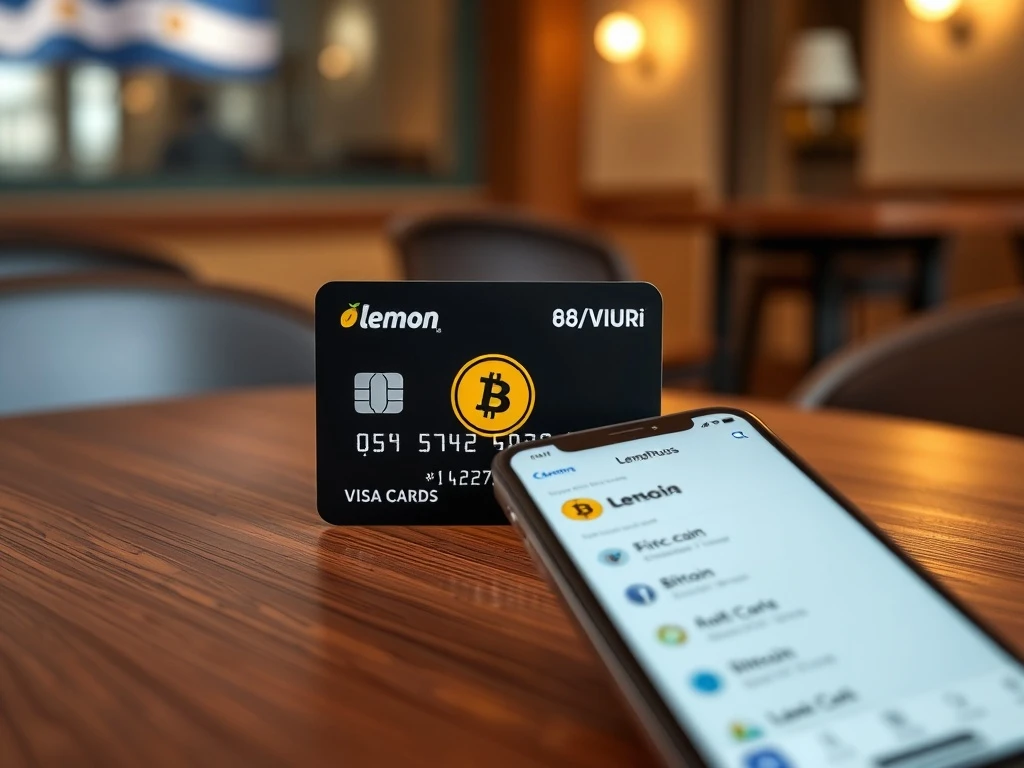
BUENOS AIRES, Argentina — In a significant development for cryptocurrency adoption, Argentinian exchange Lemon has launched a groundbreaking Visa credit card collateralized by Bitcoin, marking the first product of its kind in the South American nation. This innovative financial tool, reported initially by Wu Blockchain, enables users to leverage their Bitcoin holdings for everyday purchases without requiring traditional bank accounts or credit history. The launch represents a strategic response to Argentina’s complex economic landscape, where cryptocurrency usage has surged amid persistent inflation and currency volatility.
Bitcoin Credit Card Revolutionizes Argentine Financial Access
Lemon’s new Visa credit card fundamentally transforms how Argentinians interact with their cryptocurrency assets. Unlike conventional credit products, this card uses Bitcoin as collateral rather than traditional credit scoring. Consequently, users can access credit facilities based on their cryptocurrency holdings. The exchange automatically converts Bitcoin to Argentine pesos at the point of sale, enabling seamless transactions at any merchant accepting Visa. This approach addresses Argentina’s substantial unbanked population while providing Bitcoin holders with practical utility for their digital assets.
Argentina’s economic context makes this development particularly significant. The country has experienced triple-digit inflation, reaching 211.4% in 2024 according to the National Institute of Statistics and Censuses. Simultaneously, cryptocurrency adoption has accelerated dramatically. A 2024 Chainalysis report ranked Argentina second globally in cryptocurrency adoption, with approximately 12 million Argentinians owning digital assets. Lemon’s card directly responds to this environment by offering financial tools that bypass traditional banking limitations.
Technical Implementation and Security Framework
The Lemon Visa card operates through a sophisticated technical infrastructure that balances accessibility with security. When users apply, they pledge Bitcoin from their Lemon wallet as collateral. The exchange then establishes a credit limit typically representing 50-70% of the Bitcoin’s value, maintaining a conservative loan-to-value ratio to protect against market volatility. During transactions, the system automatically converts the necessary Bitcoin amount to Argentine pesos at current market rates, settling the purchase instantly.
Security measures include:
- Multi-signature wallet technology requiring multiple approvals for significant transactions
- Real-time monitoring for unusual spending patterns
- Automatic liquidation protocols if Bitcoin value drops below predetermined thresholds
- Biometric authentication for card transactions through the Lemon mobile application
This technical framework ensures users can access their Bitcoin’s value while minimizing risks associated with cryptocurrency’s price fluctuations. The system maintains full regulatory compliance with Argentina’s Financial Information Unit requirements for anti-money laundering and know-your-customer protocols.
Comparative Analysis: Global Crypto Card Landscape
Lemon’s offering enters a competitive global market for cryptocurrency payment solutions. However, its specific approach distinguishes it from existing products. Unlike prepaid crypto cards that require converting cryptocurrency to fiat before loading, Lemon’s card maintains Bitcoin as the underlying asset until transaction moment. This preserves potential appreciation while providing spending capability.
| Provider | Type | Collateral | Bank Account Required | Region |
|---|---|---|---|---|
| Lemon Visa | Credit Card | Bitcoin | No | Argentina |
| Crypto.com Visa | Prepaid Debit | Various Cryptocurrencies | Yes | Global |
| Binance Card | Prepaid Debit | Converted Fiat | Yes | Europe/Latin America |
| BlockFi Credit Card | Credit Card | Traditional Credit | Yes | United States |
This comparative analysis reveals Lemon’s unique position in specifically targeting Argentina’s unbanked population while utilizing Bitcoin as direct collateral. The approach addresses local economic conditions more precisely than global competitors.
Economic Impact and Regulatory Considerations
Argentina’s regulatory environment has evolved significantly regarding cryptocurrency. The National Securities Commission (CNV) has established clearer guidelines for cryptocurrency exchanges since 2023. Lemon operates under these regulations, having obtained necessary approvals for its card product. The exchange maintains transparent relationships with Argentina’s Central Bank regarding foreign exchange aspects of its operations.
Economists note several potential impacts from this development:
- Financial inclusion expansion for Argentina’s estimated 10 million unbanked adults
- Increased cryptocurrency utility beyond speculative investment
- Potential reduction in informal dollar transactions
- Enhanced competition in Argentina’s credit market
However, challenges remain. Bitcoin’s volatility requires careful risk management, particularly during Argentina’s economic instability. Additionally, tax implications for cryptocurrency spending continue evolving under Argentina’s AFIP tax authority guidelines. Lemon provides detailed transaction reporting to assist users with tax compliance.
User Experience and Practical Implementation
Early users report straightforward onboarding through Lemon’s mobile application. The process involves identity verification, Bitcoin transfer to a designated collateral wallet, and credit limit determination. The physical Visa card arrives within 7-10 business days, while virtual card details become available immediately for online purchases.
Transaction examples demonstrate practical utility:
- Grocery purchases at major supermarkets like Carrefour and Coto
- Fuel payments at YPF and Shell stations
- Utility bill payments through government portals
- Online shopping at Mercado Libre and international retailers
Users appreciate avoiding traditional credit checks while accessing credit facilities. However, they must monitor Bitcoin’s value relative to their spending, as significant price drops could trigger automatic collateral adjustments. Lemon provides real-time notifications through its application to keep users informed.
Future Developments and Industry Implications
Lemon’s leadership indicates plans for product expansion following initial adoption. Potential developments include additional cryptocurrency options beyond Bitcoin, integration with Argentina’s growing decentralized finance ecosystem, and partnerships with traditional financial institutions. The exchange monitors regulatory developments across Latin America, considering regional expansion possibilities.
Industry analysts observe broader implications for cryptocurrency adoption. Successful implementation in Argentina’s challenging economic environment could provide a model for other emerging markets with similar conditions. Additionally, traditional financial institutions may accelerate their cryptocurrency integration efforts in response to innovative products from exchanges like Lemon.
Technological advancements will likely enhance future iterations. Potential improvements include:
- Integration with Argentina’s CBDC development program
- Smart contract automation for collateral management
- Enhanced rewards programs using cryptocurrency
- Cross-border payment capabilities within Latin America
Conclusion
Lemon’s Bitcoin-backed Visa credit card represents a significant innovation in Argentina’s financial technology landscape. This Bitcoin credit card addresses specific local challenges including high inflation, currency volatility, and financial exclusion. By enabling cryptocurrency holders to utilize Bitcoin for everyday transactions without traditional banking requirements, Lemon bridges digital assets with practical financial utility. The product’s success will depend on effective risk management, regulatory compliance, and user adoption. However, its launch undoubtedly advances cryptocurrency integration into mainstream finance, particularly in emerging markets facing economic challenges. As Argentina continues navigating complex economic conditions, such innovations may provide valuable alternatives for financial access and stability.
FAQs
Q1: How does the Lemon Bitcoin Visa credit card work technically?
The card uses Bitcoin in your Lemon wallet as collateral. When you make a purchase, the system automatically converts the necessary Bitcoin amount to Argentine pesos at current exchange rates. This happens instantly, allowing you to spend at any Visa merchant while your Bitcoin remains invested until transaction moment.
Q2: What happens if Bitcoin’s price drops significantly after I make purchases?
Lemon maintains a conservative loan-to-value ratio and monitors collateral values continuously. If your Bitcoin’s value decreases substantially, you may need to add more collateral or reduce your balance. The system sends notifications before taking any automatic actions, giving you opportunity to manage the situation.
Q3: Are there any tax implications for using Bitcoin as collateral for spending?
Argentina’s AFIP tax authority considers cryptocurrency transactions taxable events. When Bitcoin converts to pesos for spending, it may create a taxable gain or loss depending on purchase price versus spending price. Lemon provides transaction records to assist with tax reporting, but users should consult tax professionals for specific advice.
Q4: How does this card compare to traditional credit cards in Argentina?
Unlike traditional cards requiring credit history and bank accounts, Lemon’s card uses Bitcoin as collateral without credit checks. However, it doesn’t offer extended credit periods—balances convert immediately. Traditional cards may offer rewards and longer payment terms but exclude many Argentinians without banking relationships.
Q5: What security measures protect users’ Bitcoin collateral?
Lemon employs multiple security layers including multi-signature wallets, biometric authentication, real-time transaction monitoring, and segregated collateral accounts. Insurance coverage protects against exchange failures, though cryptocurrency market risks remain. Users maintain control through the Lemon application with multiple verification steps for significant actions.
Related News
- DeFi Exodus: How Rampant Phishing Schemes Force Protocols to Abandon Discord
- M-Pesa Blockchain Partnership: Revolutionary Alliance with ADI Foundation to Transform Finance for 60 Million African Users
- Binance FRAX Perpetual Futures: Strategic Expansion into Algorithmic Stablecoin Derivatives