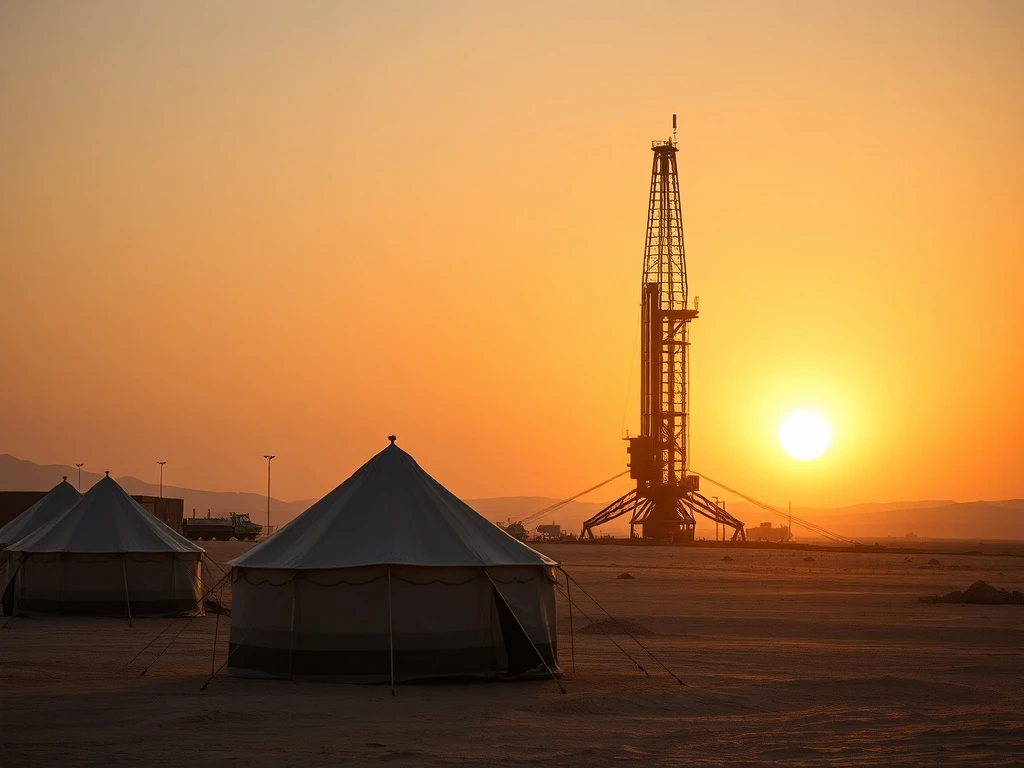
RIYADH, Saudi Arabia – December 2024 marks a transformative moment in global resource economics as Saudi Arabia announces the discovery of a monumental 7-million-ounce gold vein, fundamentally accelerating the Kingdom’s strategic pivot from petroleum dependency toward diversified mineral wealth. This unprecedented find represents not merely a geological discovery but a calculated economic realignment with profound implications for global markets, regional stability, and the future of resource-based economies.
Saudi Arabia Gold Discovery Reshapes Economic Landscape
The Ministry of Industry and Mineral Resources confirmed the discovery in the Central Arabian Gold Region, specifically within the expansive Arabian Shield geological formation. Preliminary assessments indicate the vein contains approximately 7 million troy ounces of extractable gold, valued at over $14 billion at current market prices. Consequently, this positions Saudi Arabia among the world’s top gold reserve holders almost overnight. Geological surveys conducted over 18 months revealed the deposit’s exceptional grade and accessibility, with mining engineers noting favorable extraction conditions compared to many global operations.
Furthermore, this discovery directly supports Crown Prince Mohammed bin Salman’s Vision 2030 initiative, which explicitly targets reducing oil revenue dependency from approximately 70% to 50% of national income. The Kingdom has consequently allocated $20 billion to develop its mining sector through 2030, with this gold vein serving as the cornerstone asset. International mining analysts from Wood Mackenzie and S&P Global Market Intelligence have verified the discovery’s scale, comparing it to major finds in Nevada’s Carlin Trend and Western Australia’s Golden Mile.
Technical Specifications and Extraction Timeline
The Saudi Geological Survey released detailed technical data showing the vein extends approximately 3.2 kilometers with an average width of 15 meters. Mining operations will utilize both open-pit and underground methods, with initial production scheduled for late 2026. The table below outlines key project parameters:
| Parameter | Measurement | Global Ranking |
|---|---|---|
| Estimated Reserves | 7.2 million ounces | Top 15 Global Deposit |
| Average Grade | 3.8 g/ton | Economically Viable |
| Projected Annual Output | 850,000 ounces | Major Producer Status |
| Employment Creation | 8,000+ direct jobs | Regional Development Catalyst |
| Infrastructure Investment | $3.2 billion | Integrated Mining Complex |
Strategic Pivot From Petroleum to Precious Metals
Saudi Arabia’s economic transformation represents one of history’s most ambitious resource diversification strategies. The Kingdom possesses approximately 17% of global petroleum reserves but recognizes the long-term vulnerability of single-commodity dependence. Therefore, systematic geological mapping since 2018 has identified substantial mineral potential beyond hydrocarbons. Specifically, the Arabian Shield contains significant deposits of:
- Copper: 25 million metric tons estimated
- Zinc: 18 million metric tons estimated
- Phosphate: 3 billion metric tons estimated
- Rare Earth Elements: Strategic concentrations identified
- Industrial Minerals: Gypsum, silica, and kaolin
Simultaneously, global energy transition pressures have accelerated diversification timelines. Electric vehicle adoption and renewable energy investments have created predictable long-term demand reductions for petroleum. Consequently, Saudi Arabia has strategically reallocated sovereign wealth through the Public Investment Fund toward mining infrastructure, renewable energy projects, and technology investments. This gold discovery provides immediate revenue diversification while financing broader economic transformation.
Global Market Implications and Reactions
International gold markets reacted cautiously to the announcement, with prices experiencing minimal volatility due to the phased production timeline. However, mining equities showed significant movement, particularly companies with Saudi joint ventures. Major mining corporations including Barrick Gold, Newmont Corporation, and Saudi Arabian Mining Company (Ma’aden) have announced partnership discussions. Additionally, geopolitical analysts note potential shifts in Middle Eastern economic influence, as mineral wealth complements existing energy dominance.
The International Monetary Fund published analysis suggesting successful mineral diversification could increase Saudi non-oil GDP by 4-6% annually through 2035. Moreover, regional development in mining areas could reduce urban concentration and create sustainable economic hubs beyond traditional petroleum regions. Environmental considerations remain paramount, with the Ministry implementing stringent sustainability protocols exceeding global standards for water usage, land rehabilitation, and emissions control.
Technological Innovation in Saudi Mining Operations
Saudi Arabia’s mining revolution incorporates cutting-edge technologies rather than replicating traditional extraction methods. The new gold operations will feature:
- Automated Drilling Systems: AI-optimized for precision and safety
- Water Recycling Infrastructure: 95%+ reuse rates in arid environment
- Renewable Energy Integration: Solar-powered processing facilities
- Blockchain Tracking: Transparent supply chain from mine to market
- Remote Operations Centers: Real-time monitoring and optimization
These technological investments address historical mining challenges in arid regions while establishing global best practices. Furthermore, they create exportable expertise that Saudi engineering firms can commercialize internationally. The Kingdom has consequently established the Mining Academy at King Abdulaziz University, developing specialized human capital for the expanding sector. International accreditation ensures global competency standards while incorporating local geological knowledge.
Economic Diversification and Employment Transformation
Beyond direct mining employment, the gold discovery catalyzes broader economic development. Downstream industries including refining, jewelry manufacturing, and financial services are expanding rapidly. Saudi Arabia aims to process 50% of mined gold domestically by 2030, creating value-added industries rather than exporting raw materials. This strategy mirrors successful models in Canada and Australia, where mineral wealth supports sophisticated manufacturing and service sectors.
Vocational training programs have enrolled over 12,000 Saudis in mining-related skills development since 2023. These programs specifically target regions with historically high unemployment, aligning economic development with social stability objectives. International partnerships with Canadian and Australian mining institutes ensure knowledge transfer while adapting techniques to local conditions. Consequently, the mining sector demonstrates how natural resource development can drive comprehensive national advancement.
Geopolitical Considerations and Regional Impact
Saudi Arabia’s mineral diversification occurs within complex regional dynamics. Neighboring nations including the United Arab Emirates, Egypt, and Jordan are developing their own mining sectors, creating potential for cooperative regional development. The Gulf Cooperation Council has established a Minerals Committee to coordinate exploration standards, infrastructure development, and environmental regulations. This collaborative approach maximizes regional potential while minimizing redundant investments.
Internationally, Saudi Arabia’s expanded resource portfolio enhances strategic positioning amid global power shifts. Mineral security has become increasingly important for technological manufacturing and renewable energy infrastructure. Countries controlling critical minerals gain influence in supply chains for batteries, electronics, and advanced materials. Therefore, Saudi Arabia’s geological endowment provides diplomatic leverage beyond traditional energy diplomacy. The Kingdom has consequently initiated mineral cooperation agreements with major economies including China, India, and the European Union.
Environmental Stewardship and Sustainable Development
Environmental responsibility represents a cornerstone of Saudi mining development. The gold operations implement comprehensive sustainability measures exceeding international requirements:
- Zero Discharge Water Management: Closed-loop systems in water-scarce region
- Carbon Neutral Target: 2030 operational carbon neutrality commitment
- Biodiversity Protection: Pre-mining species relocation and habitat preservation
- Progressive Rehabilitation: Concurrent land restoration during operations
- Community Monitoring: Independent environmental oversight committees
These practices address legitimate concerns about mining impacts while demonstrating how resource extraction can align with environmental stewardship. International certification under the Towards Sustainable Mining initiative provides third-party verification and continuous improvement frameworks. Moreover, Saudi Arabia contributes mining sustainability research through the Middle East Institute for Resource Management, sharing innovations with global mining communities.
Conclusion
The Saudi Arabia gold discovery of 7 million ounces represents far more than geological fortune. It symbolizes a strategic economic transformation with global implications. This development accelerates the Kingdom’s pivot from oil dependency toward diversified mineral wealth, supporting Vision 2030 objectives while creating sustainable economic foundations. The discovery demonstrates how nations can leverage natural resources for comprehensive development when combined with technological innovation, environmental responsibility, and human capital investment. As production commences in 2026, global markets will witness the emergence of a new mining powerhouse, reshaping commodity flows and economic relationships. Ultimately, this Saudi Arabia gold discovery may inspire similar transformations in resource-dependent economies worldwide.
FAQs
Q1: How significant is a 7-million-ounce gold discovery globally?
A1: This discovery ranks among the world’s top 15 gold deposits discovered this century. It contains approximately 2% of global annual gold production capacity, positioning Saudi Arabia as a major future producer alongside established mining nations like Canada, Australia, and Russia.
Q2: How will this discovery affect Saudi Arabia’s oil production?
A2: The discovery complements rather than replaces oil production. Saudi Arabia will maintain its role as a leading petroleum exporter while diversifying its economy. The mining sector aims to contribute 10% to GDP by 2030, reducing but not eliminating oil dependency.
Q3: What environmental protections are in place for the mining operations?
A3: Operations implement stringent environmental protocols including zero-discharge water systems, carbon neutrality targets by 2030, concurrent land rehabilitation, and independent monitoring. These measures exceed many global mining standards.
Q4: How will this discovery impact global gold prices?
A4: Due to phased production through 2030, immediate price impacts are minimal. Long-term, increased supply may modestly affect prices, but growing industrial and investment demand likely absorbs additional production without significant market disruption.
Q5: What opportunities exist for international mining companies?
A5: Saudi Arabia welcomes international partnerships in exploration, technology, and operations. The Kingdom offers competitive royalty rates, infrastructure support, and access to growing regional markets through joint ventures with Ma’aden and direct licensing opportunities.
Related News
- Bitcoin Soars: BTC Price Skyrockets Past $97,000 Milestone in Major Market Rally
- LSEG DiSH: Revolutionary Digital Payment Platform Launches with Crypto Support
- Bitcoin Price Prediction: Soaring to $100K as U.S. Treasury Volatility Crashes to 4-Year Low