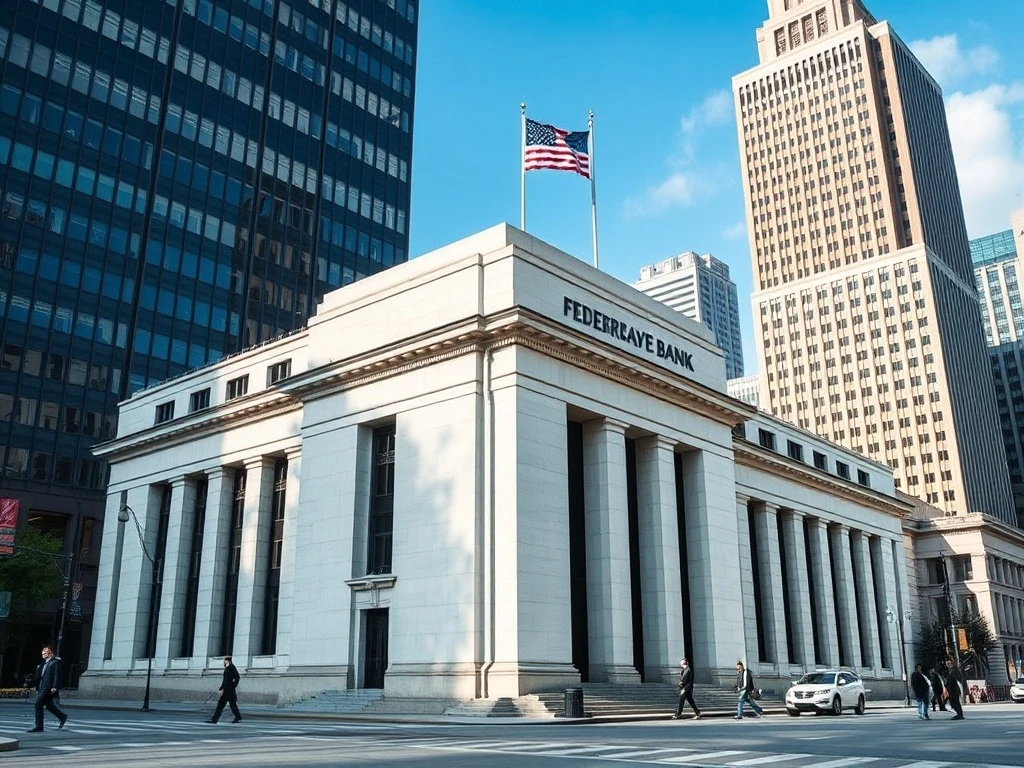
CHICAGO, March 2025 – Federal Reserve Bank of Chicago President Austan Goolsbee has set a clear expectation for a pivotal monetary policy shift, stating he anticipates an interest rate cut within the year. This significant declaration underscores a potential turning point in the central bank’s aggressive campaign against inflation, contingent upon continued favorable economic data. Goolsbee’s remarks, delivered during a keynote address on monetary policy frameworks, immediately reverberated through global financial markets, influencing bond yields and equity futures. His perspective carries substantial weight within the Federal Open Market Committee (FOMC), highlighting the delicate balance the Fed now seeks between sustaining economic growth and ensuring price stability reaches its long-term target.
Federal Reserve Rate Cut Expectations Gain a Vocal Proponent
Austan Goolsbee, a noted economist and former advisor to President Barack Obama, articulated a cautiously optimistic outlook for inflation progress. He emphasized, however, that the commitment to a rate reduction remains data-dependent. The Chicago Fed leader pointed to recent trends in core Personal Consumption Expenditures (PCE) – the Fed’s preferred inflation gauge – alongside cooling labor market indicators as key factors supporting his view. Consequently, markets are now closely parsing every upcoming employment cost index report and consumer price data release for confirmation.
This stance places Goolsbee among the more dovish regional Fed presidents, advocating for a preemptive adjustment to avoid overtightening. His reasoning hinges on the recognition of policy lags; today’s interest rate decisions impact the economy with a significant delay, often estimated between 12 to 18 months. Therefore, waiting for perfect certainty in the data could risk an unnecessary economic slowdown. The table below contrasts recent key inflation metrics that inform such policy debates.
| Metric | Current Reading (Latest) | Federal Reserve Target | Trend (6-Month) |
|---|---|---|---|
| Core PCE Inflation | 2.3% | 2.0% | Declining |
| Headline CPI | 2.5% | N/A (PCE preferred) | Declining |
| Average Hourly Earnings (YoY) | 3.8% | ~3.5% (consistent with 2% inflation) | Moderating |
The Evolving Context of US Monetary Policy
The Federal Reserve initiated its most aggressive rate-hiking cycle in decades beginning in March 2022, raising the federal funds rate from near zero to a restrictive range of 5.25% to 5.50%. This decisive action aimed to combat inflation that peaked above 9% in mid-2022. Now, with inflation showing sustained signs of moderation, the policy conversation has decisively shifted from “how high” to “how long” rates will remain elevated, and subsequently, the timing and pace of any easing.
Goolsbee’s comments reflect a broader, though not unanimous, sentiment within the Fed. Other officials have expressed more caution, preferring to see several more months of benign inflation data before committing to cuts. The diversity of views is typical of the FOMC’s deliberative process. Key considerations for all members include:
- Labor Market Resilience: While job growth has cooled from its torrid pace, unemployment remains near historic lows. The Fed must assess whether wage growth is slowing sufficiently to be consistent with 2% inflation.
- Housing Services Inflation: This component, which makes up a large portion of the CPI, has been stubborn but is expected to decline as newer rental market data feeds into official indices.
- Global Economic Conditions: Slower growth in Europe and China could dampen U.S. export demand and commodity prices, aiding the disinflationary process.
Expert Analysis on the Policy Pathway
Former Fed Vice Chair Alan Blinder, in a recent Brookings Institution paper, noted that the final descent of inflation from 3% to the 2% target is often the most challenging. He argues that policymakers must avoid the “last mile” fallacy of holding policy too tight for too long. Goolsbee’s expectation aligns with this risk-management approach. Furthermore, analysis from the Chicago Fed’s own research staff suggests that the neutral rate of interest (r*) may have risen post-pandemic, implying that the current policy stance is more restrictive than traditional models indicate, thus warranting earlier adjustment.
The impact of this signaling is immediate and tangible. Financial conditions have already eased modestly in response to dovish commentary, lowering mortgage rates and corporate borrowing costs slightly. This “Fed put” provides underlying support to asset prices and consumer sentiment. However, the central bank remains vigilant against a premature easing that could reignite inflationary pressures, a scenario that would severely damage its hard-won credibility.
Potential Economic Impacts of a Policy Shift
A Federal Reserve rate cut in 2025 would have wide-ranging consequences. Primarily, it would reduce borrowing costs for consumers and businesses, providing a tailwind for sectors like housing and capital investment. The housing market, which has been subdued by high mortgage rates, would likely see increased transaction activity. Additionally, lower yields on Treasury securities could lead to a re-evaluation of global capital flows, potentially weakening the U.S. dollar and boosting the competitiveness of American exports.
For financial markets, the anticipation and execution of a cutting cycle typically support equity valuations, particularly for growth and technology stocks sensitive to discount rates. However, the market reaction will hinge critically on the perceived reason for the cut. A cut in response to convincingly vanquished inflation is bullish. Conversely, a cut driven by fears of a sharp economic downturn would have negative connotations. Goolsbee’s framing clearly leans toward the former, optimistic scenario, focusing on policy normalization rather than emergency stimulus.
Conclusion
Chicago Fed President Austan Goolsbee’s expectation for a Federal Reserve rate cut this year marks a crucial inflection point in the post-pandemic monetary policy narrative. His data-dependent but forward-leaning stance highlights the complex task facing the FOMC: guiding the economy to a soft landing where inflation returns sustainably to 2% without triggering a recession. As more economic reports are published in the coming months, they will either solidify or challenge this outlook, determining the precise timing of this pivotal policy shift. The central bank’s next moves will fundamentally shape the economic landscape for 2025 and beyond.
FAQs
Q1: What did Chicago Fed President Austan Goolsbee say about interest rates?
Austan Goolsbee stated he expects the Federal Reserve to cut interest rates within the current year, though he emphasized this expectation depends on continued positive economic data confirming inflation’s downward path.
Q2: Why is Goolsbee’s opinion on a rate cut significant?
As a voting member on the Federal Open Market Committee (FOMC) in 2025, Goolsbee’s views directly influence monetary policy decisions. His dovish-leaning stance signals a growing faction within the Fed that believes restrictive policy may soon need adjustment to avoid harming the economy.
Q3: What economic data is the Fed watching most closely?
The Fed prioritizes the core Personal Consumption Expenditures (PCE) price index, along with labor market data like wage growth and the unemployment rate. They seek consistent evidence that inflation is moving convincingly toward their 2% target.
Q4: How would a Fed rate cut affect average consumers?
A rate cut would likely lead to lower interest rates on products like mortgages, auto loans, and credit cards. It could also reduce the yield on savings accounts and certificates of deposit (CDs).
Q5: Does a rate cut mean the Fed is worried about a recession?
Not necessarily. In this context, Goolsbee is framing a potential cut as a “normalization” of policy as inflation cools, not as an emergency stimulus for a faltering economy. It would be a shift from a restrictive stance to a more neutral one.
Related News
- Crypto Market Structure Bill Stalls: Senate Banking Committee Postpones Critical Markup Vote
- Kaito Yaps Shutdown Sparks Strategic Pivot: New Kaito Studio Marketing Platform Emerges
- Ripple RLUSD Achieves Monumental Integration with LMAX’s $8.2 Trillion Trading Engine