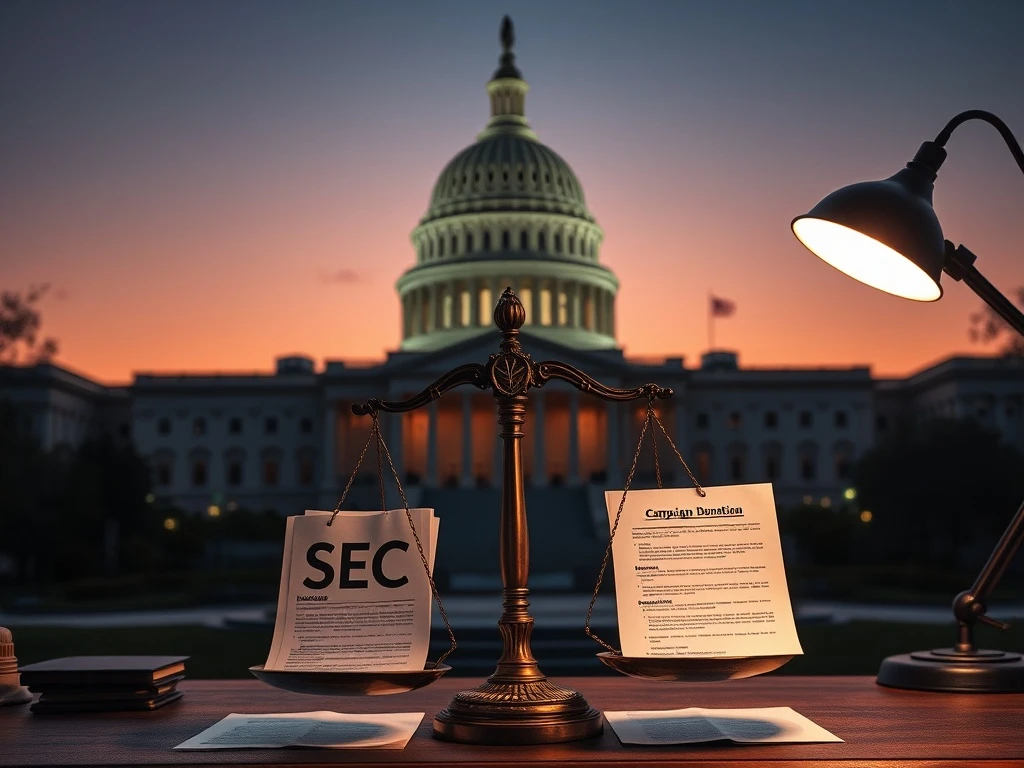
WASHINGTON, D.C. – December 2025 – A group of U.S. Democratic House members has leveled serious allegations against the Securities and Exchange Commission, claiming the agency halted major cryptocurrency investigations amid industry donations to former President Donald Trump. Representatives Maxine Waters, Sean Casten, and Brad Sherman detailed these concerns in a formal letter to SEC Chairman Paul Atkins, marking a significant escalation in political scrutiny of cryptocurrency regulation.
SEC Crypto Investigations Face Political Scrutiny
The lawmakers specifically identified at least twelve cryptocurrency-related cases that the SEC dismissed or closed since early 2024. These enforcement actions targeted prominent cryptocurrency exchanges including Coinbase, Binance, and Kraken. According to the congressional letter, the SEC possessed strong evidence and a high probability of success in these matters. The timing of these decisions coincides with substantial political donations from cryptocurrency industry leaders to Trump-affiliated political action committees.
Cryptocurrency regulation has evolved significantly since the SEC first addressed digital assets. The agency initially focused on initial coin offerings before expanding to exchange operations and trading practices. Enforcement actions typically follow extensive investigations that sometimes span multiple years. Consequently, the sudden closure of multiple high-profile cases raises legitimate questions about procedural consistency.
Political Donations and Regulatory Timing
Campaign finance records reveal substantial cryptocurrency industry contributions during the 2024 election cycle. Major exchange executives and cryptocurrency venture capitalists donated millions to political committees supporting Trump’s campaign. These donations began increasing noticeably in late 2023 and continued through 2024. Meanwhile, the SEC’s enforcement division reportedly scaled back several cryptocurrency investigations during this same period.
The relationship between political contributions and regulatory decisions remains complex. Regulatory agencies like the SEC maintain formal independence from political influence. However, presidential administrations historically influence regulatory priorities through appointed leadership. The current allegations suggest potential coordination beyond normal political channels. Industry observers note that cryptocurrency regulation has become increasingly politicized in recent years.
Expert Analysis of Enforcement Patterns
Former SEC enforcement attorneys have analyzed the agency’s recent cryptocurrency case closures. These experts note that the SEC typically pursues cases with strong legal foundations and clear regulatory violations. The dismissed investigations reportedly involved substantial evidence of securities law violations. Legal experts emphasize that case selection should follow consistent legal standards rather than political considerations.
Cryptocurrency markets reacted cautiously to the allegations. Major digital assets showed minimal price movement following the news. Market analysts suggest investors have grown accustomed to regulatory uncertainty in the cryptocurrency space. However, the political dimensions of these allegations could influence future regulatory approaches. Congressional oversight hearings may examine these matters more thoroughly in coming months.
Historical Context of Cryptocurrency Regulation
The SEC’s approach to cryptocurrency regulation has evolved through multiple administrations. During the Obama administration, the agency focused primarily on fraudulent initial coin offerings. The Trump administration saw increased attention toward exchange operations and trading platforms. Current regulatory frameworks continue developing as cryptocurrency markets mature and expand.
Several factors complicate cryptocurrency regulation. Jurisdictional questions frequently arise between the SEC and Commodity Futures Trading Commission. Technological innovation often outpaces regulatory development. International coordination remains challenging despite growing global cryptocurrency markets. These complexities create opportunities for political influence according to regulatory experts.
| Exchange | Investigation Type | Status | Timeline |
|---|---|---|---|
| Coinbase | Securities Violations | Closed 2024 | 18-month investigation |
| Binance | Market Manipulation | Dismissed 2024 | 24-month investigation |
| Kraken | Trading Compliance | Closed 2024 | 12-month investigation |
| Other Cases | Various Violations | Closed/Dismissed | 2023-2024 period |
The table above illustrates the pattern of closed investigations identified by Democratic lawmakers. These cases represent significant enforcement resources that produced no regulatory action. Legal experts estimate investigation costs ranging from $500,000 to $2 million per case depending on complexity and duration.
Regulatory Impact on Cryptocurrency Markets
Cryptocurrency market participants monitor regulatory developments closely. Clear enforcement actions typically reduce market uncertainty. Conversely, inconsistent enforcement can create confusion about legal compliance standards. The current allegations suggest potential regulatory inconsistency that could affect market stability.
Several key factors influence cryptocurrency market reactions to regulatory news:
- Enforcement predictability affects long-term investment decisions
- Regulatory clarity influences exchange operations and compliance costs
- Political stability impacts international cryptocurrency flows
- Legal certainty determines institutional participation levels
Market data shows increasing institutional cryptocurrency investment despite regulatory uncertainty. However, political controversies could slow this trend according to financial analysts. Major investment firms typically prefer stable regulatory environments when allocating capital to emerging asset classes.
Comparative International Approaches
International cryptocurrency regulation varies significantly across jurisdictions. The European Union recently implemented comprehensive cryptocurrency regulations through MiCA legislation. Asian markets display diverse approaches ranging from restrictive to supportive frameworks. These international differences highlight the complexity of cryptocurrency regulation in global markets.
The United States has historically taken a cautious approach to cryptocurrency regulation. Multiple agencies share jurisdiction over different aspects of digital assets. This fragmented regulatory landscape creates compliance challenges for cryptocurrency businesses. Political influence could further complicate an already complex regulatory environment according to industry advocates.
Conclusion
The allegations regarding SEC crypto investigations highlight growing concerns about political influence on financial regulation. Democratic lawmakers have identified specific cases and timing patterns that warrant further examination. These SEC crypto investigations represent significant regulatory resources that produced no enforcement actions. The cryptocurrency industry continues evolving amid ongoing regulatory and political developments. Market participants should monitor these developments closely as they could influence future regulatory approaches and market conditions.
FAQs
Q1: What specific cases did Democrats identify in their allegations?
The lawmakers identified at least twelve cryptocurrency-related investigations that the SEC closed or dismissed since early 2024. These included enforcement actions against major exchanges like Coinbase, Binance, and Kraken involving securities violations and trading compliance issues.
Q2: How does political donation timing relate to these SEC decisions?
Democratic representatives noted that cryptocurrency industry donations to Trump-affiliated political committees increased substantially during 2023-2024. The SEC reportedly closed multiple investigations during this same period, creating what lawmakers describe as suspicious timing correlations.
Q3: What evidence supports the allegations of political interference?
The allegations primarily rely on timing correlations between political donations and regulatory decisions. The lawmakers also noted that the SEC had strong legal cases against the targeted exchanges based on their review of investigation materials and legal precedents.
Q4: How might these allegations affect cryptocurrency markets?
Markets have shown limited immediate reaction, but prolonged regulatory uncertainty could affect institutional investment. Political controversies might influence future regulatory approaches and compliance requirements for cryptocurrency businesses operating in U.S. markets.
Q5: What happens next in this political controversy?
Congressional oversight committees may hold hearings to examine the allegations more thoroughly. The SEC will likely respond formally to the lawmakers’ letter. Regulatory experts expect continued scrutiny of cryptocurrency enforcement decisions regardless of immediate outcomes.
Related News
- Bitcoin Ordinals Surpass 100 Million Milestone — The Quiet Revolution Transforming Bitcoin Into a Premier NFT Chain
- US Stocks Close Higher: Major Indices Post Solid Gains Amid Market Optimism
- DTCC’s Ambitious Roadmap to Tokenize 1.4 Million Securities Signals a Monumental Shift for Global Finance