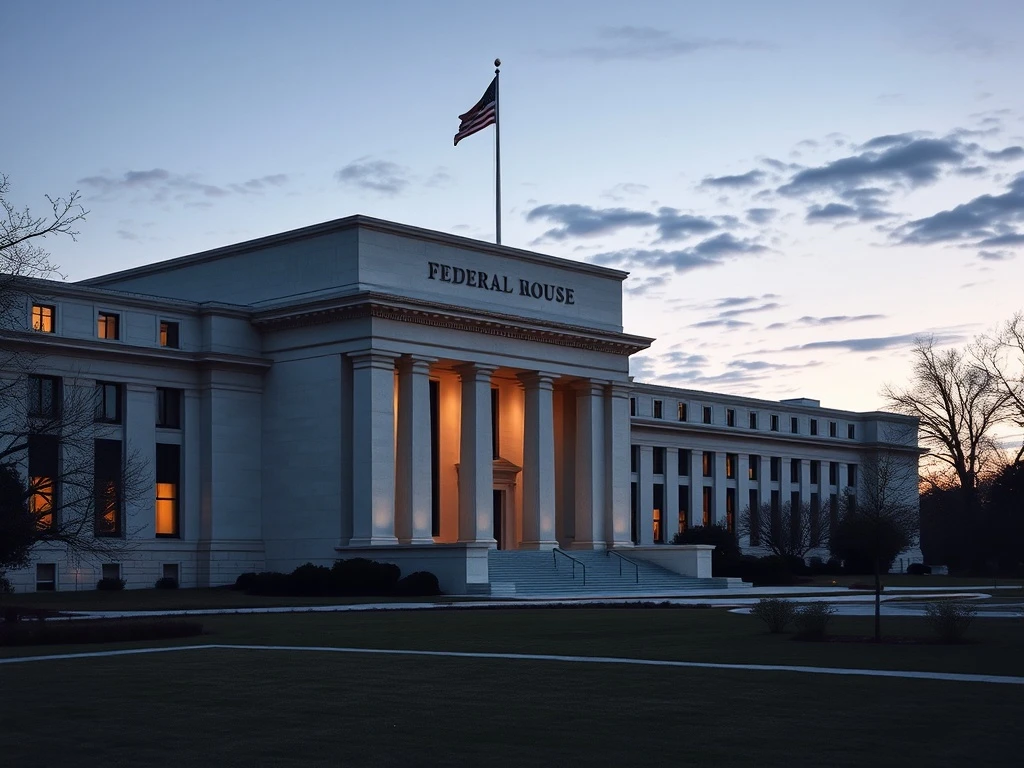
WASHINGTON, D.C. – In a move with profound implications for the global financial system, the White House confirmed this week that President Donald Trump will select the next chair of the Federal Reserve within the coming weeks. This critical decision arrives at a complex juncture for the U.S. economy, placing immense focus on the leadership of the world’s most influential central bank. Consequently, markets and policymakers worldwide are scrutinizing the potential candidates and the future direction of American monetary policy.
The Stakes of the Federal Reserve Chair Decision
Selecting a Federal Reserve chair represents one of a president’s most consequential economic appointments. The chair leads the Federal Open Market Committee (FOMC), which sets benchmark interest rates and manages the nation’s money supply. Therefore, this individual directly influences inflation, employment, economic growth, and financial stability. The White House statement, reported by Walter Bloomberg, noted President Trump has several suitable individuals in mind for the position. However, the administration has not yet publicly named specific contenders.
This decision follows a period of significant monetary policy normalization. The Fed, under recent leadership, navigated the post-pandemic economic surge, aggressive inflation, and a subsequent series of interest rate hikes. Now, the economy faces new challenges, making the chair’s philosophy on inflation targeting, financial regulation, and balance sheet management paramount. Furthermore, the chair must maintain the Fed’s cherished independence while navigating political pressures.
Historical Context and the Appointment Process
Historically, presidents have occasionally reappointed sitting chairs from opposing parties to signal continuity and non-partisanship. For instance, President Barack Obama reappointed Ben Bernanke, and President Bill Clinton reappointed Alan Greenspan. President Trump’s previous Fed chair appointment in 2017 brought Jerome Powell to the role. The current process involves consultation with economic advisors, Treasury officials, and likely key congressional figures.
The nominee must then undergo Senate confirmation, a process that has become increasingly scrutinized. A candidate’s views on key issues will face intense examination:
- Inflation Mandate: Commitment to the Fed’s 2% target.
- Employment Goals: Interpretation of maximum employment.
- Financial Stability: Approach to banking regulation and systemic risk.
- Digital Currency: Stance on a potential U.S. central bank digital currency (CBDC).
Market participants immediately analyze any candidate’s past speeches, academic work, and voting record for clues on their policy leanings.
Potential Impacts on Markets and the Economy
The announcement timeline of “within weeks” provides a short window for speculation, which can increase market volatility. Different candidates are typically associated with different policy biases—dovish (favoring lower rates to support growth) or hawkish (prioritizing inflation control, potentially with higher rates). A perceived shift in bias can trigger movements across asset classes:
| Candidate Perception | Potential Market Reaction |
|---|---|
| More Dovish | Equity markets may rally; bond yields could fall. |
| More Hawkish | Equities may face pressure; bond yields could rise. |
| Continuity Candidate | Markets may show stability, expecting steady policy. |
Moreover, the decision carries international weight. The U.S. dollar, global capital flows, and emerging market debt stability are all sensitive to Fed policy. International counterparts at the European Central Bank and Bank of Japan will closely monitor the choice, as it affects global monetary policy coordination.
Expert Analysis on the Crucial Selection
Central bank scholars emphasize that the chair’s leadership style and communication skills are as vital as their economic views. “The Fed chair must be a master of consensus-building on the FOMC and a clear communicator to the public,” notes Dr. Sarah Jensen, a former Fed economist now with the Brookings Institution. “Uncertainty around leadership can itself become an economic headwind if it clouds the policy outlook.”
Financial historians often point to the 1970s, when political pressure on the Fed contributed to runaway inflation, and the early 1980s, when Paul Volcker’s independent, hawkish stance broke inflation but induced a recession. These episodes underscore the long-term consequences of this appointment. The next chair may face similar defining challenges, whether from resurgent inflation, a financial crisis, or the structural changes of digital finance.
Additionally, the Fed’s role in regulating payment systems and exploring digital currency innovation adds a new dimension to the job. A chair’s perspective on cryptocurrency regulation and blockchain technology integration will significantly shape the financial landscape for decades.
Conclusion
President Trump’s imminent decision on the next Federal Reserve chair is a defining moment for U.S. economic stewardship. The selection, expected within weeks, will set the course for monetary policy during a period of technological transformation and global economic uncertainty. Ultimately, the chosen candidate must balance the dual mandate of price stability and maximum employment while upholding the institutional credibility of the Federal Reserve. The world will be watching as this critical appointment unfolds, determining the leadership of America’s central bank.
FAQs
Q1: Why is the Federal Reserve chair appointment so important?
The Federal Reserve chair controls U.S. monetary policy, influencing interest rates, inflation, and employment for the world’s largest economy. Their decisions directly impact global financial markets, loan rates, and economic growth.
Q2: What is the typical timeline for appointing a new Fed chair?
While not fixed by statute, the process often culminates in the fall of the year before a chair’s term expires. The current announcement of a decision “within weeks” aligns with this historical pattern, allowing time for Senate confirmation hearings.
Q3: Can President Trump reappoint the current chair?
Yes, a sitting chair can be reappointed for another term. This has happened multiple times in history, regardless of party alignment, to maintain policy continuity and market confidence.
Q4: How does the Fed chair appointment affect average Americans?
The appointment affects mortgage rates, car loan interest, savings account yields, and job market conditions. A chair focused on controlling inflation might support higher rates, increasing borrowing costs but protecting savings. A chair focused on employment might favor lower rates to stimulate hiring.
Q5: What are the main qualities experts look for in a Fed chair?
Experts prioritize deep economic expertise, proven leadership and consensus-building skills, clear communication abilities, a steadfast commitment to the Fed’s independent mandate, and a calm demeanor under market and political pressure.
Related News
- Cake Wallet’s Strategic Expansion: Embracing Zcash to Revolutionize Privacy-Focused Cryptocurrency Management
- Ethereum Price Prediction: Analysts Foresee Potential Rally to $4,100 After Short-Term Dip
- Bitcoin Ordinals Surpass 100 Million Milestone — The Quiet Revolution Transforming Bitcoin Into a Premier NFT Chain