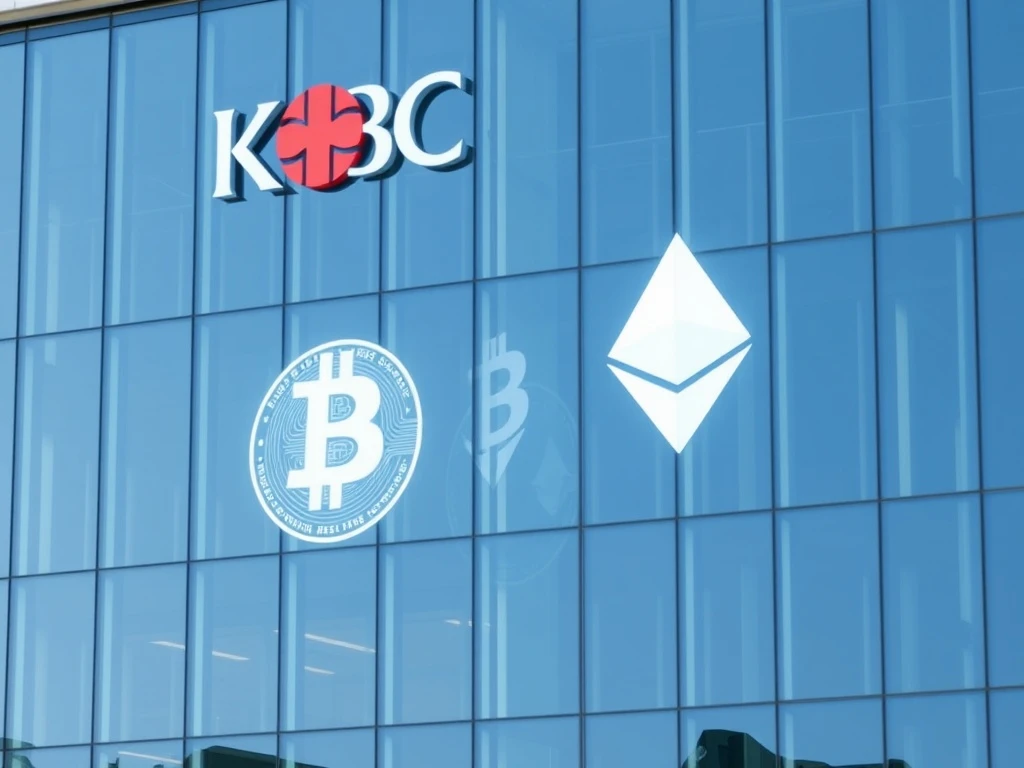
In a landmark development for European financial markets, Belgian banking giant KBC has officially announced plans to offer Bitcoin (BTC) and Ethereum (ETH) trading services to its customers starting February 16, 2025. This strategic move represents a significant institutional embrace of digital assets within the traditional banking sector. Consequently, it signals a major shift in how established financial institutions approach cryptocurrency integration. The bank has formally submitted its registration as a Crypto Asset Service Provider (CASP) to Belgian financial authorities, ensuring full compliance with the European Union’s comprehensive Markets in Crypto-Assets (MiCA) regulation framework.
KBC Crypto Trading Services: A Detailed Breakdown
KBC Group, one of Belgium’s largest and most reputable financial institutions, will launch its cryptocurrency trading platform on February 16. Initially, the service will support only Bitcoin and Ethereum, the two largest digital assets by market capitalization. The bank confirmed this information through official channels, following an initial report by Cointelegraph. Importantly, this launch follows a meticulous preparation period where KBC developed robust security protocols and compliance systems. The service will integrate directly into KBC’s existing online and mobile banking platforms. Therefore, customers will manage traditional and digital assets from a single, familiar interface.
The decision to start with BTC and ETH reflects a cautious yet strategic approach. These assets possess the highest liquidity and regulatory clarity globally. KBC’s platform will likely feature real-time price tracking, secure wallet infrastructure, and educational resources. The bank emphasizes that this offering targets both retail and sophisticated investors within its existing client base. Furthermore, KBC plans to implement strict know-your-customer (KYC) and anti-money laundering (AML) checks that exceed baseline regulatory requirements. This proactive stance aims to build immediate trust and mitigate potential risks associated with digital asset custody and exchange.
The MiCA Regulation: Enabling Institutional Adoption
KBC’s initiative is directly enabled by the EU’s MiCA regulation, which establishes a unified legal framework for crypto-assets across all 27 member states. MiCA, which fully came into effect in late 2024, provides clear rules for CASPs regarding transparency, disclosure, authorization, and supervision of transactions. For a bank like KBC, MiCA eliminates the previous regulatory ambiguity that deterred many traditional institutions from entering the crypto space. The regulation mandates capital requirements, consumer protection measures, and governance standards specifically designed for crypto services.
By registering as a CASP, KBC commits to operating under these stringent guidelines. This move provides customers with a level of protection and recourse previously unavailable on many standalone crypto exchanges. The table below outlines key MiCA requirements KBC must meet:
| MiCA Requirement | Impact on KBC Service |
|---|---|
| CASPr Authorization | Mandatory registration with the FSMA (Belgian regulator) before offering any services. |
| Capital & Governance | KBC must hold sufficient capital and maintain fit-and-proper management. |
| Consumer Protection | Clear disclosures on costs, risks, and the legal status of crypto assets are required. |
| Custody Rules | Strict segregation of client assets and robust wallet security protocols are enforced. |
| Market Integrity | Measures to prevent market abuse and ensure fair trading must be implemented. |
Broader Impact on the European Banking Landscape
KBC’s announcement is not an isolated event but part of a accelerating trend across European finance. Other major banks, including Germany’s DZ Bank and France’s Société Générale, have recently launched or announced similar digital asset services. This collective movement indicates a fundamental transformation in the banking industry’s relationship with blockchain technology. The entry of trusted, regulated banks into the crypto market addresses several longstanding barriers to mainstream adoption:
- Trust and Security: Customers prefer the insured and regulated environment of their primary bank over unregulated exchanges.
- Convenience: Integrated banking platforms eliminate the need for separate accounts and complex transfers.
- Regulatory Clarity: MiCA provides a stable, predictable legal environment for institutions to operate within.
- Institutional Investment: Bank offerings pave the way for more pension funds and insurers to allocate to crypto.
Analysts predict this “bankification” of crypto will significantly increase overall market stability and liquidity. However, it also raises questions about decentralization, a core philosophy of the original crypto movement. Traditional banks inherently act as centralized custodians, which contrasts with the self-custody model promoted by Bitcoin pioneers. Nevertheless, for the average European saver or investor, KBC’s service represents a vastly more accessible and less intimidating entry point into digital assets.
Historical Context and Market Evolution
The journey from Bitcoin’s niche inception to being offered by a major retail bank like KBC spans over 15 years. Initially, banks were openly hostile or dismissive of cryptocurrencies. The period from 2017 to 2021 saw a gradual shift from skepticism to cautious exploration, often limited to private banking and wealth management divisions. The turning point arrived with the development and passage of MiCA, which gave legal certainty to financial institutions. The 2022 market downturn and high-profile failures of unregulated entities further highlighted the demand for regulated, trustworthy gateways.
KBC itself has been exploring blockchain applications for several years, participating in various consortiums and pilot projects. Its decision to launch a retail trading service is the culmination of this internal research and development. The bank’s extensive customer base in Belgium and several Central and Eastern European countries positions it as a major onboarding channel for new crypto users. This development also pressures competing banks in the Benelux region to accelerate their own digital asset strategies to avoid losing market relevance.
Security, Risks, and Customer Education
A paramount concern for any bank entering this space is security. KBC has invested heavily in developing a custody solution that meets both MiCA standards and its own rigorous internal security policies. While specific technical details remain confidential, industry standards involve a combination of:
- Multi-signature wallet technology requiring several private keys for transaction authorization.
- Predominant use of cold storage (offline wallets) for the bulk of asset reserves.
- Distributed geographic storage of cryptographic key shards.
- Continuous 24/7 monitoring and insurance against theft or hacking.
Despite these measures, KBC will undoubtedly emphasize the inherent volatility and risks of Bitcoin and Ethereum in its customer communications. Unlike bank deposits, cryptocurrencies are not covered by national deposit guarantee schemes. Price fluctuations can be extreme, and the technological complexity presents unique risks. Therefore, a core component of KBC’s rollout will be an extensive educational campaign. This initiative will explain blockchain basics, investment risks, tax implications, and security best practices to its clients. The bank’s approach will likely set a benchmark for how traditional finance educates mainstream audiences about digital assets.
Conclusion
The launch of KBC crypto trading services for Bitcoin and Ethereum on February 16, 2025, marks a definitive milestone in the maturation of the digital asset ecosystem. By operating under the EU’s MiCA framework, KBC provides a secure, regulated, and familiar gateway for millions of customers. This move significantly bridges the gap between traditional finance and the crypto economy, lending unprecedented institutional credibility to assets like BTC and ETH. Ultimately, KBC’s bold initiative reflects a broader, irreversible trend of financial digitization, setting a new standard for retail banking in Europe and beyond. The success of this service will likely influence the pace of adoption across the entire global banking sector.
FAQs
Q1: When exactly can I start trading Bitcoin and Ethereum with KBC?
KBC will officially launch its BTC and ETH trading services on February 16, 2025. The service will become available to customers through the bank’s standard online and mobile banking platforms on that date.
Q2: Is KBC’s crypto service safe and regulated?
Yes. KBC has registered as a Crypto Asset Service Provider (CASP) with the Belgian Financial Services and Markets Authority (FSMA) in full compliance with the EU’s MiCA regulation. This ensures the service meets strict EU-wide rules on consumer protection, custody, transparency, and operational resilience.
Q3: Will KBC offer other cryptocurrencies besides Bitcoin and Ethereum?
The initial launch will only support Bitcoin (BTC) and Ethereum (ETH). The bank has indicated it may consider adding more digital assets in the future, depending on regulatory developments, customer demand, and its own risk assessments.
Q4: Are my crypto holdings with KBC insured like my regular bank deposits?
No. Cryptocurrencies held in your KBC trading account are not covered by the Belgian Deposit Guarantee Scheme, which insures traditional cash deposits up to €100,000. They are financial instruments subject to market risk and technological risk, not guaranteed deposits.
Q5: How does MiCA regulation protect me as a KBC crypto customer?
MiCA ensures KBC must provide clear information on costs and risks, keep client assets fully segregated from its own funds, maintain robust custody solutions, and be subject to ongoing supervision by national authorities. It also establishes clear rules for governance, complaint handling, and market conduct.
Related News
- Artemis Crypto Cards Surge to Rival P2P Stablecoin Payments in Revolutionary Shift
- New York’s CRYPTO Act: Landmark Legislation Imposes Criminal Penalties on Unlicensed Crypto Firms
- Binance Perpetual Futures Expansion: Strategic Listings of SPORTFUN and AIA Tokens with 20x Leverage