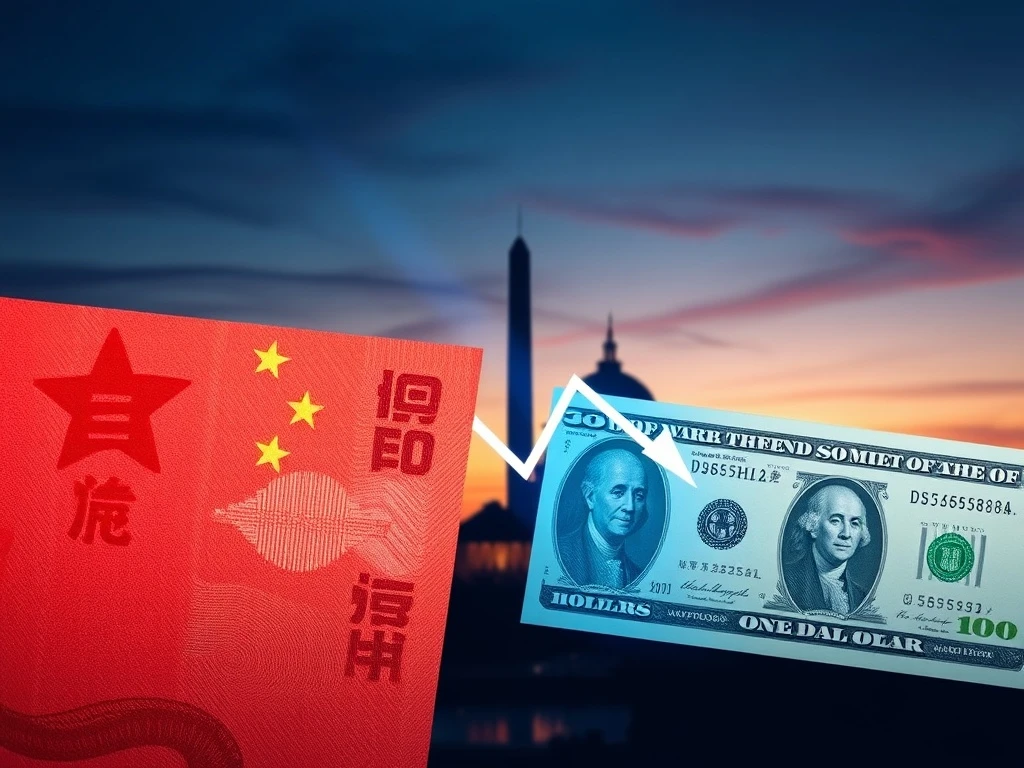
BEIJING/WASHINGTON, March 2025 – China continues its systematic reduction of US Treasury holdings, reaching exposure levels not witnessed since the 2008 financial crisis. This strategic financial maneuver represents a fundamental shift in global capital flows and dollar dependency. Consequently, markets worldwide now closely monitor Beijing’s treasury management decisions. Moreover, this trend signals deeper geopolitical realignments within international finance.
China’s US Treasury Holdings Reach Historic Low Point
Recent Treasury International Capital data reveals China’s US Treasury portfolio now stands at approximately $750 billion. This figure represents a dramatic 40% reduction from peak holdings exceeding $1.3 trillion in 2013. Furthermore, China has maintained a consistent selling pattern for eight consecutive quarters. The People’s Bank of China executes these transactions through multiple international financial centers. Additionally, other Asian economies observe China’s treasury management strategy closely.
Historical context illuminates this significant shift. Initially, China accumulated massive US debt reserves during its export-led growth phase. Subsequently, these holdings provided currency stability and investment returns. However, changing economic priorities now drive diversification efforts. Meanwhile, geopolitical tensions influence asset allocation decisions. The table below illustrates China’s treasury holding trajectory:
| Year | US Treasury Holdings | Percentage of Foreign Holdings |
|---|---|---|
| 2013 | $1.32 trillion | 22.0% |
| 2018 | $1.12 trillion | 18.5% |
| 2022 | $870 billion | 14.2% |
| 2025 | $750 billion | 11.8% |
Several factors contribute to this sustained divestment pattern. First, China seeks to reduce dollar dependency amid trade tensions. Second, domestic economic priorities require different asset allocations. Third, currency management strategies evolve with financial market development. Finally, geopolitical considerations influence reserve management decisions.
Global Bond Market Implications and Dollar Dynamics
China’s treasury reduction creates ripple effects across international bond markets. Consequently, yield curves experience subtle but meaningful adjustments. Meanwhile, other central banks reassess their own dollar exposure levels. The Federal Reserve monitors these developments closely during policy deliberations. Furthermore, currency markets reflect changing reserve allocation patterns.
Market analysts identify several immediate impacts:
- Yield pressure: Reduced Chinese demand potentially increases Treasury borrowing costs
- Currency volatility: Dollar selling affects exchange rate stability
- Alternative markets: Capital flows toward European and Asian bonds increase
- Private sector adjustment: Institutional investors rebalance portfolios accordingly
Japan recently surpassed China as America’s largest foreign creditor. Similarly, European nations maintain stable treasury positions. However, emerging markets demonstrate varied approaches to dollar debt. Therefore, the global financial architecture undergoes gradual transformation.
Expert Analysis: Strategic Diversification or Geopolitical Signaling?
Financial strategists offer nuanced interpretations of China’s treasury management. Dr. Evelyn Chen, former IMF Asia Division Director, explains: “China’s approach combines practical reserve management with strategic positioning. Their actions reflect legitimate diversification needs rather than purely political motives.” She emphasizes three key considerations: return optimization, risk management, and currency stability.
Conversely, geopolitical analysts highlight broader implications. Professor Michael Richardson of Georgetown University notes: “Financial independence represents the next frontier in US-China competition. Treasury holdings provide economic leverage during disputes.” He references historical precedents where financial interdependence moderated conflicts.
Market practitioners observe practical consequences. James Wilson, head of sovereign debt trading at Global Capital Partners, states: “We’ve adjusted our market-making approach for long-dated Treasuries. Asian trading sessions now show different liquidity patterns.” His firm tracks order flow changes across global financial centers.
Historical Context and Financial Crisis Parallels
The 2008 comparison warrants careful examination. During the global financial crisis, China actually increased Treasury purchases to stabilize markets. Currently, different economic conditions prevail. China’s financial system now demonstrates greater sophistication and independence. Additionally, international payment systems offer more alternatives to dollar transactions.
Several structural differences distinguish present circumstances:
- Digital currency development: China’s digital yuan progresses through pilot phases
- Regional financial integration: Asian clearing mechanisms reduce dollar dependency
- Domestic bond market growth: China’s local currency debt market attracts foreign investment
- Commodity pricing evolution: Some raw materials now trade in alternative currencies
Financial historians note that reserve currency transitions typically span decades. The dollar replaced sterling through gradual accumulation of structural advantages. Similarly, any potential currency diversification will require sustained effort across multiple dimensions.
Economic Impacts and Future Trajectory
China’s treasury management affects multiple economic sectors. US government financing costs experience upward pressure from reduced foreign demand. However, domestic investors increasingly absorb Treasury issuance. Meanwhile, China redirects capital toward other assets including:
- European sovereign bonds, particularly German Bunds
- Japanese government bonds and corporate debt
- Gold reserves, which have increased substantially
- Belt and Road Initiative infrastructure projects
- Emerging market local currency debt
Future developments depend on several variables. Trade relationship evolution will influence currency management decisions. Additionally, dollar strength fluctuations affect reserve valuation. Technological innovations in payment systems may accelerate diversification. Finally, global economic growth patterns determine optimal asset allocation.
Market participants prepare for various scenarios. Some anticipate gradual continued reduction toward $500 billion holdings. Others predict stabilization around current levels. A minority foresees potential rebuilding under different conditions. Most agree that transparency remains limited regarding China’s ultimate objectives.
Conclusion
China’s reduction of US Treasury holdings to 2008 levels represents a landmark financial development. This strategic shift reflects evolving economic priorities and geopolitical considerations. Consequently, global capital flows undergo reconfiguration toward greater multipolarity. The dollar maintains dominance but faces incremental diversification pressure. Market participants must monitor these treasury management patterns closely. Ultimately, financial interdependence continues evolving amid changing global dynamics.
FAQs
Q1: Why is China reducing its US Treasury holdings?
China seeks to diversify its foreign exchange reserves, manage currency risks, and optimize investment returns. Geopolitical considerations and domestic economic priorities also influence these decisions.
Q2: How does this affect US government borrowing costs?
Reduced foreign demand potentially increases Treasury yields, though domestic investors currently absorb most issuance. The Federal Reserve’s monetary policy remains the primary yield determinant.
Q3: What assets is China buying instead of US Treasuries?
China increases holdings of European and Japanese bonds, gold reserves, and emerging market debt. Belt and Road infrastructure investments also receive redirected capital.
Q4: Could this lead to a dollar crisis?
Most economists consider sudden dollar collapse unlikely given its deep markets and institutional support. However, gradual diversification reduces dollar dominance over decades.
Q5: How do other countries respond to China’s treasury reduction?
Japan and European nations maintain stable Treasury positions while monitoring developments. Emerging markets balance dollar dependency against currency stability needs.
Q6: What would cause China to reverse this trend?
Improved US-China relations, attractive Treasury yields, or dollar strength could potentially slow or reverse the reduction. However, diversification appears structurally embedded in China’s strategy.
Related News
- XRP Reclaims Its Footing as Ripple Expands Real-World Use Cases, Setting Stage for Next Move
- Ethereum Price Prediction: Stunning $15K Forecast by 2027 as Wall Street Embraces ETH Infrastructure
- Belarus Crypto Banks: Revolutionary Hybrid Financial System Launches Amid Global Regulatory Shift