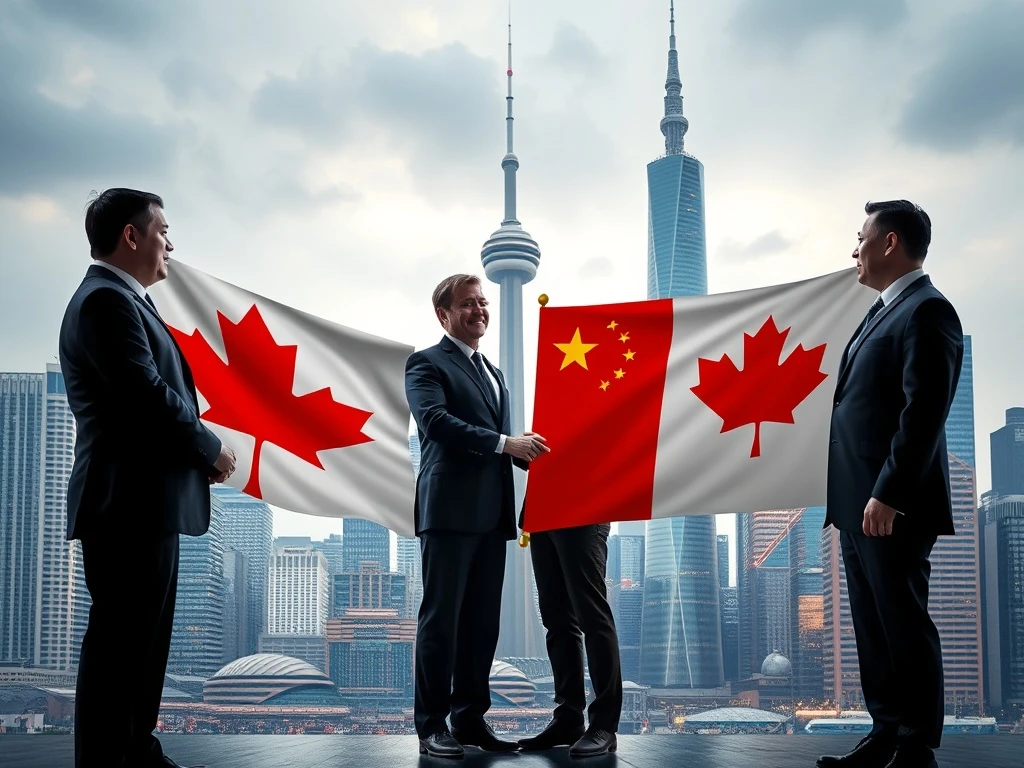
OTTAWA, CANADA — March 2025 marks a defining moment in North American geopolitics as Canada announces comprehensive economic agreements with China, signaling a strategic pivot that fundamentally reshapes traditional alliances and global trade dynamics. This calculated move represents one of the most significant foreign policy shifts in Canada’s modern history, with profound implications for international relations, supply chains, and economic stability across three continents.
Canada’s Economic Pivot: From Historical Ally to New Partnership
For decades, Canada maintained an economic relationship with the United States characterized by deep integration and mutual dependency. The two nations shared the world’s longest undefended border and developed intricate trade networks through agreements like NAFTA and its successor, the USMCA. However, recent geopolitical developments have prompted Canadian policymakers to reassess this traditional alignment. Consequently, they have initiated a deliberate diversification strategy that prioritizes economic resilience over historical allegiance.
Several factors converged to create this pivotal moment. First, persistent trade disputes between the US and Canada created uncertainty for Canadian exporters. Second, changing global supply chain dynamics necessitated new partnerships. Third, China’s growing economic influence presented opportunities that Canadian leaders could not ignore. These developments collectively created the conditions for a strategic realignment that experts describe as both unprecedented and inevitable.
The Agreement Framework: What Canada Gains
The newly announced agreements establish multiple cooperative frameworks across key sectors. Critical minerals represent a primary focus, with Canada securing preferential access to Chinese processing technology and manufacturing partnerships. Additionally, agricultural exports receive reduced tariffs under the new terms. Clean energy collaboration forms another cornerstone, particularly in battery technology and renewable infrastructure development. Finally, financial services integration allows Canadian institutions expanded access to Chinese markets.
These arrangements provide Canada with several strategic advantages. They diversify export markets beyond the United States, reducing vulnerability to unilateral policy changes. They secure access to essential technology for Canada’s green transition. They position Canadian companies within Asia’s growing economic sphere. Most importantly, they enhance Canada’s negotiating position in future international discussions by demonstrating alternative partnership options.
Geopolitical Context: Why This Shift Matters Now
The timing of Canada’s announcement reflects broader global realignments occurring throughout 2024 and early 2025. Multiple nations have reassessed their economic dependencies following supply chain disruptions during the pandemic era. Furthermore, evolving trade blocs and regional partnerships have created new opportunities for middle powers like Canada. Meanwhile, technological advancements in transportation and communication have reduced traditional geographic constraints on trade relationships.
Several specific developments created the conditions for this shift. The European Union’s own economic negotiations with China established precedents that Canada could reference. Southeast Asian nations successfully diversified their economic partnerships throughout 2024. Australia’s stabilization of relations with China after earlier tensions demonstrated that pragmatic engagement remained possible. These regional developments provided Canada with both models and confidence for pursuing its own strategic pivot.
Economic Impacts and Sector Analysis
The immediate effects of Canada’s economic pivot manifest across multiple industries. Natural resource sectors experience the most direct impact, with mining companies securing new investment and export channels. Agricultural producers gain access to markets previously constrained by logistical challenges and regulatory barriers. Technology firms benefit from research partnerships and manufacturing collaborations. However, some sectors face adjustment challenges, particularly those deeply integrated with US supply chains.
| Sector | Primary Benefits | Potential Challenges |
|---|---|---|
| Critical Minerals | New processing partnerships, export diversification | Environmental standards alignment, transportation costs |
| Agriculture | Reduced tariffs, market access expansion | Sanitary regulations, quality control systems |
| Clean Technology | Research collaboration, manufacturing scale | Intellectual property protection, technology transfer |
| Financial Services | Market access, investment opportunities | Regulatory differences, currency exchange mechanisms |
Regional economic effects vary significantly across Canada. Western provinces benefit from enhanced resource exports, while central Canada gains manufacturing and technology opportunities. Eastern provinces face more complex adjustments due to their historical trade patterns with both the US and Europe. Urban centers experience increased financial services activity, while rural communities adapt to changing agricultural markets. This geographic variation necessitates tailored policy responses from both federal and provincial governments.
Expert Perspectives: Analyzing the Strategic Calculus
International relations specialists offer nuanced interpretations of Canada’s strategic pivot. Dr. Evelyn Chen of the University of British Columbia notes, “This represents a classic hedging strategy by a middle power in an increasingly multipolar world. Canada maintains its security relationship with the United States while diversifying its economic partnerships.” Similarly, former diplomat Michael Robertson observes, “The agreements reflect pragmatic recognition of global economic realities rather than ideological alignment.”
Economic analysts highlight several strategic considerations behind the timing. First, Canada positions itself before potential US policy changes following the 2024 elections. Second, the agreements secure access to Chinese markets before potential competition from other nations. Third, they provide leverage in ongoing negotiations with the United States regarding trade disputes. Fourth, they align with Canada’s long-term economic diversification goals established in previous policy documents. Finally, they respond to domestic political pressures for greater economic sovereignty.
Historical Precedents and Future Projections
Canada’s economic pivot follows historical patterns of middle powers adjusting to changing global dynamics. Similar strategic shifts occurred when Canada strengthened ties with Europe following World War II and when it pursued Pacific Rim partnerships in the 1990s. However, the current realignment represents a more comprehensive and deliberate strategy than previous adjustments. It reflects lessons learned from earlier diversification efforts and incorporates more sophisticated economic planning tools.
Looking forward, several developments will determine the long-term success of this strategic pivot. Implementation effectiveness across multiple sectors will prove crucial. Geopolitical stability in the Asia-Pacific region will influence partnership sustainability. Domestic political support in Canada must remain consistent through potential economic adjustments. Technological cooperation must yield tangible benefits for both nations. Most importantly, the agreements must demonstrate clear economic advantages to maintain public and political support in Canada.
Global Reactions and Diplomatic Implications
International responses to Canada’s announcement reveal complex diplomatic calculations. The United States initially expressed concern but subsequently acknowledged Canada’s sovereign right to pursue independent economic policies. European nations generally viewed the development as consistent with broader global diversification trends. Asian partners welcomed increased Canadian engagement with the region. Meanwhile, other middle powers studied Canada’s approach as a potential model for their own strategic adjustments.
The diplomatic implications extend beyond bilateral relationships. Canada’s pivot influences discussions within multilateral organizations including the G7, G20, and APEC. It affects negotiations regarding international trade rules and standards. It contributes to evolving norms about economic sovereignty in an interconnected world. Furthermore, it demonstrates how middle powers can navigate great power competition while pursuing national interests. These broader implications will likely influence international relations throughout the coming decade.
Risk Assessment and Mitigation Strategies
Canadian policymakers acknowledge several risks associated with their strategic pivot. Overdependence on any single partner represents a primary concern, prompting continued diversification efforts. Geopolitical tensions between China and other nations could create difficult diplomatic choices. Economic fluctuations in either nation might affect partnership stability. Domestic political opposition could emerge if anticipated benefits materialize slowly. Finally, implementation challenges across complex agreements could reduce expected gains.
To address these risks, Canada employs multiple mitigation strategies. The agreements include review mechanisms allowing periodic adjustments. Parallel negotiations continue with other Asian and European partners. Domestic support measures assist sectors experiencing transition challenges. Diplomatic channels maintain open communication with all affected nations. Monitoring systems track implementation progress across multiple metrics. These comprehensive approaches aim to balance opportunity pursuit with risk management in a volatile global environment.
Conclusion
Canada’s economic pivot toward China represents a landmark strategic shift with profound implications for global trade patterns and geopolitical alignments. This calculated move reflects pragmatic adaptation to changing international realities rather than ideological transformation. While challenges undoubtedly accompany this transition, the agreements position Canada for greater economic resilience and strategic flexibility in an increasingly multipolar world. The success of this Canada China economic pivot will depend on effective implementation, continued diversification, and balanced diplomacy that acknowledges complex global interdependencies while pursuing national interests with clarity and purpose.
FAQs
Q1: What specific agreements form Canada’s economic pivot toward China?
The pivot comprises multiple agreements covering critical minerals cooperation, agricultural market access, clean technology collaboration, and financial services integration. These arrangements establish preferential terms for Canadian exports while facilitating technology transfer and investment flows in both directions.
Q2: How does this affect Canada’s relationship with the United States?
While economic relations diversify, security and diplomatic ties with the United States remain fundamentally intact. The shift represents strategic hedging rather than alliance abandonment, with Canada maintaining its position in NORAD and other security frameworks while pursuing independent economic policies.
Q3: What economic sectors benefit most from these new agreements?
Critical minerals extraction and processing gain immediate advantages through new partnerships and export channels. Agricultural producers access reduced tariffs for key commodities. Clean technology firms benefit from research collaboration and manufacturing scale. Financial institutions obtain expanded market access within China’s growing financial ecosystem.
Q4: Are there risks to Canada’s strategic autonomy in this pivot?
Like any major economic partnership, these agreements involve interdependence that requires careful management. Canadian policymakers emphasize continued diversification, agreement review mechanisms, and parallel negotiations with other partners to maintain strategic flexibility and avoid overreliance on any single nation.
Q5: How might this shift influence global trade patterns?
Canada’s pivot contributes to broader trends of economic multipolarity and supply chain diversification. It demonstrates how middle powers can navigate great power competition while pursuing national interests. Other nations may study this approach as they reconsider their own economic partnerships and strategic alignments in coming years.
Related News
- Crypto Fraud Skyrockets to $15.8B in 2025, Dwarfing Hack Losses in Alarming Shift
- Solayer Team Wallet Sparks Scrutiny with $3 Million LAYER Deposit to Binance
- Bitcoin Market Crash Warning: A Chilling COVID March 2020-Style Event Is Potentially Brewing, Analyst Luke Gromen Reveals