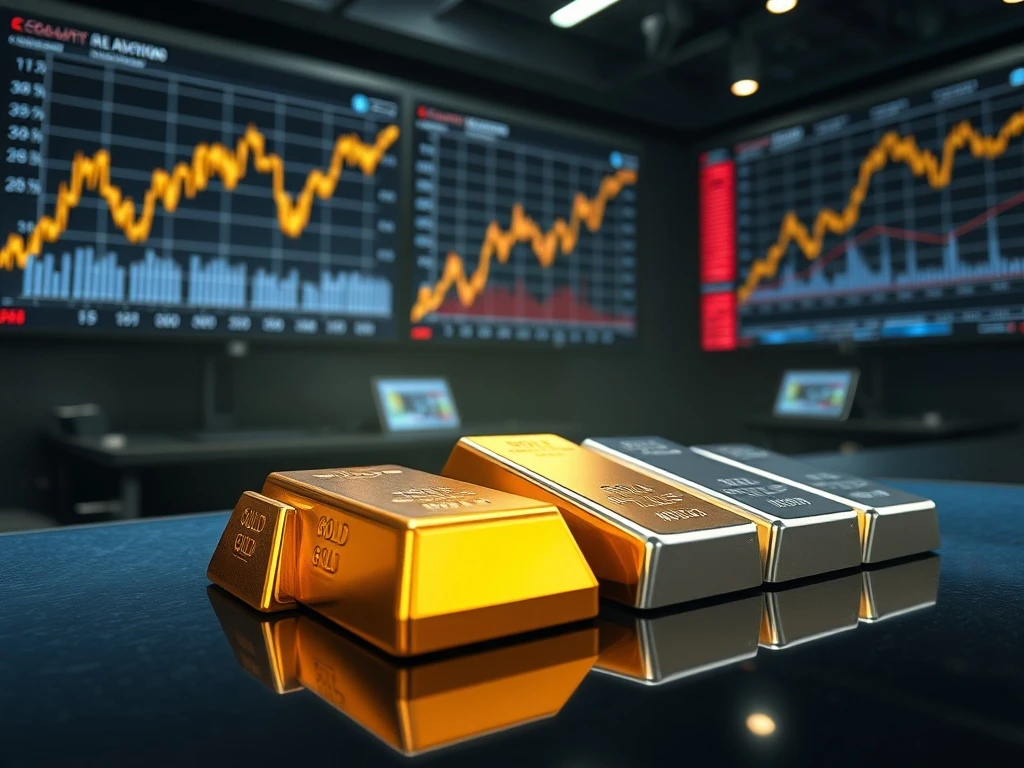
Global financial markets witnessed a historic surge on Tuesday, May 20, 2025, as spot gold and silver prices simultaneously shattered previous records to establish stunning new all-time highs. The price of spot gold decisively breached the $4,666 per ounce barrier, while spot silver powered past $94 per ounce, signaling a powerful rally in the precious metals sector that has captured the attention of investors and analysts worldwide.
Spot Gold and Silver Achieve Unprecedented Milestones
According to real-time trading data from major commodities exchanges, spot gold is currently trading at $4,668.780 per ounce. This represents a significant daily gain of 1.59%. Concurrently, spot silver is trading at $93.014 per ounce, marking an even more substantial intraday increase of 3.26%. These figures are not merely incremental gains; they represent decisive breaks above long-standing resistance levels that have defined market psychology for years. The simultaneous surge across both primary precious metals suggests a broad-based macroeconomic driver rather than isolated sector-specific news.
Market technicians immediately noted the psychological importance of these round-number levels. For instance, gold’s move above $4,650 was a key technical trigger that accelerated buying activity. Similarly, silver’s break above $90 unleashed a wave of algorithmic and institutional orders. The trading volume accompanying these moves was exceptionally high, confirming strong conviction behind the price action. This volume surge indicates participation from large funds, not just retail speculators.
Analyzing the Drivers Behind the Precious Metals Rally
Several interconnected factors are contributing to this powerful rally in gold and silver prices. First, central bank policies remain a primary catalyst. The persistent accumulation of gold reserves by central banks in emerging economies, particularly in Asia and the Middle East, has provided a steady, structural bid under the market. These institutions are diversifying their foreign exchange reserves away from traditional fiat currencies.
Secondly, currency dynamics play a crucial role. A measured weakening of the US dollar index, coupled with expectations of shifting interest rate policies by the Federal Reserve, has enhanced the appeal of non-yielding assets like gold. When real interest rates—adjusted for inflation—decline or are expected to decline, the opportunity cost of holding gold decreases, making it more attractive.
- Geopolitical Tensions: Ongoing conflicts and trade disputes continue to fuel safe-haven demand.
- Inflationary Pressures: Persistent concerns about long-term inflation erode the value of fiat currencies.
- Market Volatility: Equity market corrections drive capital toward traditional hedges.
- Industrial Demand: For silver, robust demand from the solar panel and electronics sectors provides fundamental support.
Expert Perspectives on the Record Break
Financial analysts and commodity strategists are providing critical context for these price movements. Dr. Anya Sharma, Chief Commodities Strategist at Global Markets Insight, stated, “The breakout we are witnessing is technically sound and fundamentally supported. It reflects a deep-seated reassessment of long-term global financial stability and a search for tangible assets in an increasingly digital and leveraged financial system.” Her analysis points to a multi-year trend of reallocation into hard assets.
Furthermore, historical data reveals the scale of this move. The current gold price represents an approximate 450% increase from its level two decades ago, significantly outpacing broad inflation measures. Silver’s performance, while more volatile, shows a similar long-term upward trajectory, especially when viewed through the lens of the gold-to-silver ratio, which has been compressing. This ratio compression often signals a healthy, broad-based precious metals bull market where silver, the more industrial metal, plays catch-up.
| Metal | Current Price | Daily Change | Previous Record |
|---|---|---|---|
| Spot Gold | $4,668.78 | +1.59% | $4,589.21 (2024) |
| Spot Silver | $93.014 | +3.26% | $89.50 (2024) |
The Broader Economic Impact and Market Reactions
The surge in gold and silver prices is sending ripples through related financial markets. Mining equities, represented by indices like the NYSE Arca Gold BUGS Index, are experiencing pronounced strength. Additionally, flows into physically-backed exchange-traded funds (ETFs) have turned positive after a period of outflows, indicating renewed interest from generalist investors. This is a key metric for gauging mainstream investment demand beyond specialized commodity funds.
Conversely, the rally presents challenges. For industries reliant on silver, such as photovoltaic cell manufacturing and medical device producers, rising input costs could pressure margins. Central bankers are also monitoring the situation closely, as sustained rises in gold are sometimes interpreted by the market as a vote of no confidence in fiat currency management. However, most policymakers view it as one indicator among many in a complex global system.
Retail investor interest has spiked noticeably. Online bullion dealers report a sharp increase in website traffic and order volumes for both coins and small bars. This grassroots demand adds another layer of support to the market. Financial advisors note a rise in client inquiries about portfolio allocation to precious metals, often framed as a hedge against uncertainty.
Conclusion
The establishment of new all-time highs for spot gold and silver marks a significant moment in financial markets. This move is underpinned by a confluence of macroeconomic factors, including monetary policy expectations, geopolitical risk, and strategic asset allocation shifts. While short-term volatility is always possible following such a sharp ascent, the breach of these key technical levels has reset the market’s long-term trajectory. The performance of these precious metals will continue to serve as a critical barometer for global economic sentiment, risk appetite, and inflationary expectations in the months ahead.
FAQs
Q1: What exactly are “spot” gold and silver prices?
The spot price is the current market price for immediate delivery and payment of the metal. It is the benchmark price for bullion and serves as the basis for pricing derivatives, ETFs, and physical products.
Q2: Why do gold and silver often move together?
Gold and silver share the status of precious metals and are influenced by similar macroeconomic drivers like interest rates, inflation, and currency movements. However, silver has higher industrial demand, which can cause its price to diverge at times.
Q3: How does a weaker US dollar affect gold prices?
Gold is globally priced in US dollars. A weaker dollar makes gold cheaper for buyers using other currencies, which can increase international demand and push the dollar-denominated price higher.
Q4: What is the gold-to-silver ratio and why is it important?
This ratio indicates how many ounces of silver it takes to buy one ounce of gold. A declining ratio often signals strong outperformance by silver, which is typical in the later stages of a broad precious metals bull market.
Q5: Are there risks to buying gold and silver after such a big rally?
Like all assets, precious metals are subject to price corrections and volatility. While the long-term fundamentals may appear strong, prices can experience sharp pullbacks, so investors should consider their risk tolerance and investment horizon.
Related News
- Gold’s Stunning Surge: Myrmikan Capital Exposes the Alarming Weakness of the US Stock Market
- Digital Asset Investment Products See Staggering $2.17B Net Inflow, Signaling Renewed Institutional Confidence
- Bitcoin Price Analysis: Three Critical Market Catalysts to Watch This Week