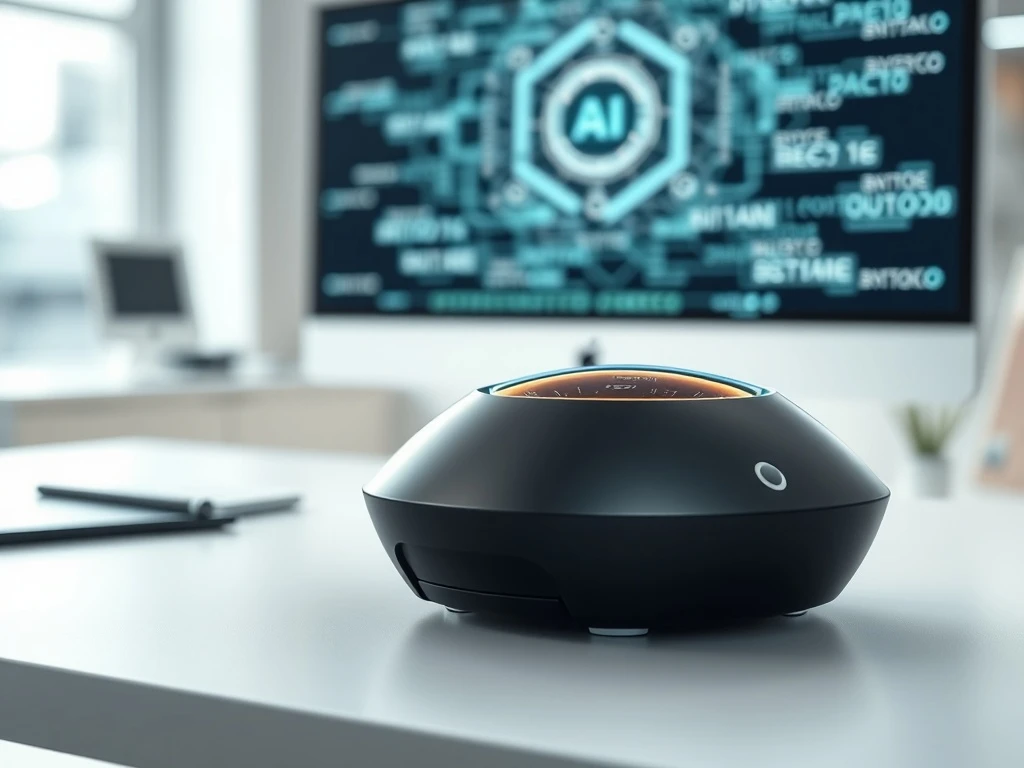
In a landmark announcement that signals a fundamental transformation in artificial intelligence deployment, OpenAI has officially confirmed a 2026 rollout window for its first physical AI device. This strategic move represents the company’s most significant expansion beyond pure software solutions since its founding. The confirmation comes directly from OpenAI leadership during their quarterly technology roadmap briefing in San Francisco, California, on November 15, 2024. Industry analysts immediately recognized this announcement as potentially reshaping the entire consumer technology landscape while accelerating the integration of advanced AI into daily human experiences.
OpenAI Physical AI Device Marks Strategic Hardware Expansion
OpenAI’s transition into physical hardware represents a calculated evolution from its established software dominance. The company revolutionized artificial intelligence with ChatGPT and DALL-E, fundamentally changing how people interact with machine learning systems. Consequently, this hardware initiative builds upon years of research in multimodal AI systems capable of processing text, audio, and visual inputs simultaneously. The 2026 timeline suggests development has progressed beyond conceptual stages into advanced prototyping and manufacturing planning phases.
Historically, successful technology companies have expanded from software to integrated hardware solutions to control the complete user experience. Apple demonstrated this strategy effectively with its transition from computer software to the iPhone ecosystem. Similarly, Google moved from search algorithms to Pixel devices and Nest products. OpenAI appears to follow this proven path, seeking to create seamless AI interactions that software alone cannot fully deliver. The physical device will likely serve as a dedicated platform for OpenAI’s most advanced models, potentially including next-generation iterations beyond GPT-4 architecture.
Technical Specifications and Industry Context
While specific technical details remain confidential, industry experts anticipate several key features based on OpenAI’s research publications and patent filings. The device will probably incorporate specialized neural processing units optimized for transformer architectures. These custom chips would enable efficient execution of large language models without constant cloud dependency. Additionally, advanced sensor arrays for environmental perception seem likely, given OpenAI’s investments in robotics and computer vision research divisions.
The competitive landscape for AI hardware has intensified remarkably in recent years. Major technology firms have announced or released dedicated AI devices with varying success:
| Company | Device | Release Year | Primary Function |
|---|---|---|---|
| Humane | AI Pin | 2024 | Wearable AI assistant |
| Rabbit | R1 | 2024 | Standalone AI companion |
| Meta | Ray-Ban Meta | 2023 | AI-enabled smart glasses |
| Apple | Vision Pro | 2024 | Spatial computing with AI |
OpenAI enters this market with distinct advantages, particularly its industry-leading language models and massive user base exceeding 100 million weekly active ChatGPT users. However, the company faces substantial challenges in hardware manufacturing, supply chain management, and physical product design—areas where it has limited public experience compared to established device manufacturers.
Manufacturing Partnerships and Development Timeline
Multiple sources within the consumer electronics supply chain indicate OpenAI has engaged with leading Asian manufacturers for production capacity. The 2026 rollout window suggests a typical hardware development cycle of 24-30 months from final design to mass production. This timeline allows for:
- Prototype refinement through multiple testing phases
- Regulatory certification across different global markets
- Software optimization specifically for the hardware platform
- Manufacturing scale-up to meet anticipated demand
Industry analysts note that OpenAI likely began serious hardware exploration following the tremendous success of ChatGPT in late 2022. The company subsequently established a dedicated hardware division and recruited talent from Apple, Google, and Tesla. This strategic hiring suggests ambitions beyond simple reference designs toward creating a distinctive, integrated product ecosystem.
Potential Market Impact and User Experience
The introduction of a physical OpenAI device could fundamentally alter how consumers interact with artificial intelligence. Currently, most AI interactions occur through:
- Web browsers and mobile applications
- Third-party integrations in existing devices
- API connections to other software services
A dedicated hardware platform would enable more natural, contextual, and persistent AI interactions. For instance, the device might function as an always-available assistant that understands environmental context through built-in sensors. This represents a shift from reactive AI interactions to proactive, ambient computing experiences.
Market research firms project the dedicated AI hardware market will grow from approximately $5 billion in 2024 to over $50 billion by 2030. OpenAI’s entry could accelerate this growth significantly, particularly if the device establishes new interaction paradigms. However, success depends on solving several critical challenges:
- Privacy implementation for always-listening/always-watching devices
- Battery technology to support continuous AI processing
- Cost structure that makes advanced AI accessible to mainstream consumers
- Differentiation from smartphone-based AI assistants
Expert Perspectives on the Strategic Move
Technology analysts have offered varied interpretations of OpenAI’s hardware strategy. Dr. Elena Rodriguez, Director of AI Research at Stanford University, commented, “This represents a logical evolution for OpenAI. Their models have reached sufficient capability that hardware constraints now limit user experience. A purpose-built device could unlock interactions we haven’t yet imagined.”
Conversely, Michael Chen, Senior Hardware Analyst at TechInsight, noted potential challenges: “Hardware is fundamentally different from software. Manufacturing at scale, global distribution, physical retail, and device support require entirely different competencies. OpenAI must build these capabilities rapidly or partner exceptionally well.”
The 2026 timeline suggests OpenAI recognizes these challenges and has allocated sufficient development time. The company’s substantial funding—including Microsoft’s continued multi-billion dollar investments—provides resources for extensive research, development, and potential acquisitions to accelerate hardware capabilities.
Conclusion
OpenAI’s confirmation of a 2026 rollout window for its first physical AI device marks a pivotal moment in artificial intelligence commercialization. This strategic expansion from pure software to integrated hardware solutions reflects the company’s ambition to control the complete AI experience. The physical device will likely leverage OpenAI’s industry-leading models while introducing novel interaction paradigms through dedicated hardware. Although significant challenges remain in manufacturing, distribution, and differentiation, the 2026 timeline provides adequate development runway. Ultimately, this move could accelerate mainstream adoption of advanced AI while establishing new standards for human-computer interaction. The success of OpenAI’s physical AI device may determine whether artificial intelligence remains primarily a software layer or becomes embodied in dedicated hardware that transforms daily life.
FAQs
Q1: What exactly has OpenAI announced regarding hardware?
OpenAI has officially confirmed a 2026 rollout window for its first physical AI device, marking the company’s initial expansion into dedicated hardware products beyond software and API services.
Q2: Why would OpenAI move from software to physical devices?
The company likely seeks to create more integrated, contextual AI experiences that software alone cannot deliver, control the complete user experience, and establish a new platform for its advanced models beyond existing devices.
Q3: What might this OpenAI device actually do?
While specifics remain confidential, experts anticipate a dedicated AI assistant device with multimodal capabilities (processing text, audio, and visual inputs), potentially functioning as an always-available companion with environmental awareness.
Q4: How does this compare to other AI hardware like Humane AI Pin or Rabbit R1?
OpenAI enters with advantages in AI model sophistication and user base, but faces challenges in hardware experience. The 2026 timeline suggests more development time than some competitors took.
Q5: What are the biggest challenges for OpenAI in hardware?
Key challenges include manufacturing at scale, hardware design expertise, supply chain management, differentiating from smartphone AI, addressing privacy concerns, and creating compelling battery life for continuous AI processing.
Related News
- Federal Reserve Rate Hold Looms: CME FedWatch Reveals 95% Probability for January FOMC Meeting
- Altcoin Season Index Surges to 26: A Critical Signal for Cryptocurrency Market Rotation
- Crypto Fear & Greed Index Plummets to 32: A Stark Signal of Prolonged Market Anxiety