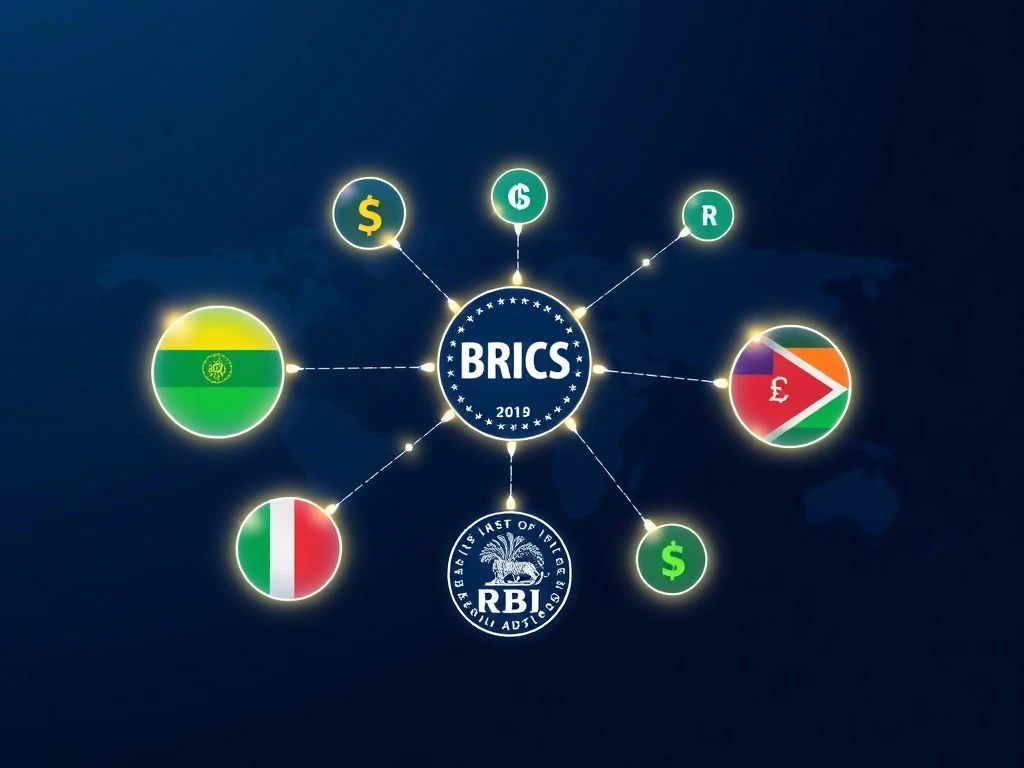
MUMBAI, March 15, 2025 – The Reserve Bank of India has proposed a groundbreaking initiative to interconnect the central bank digital currencies of BRICS nations, potentially creating the world’s largest digital currency network for cross-border settlements. This strategic move could fundamentally reshape international finance while reducing traditional dollar dependency.
RBI’s BRICS CBDC Proposal: A Strategic Framework
The Reserve Bank of India formally presented its technical framework for linking BRICS nations’ central bank digital currencies during the recent BRICS Finance Ministers meeting. This proposal represents a significant advancement in multilateral financial cooperation. The RBI’s plan outlines a standardized protocol for interoperability between different CBDC systems.
Furthermore, the framework addresses critical technical challenges including settlement finality, transaction privacy, and regulatory compliance. The proposal builds upon India’s successful Digital Rupee pilot program, which has processed over 5 million transactions since its 2022 launch. This experience provides valuable insights for scaling the technology across multiple sovereign currencies.
Technical Architecture of the Proposed CBDC Network
The RBI’s proposed architecture utilizes a hybrid model combining distributed ledger technology with existing payment systems. This approach maintains national sovereignty over monetary policy while enabling seamless cross-border transactions. The technical specifications include several innovative features designed specifically for international settlements.
Key components include a unified messaging standard, real-time gross settlement capabilities, and multi-currency liquidity pools. The system would operate through authorized financial institutions in each BRICS nation, ensuring regulatory oversight. Transaction validation would occur through a consensus mechanism agreed upon by all participating central banks.
Comparative Analysis of BRICS CBDC Progress
Each BRICS nation has made distinct progress in developing their central bank digital currencies. China’s digital yuan (e-CNY) leads in adoption with over 260 million individual wallets. Russia’s digital ruble entered pilot phase in 2023 following international sanctions. Brazil’s Drex and South Africa’s digital rand are both in advanced testing stages.
India’s Digital Rupee (e₹) has demonstrated particular success in wholesale transactions between banks. The RBI reported settlement times reduced from hours to seconds during pilot programs. This technical proficiency positions India as a natural leader in proposing interoperability standards for the bloc.
Potential Impacts on Global Financial Systems
The proposed BRICS CBDC linkage could significantly impact international finance in multiple dimensions. Cross-border transaction costs might decrease substantially, potentially benefiting trade between member nations. Current correspondent banking arrangements often involve multiple intermediaries and high fees.
Additionally, transaction settlement times could improve from days to near-instantaneous completion. This efficiency gain would enhance liquidity management for multinational corporations. The system might also reduce exposure to currency volatility through smart contract mechanisms for hedging.
Geopolitical Implications and Dollar Diversification
Financial analysts note the proposal’s timing coincides with broader BRICS efforts to create alternative financial infrastructure. The bloc has already established the New Development Bank and Contingent Reserve Arrangement. A connected CBDC network represents the next logical step in financial integration.
This development could gradually reduce BRICS nations’ reliance on the U.S. dollar for international trade. Currently, approximately 85% of global trade transactions use dollars. A functional BRICS CBDC network might capture a portion of intra-bloc trade, estimated at over $500 billion annually.
Regulatory Challenges and Implementation Timeline
Substantial regulatory hurdles must be addressed before implementation. Anti-money laundering and counter-terrorism financing compliance requires sophisticated monitoring capabilities. Data privacy standards vary significantly between BRICS jurisdictions, necessitating careful harmonization.
The proposed implementation follows a phased approach over three to five years. Phase one involves technical standardization and testing between two nations. Phase two expands to all BRICS members with limited transaction types. The final phase enables full-scale commercial and retail usage across the network.
Expert Perspectives on Technical Viability
Financial technology experts acknowledge the proposal’s ambition while noting practical challenges. Dr. Anjali Verma, former RBI deputy governor, stated, “The technical foundation exists, but governance structures require meticulous design.” She emphasized the need for clear legal frameworks governing dispute resolution and liability.
International monetary specialists highlight precedents like the Bank for International Settlements’ Project mBridge. That initiative demonstrated technical feasibility of multi-CBDC platforms. However, scaling to five major economies presents unprecedented complexity in coordination and policy alignment.
Economic Benefits for Participating Nations
The proposed system offers several economic advantages for BRICS countries. Reduced transaction costs could increase trade volumes between member states. Enhanced payment efficiency might attract foreign investment seeking streamlined cross-border operations.
Financial inclusion could improve through integrated digital payment infrastructure. Remote regions with limited banking access might benefit from CBDC-based cross-border remittances. The system could also strengthen local currencies by facilitating their use in international transactions.
Security Considerations and Risk Mitigation
Cybersecurity represents a paramount concern for interconnected CBDC systems. The RBI proposal includes multiple security layers incorporating quantum-resistant cryptography. Distributed architecture limits single points of failure that could disrupt the entire network.
Central banks would maintain emergency controls including transaction freezing capabilities and circuit breakers. Regular security audits and penetration testing would be mandated for all participating institutions. These measures aim to balance innovation with financial stability requirements.
Conclusion
The RBI’s proposal to link BRICS central bank digital currencies represents a visionary step toward modernizing international payments. This initiative combines technological innovation with strategic financial cooperation among emerging economies. Successful implementation could establish a new paradigm for cross-border settlements while enhancing BRICS economic integration.
The proposal’s technical sophistication reflects India’s growing leadership in financial technology. As central banks worldwide explore CBDC applications, the BRICS initiative provides a valuable case study in multilateral digital currency cooperation. The coming years will determine whether this ambitious vision transforms into practical financial infrastructure.
FAQs
Q1: What exactly is the RBI proposing regarding BRICS CBDCs?
The Reserve Bank of India has proposed creating technical standards and infrastructure to interconnect the central bank digital currencies of all BRICS nations (Brazil, Russia, India, China, South Africa) for seamless cross-border payments and settlements.
Q2: How would this CBDC linkage benefit ordinary citizens and businesses?
Businesses could experience faster, cheaper international transactions with reduced currency conversion costs. Citizens might benefit from more affordable cross-border remittances and potentially new financial products enabled by the integrated system.
Q3: What are the main challenges facing this proposal?
Key challenges include harmonizing different regulatory frameworks, ensuring robust cybersecurity, establishing governance structures, addressing data privacy concerns, and achieving technical interoperability between diverse CBDC systems.
Q4: How does this relate to reducing dependence on the U.S. dollar?
By creating an alternative system for international settlements among BRICS nations, the proposal could gradually reduce the bloc’s reliance on dollar-denominated transactions for intra-BRICS trade, which currently exceeds $500 billion annually.
Q5: What is the expected timeline for implementation?
The proposal outlines a phased implementation over three to five years, beginning with technical standardization and bilateral testing, expanding to all BRICS members with limited functions, and eventually enabling full-scale commercial and retail usage.
Related News
- Japanese Bonds Crashing: Bitwise Reveals the US Fiscal Path Is No Safer
- Tether USDT Mint: Stunning 1,000 Million Stablecoin Injection Signals Major Market Liquidity Move
- Greenland Sovereignty: Danish PM Delivers Defiant Rejection Amid Geopolitical Pressure