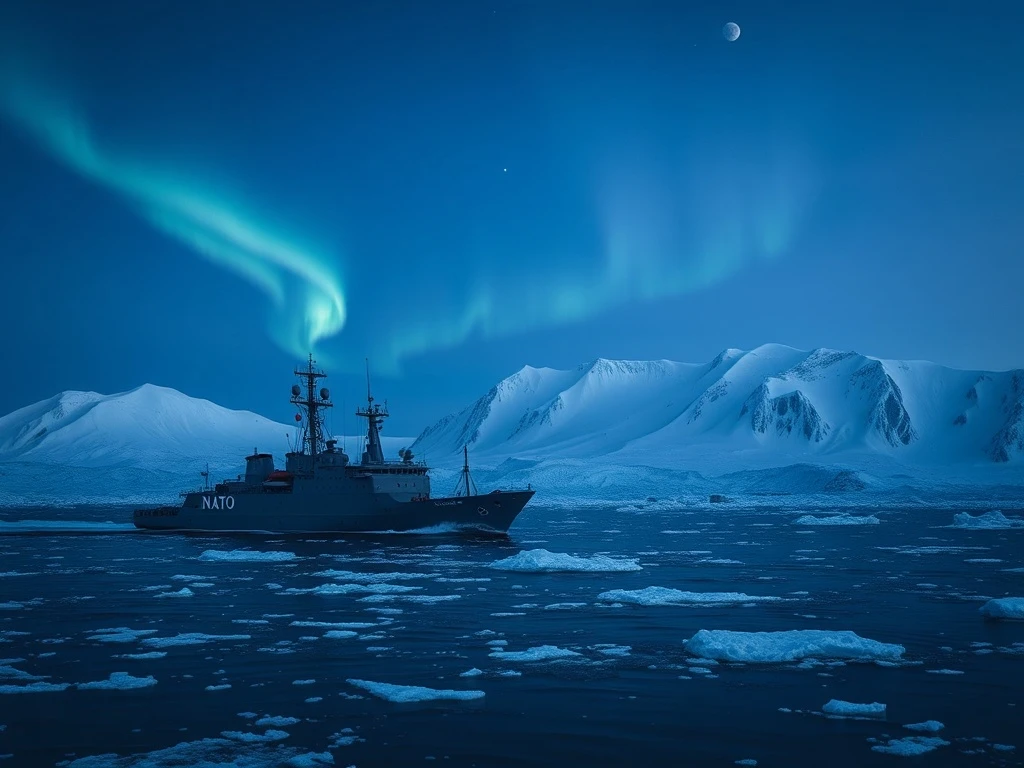
In a significant geopolitical development, NATO allies are accelerating discussions about establishing a comprehensive Arctic security framework, a strategic initiative first mentioned by former President Donald Trump and now gaining urgent momentum. According to a NATO spokesperson speaking to Walter Bloomberg, these intensified talks aim to create a collective defense mechanism specifically designed to prevent Russia and China from establishing economic or military footholds in the strategically vital Arctic region, with particular focus on Greenland’s sovereignty and resources. This move represents a pivotal shift in alliance strategy as melting ice opens new shipping routes and resource access in the High North.
NATO’s Arctic Security Framework Takes Shape
The proposed Arctic security framework represents NATO’s most substantial northern policy development in decades. Alliance officials confirm that discussions now center on formalizing cooperation among the seven NATO members with Arctic territories: Canada, Denmark (through Greenland), Finland, Iceland, Norway, Sweden, and the United States. This collective approach specifically addresses what NATO perceives as increasing Russian militarization and Chinese economic expansion in the region. The framework’s primary objectives include enhanced surveillance, coordinated military exercises, and infrastructure development to secure allied interests.
Furthermore, the spokesperson emphasized Greenland’s critical role in this strategy. As the world’s largest island with vast mineral resources and strategic positioning between North America and Europe, Greenland represents a key geopolitical prize. NATO aims to strengthen cooperation with Denmark and Greenland’s local government to ensure the territory remains within the Western sphere of influence. This approach directly responds to China’s attempts to invest in Greenland’s mining sector and infrastructure projects, which alliance members view as potential Trojan horses for broader strategic influence.
Historical Context and Strategic Imperatives
The Arctic has transformed from a frozen periphery to a central theater of geopolitical competition. Russia maintains the region’s most substantial military presence, having reopened dozens of Soviet-era bases and established new ones along its northern coastline. Moscow has also deployed advanced anti-access systems, submarines, and missile systems specifically designed for Arctic conditions. Meanwhile, China declared itself a “near-Arctic state” in 2018 and has pursued scientific, economic, and diplomatic initiatives throughout the region despite having no Arctic coastline.
Climate change fundamentally drives this strategic shift. The Arctic is warming nearly four times faster than the global average, opening the Northern Sea Route along Russia’s coast and the Northwest Passage through Canadian waters. These routes could potentially cut shipping times between Asia and Europe by 40%, representing enormous economic value. Additionally, the region contains approximately 13% of the world’s undiscovered oil and 30% of undiscovered natural gas, alongside rare earth minerals critical for modern technology and defense systems.
| Country/Alliance | Military Bases | Specialized Arctic Units | Icebreaker Fleet |
|---|---|---|---|
| Russia | 50+ | Brigade-level forces | 40+ |
| United States | 6 | Two brigade combat teams | 2 |
| NATO (Collective) | 15 | Multiple national units | 15 |
| China | 0 (research stations) | None (observer status) | 2 (non-Arctic) |
Expert Analysis: The Greenland Gambit
Security analysts note that Greenland represents the framework’s most sensitive component. China’s state-owned companies have previously attempted to purchase abandoned naval bases and invest in rare earth mining projects on the island. While Greenland’s government has rejected some proposals, Chinese investment continues through joint ventures and research partnerships. NATO’s framework would establish clearer guidelines for foreign investment screening and security cooperation to address these concerns. The alliance also plans to increase military training exercises in Greenlandic territory and potentially upgrade surveillance infrastructure.
Moreover, Denmark’s role as Greenland’s sovereign power creates complex diplomatic considerations. Copenhagen must balance its NATO commitments with Greenland’s increasing autonomy and economic development needs. The framework reportedly includes provisions for direct consultation with Greenland’s government and investment in sustainable development projects to provide alternatives to Chinese financing. This dual approach of security cooperation and economic partnership aims to address both military and soft power challenges simultaneously.
Implementation Challenges and Alliance Dynamics
Implementing a cohesive Arctic security framework presents significant challenges for NATO. Member states possess differing threat perceptions, resource commitments, and relationships with Russia. For instance, Norway maintains pragmatic cooperation with Moscow on fisheries and search-and-rescue despite security concerns, while Finland and Sweden bring recent experience with Russian hybrid tactics. Canada has historically emphasized sovereignty protection in its Arctic territories, sometimes creating tensions with U.S. freedom of navigation positions.
The framework’s development also occurs amid broader alliance discussions about burden-sharing and strategic priorities. Some southern European members question allocating substantial resources to Arctic security when they face more immediate threats in the Mediterranean and Africa. However, proponents argue that the Arctic represents a forward defense line for North America and Europe, particularly for ballistic missile defense and undersea cable protection. They emphasize that Russian submarines operating from Arctic bases can threaten transatlantic supply lines during any conflict.
Key implementation elements under discussion include:
- Enhanced Surveillance Network: Integrating satellite monitoring, underwater sensors, and drone patrols
- Rapid Response Forces: Creating specialized units capable of Arctic deployment within 72 hours
- Infrastructure Investment: Upgrading ports, airfields, and communications in remote locations
- Research Cooperation: Joint scientific programs to understand environmental changes and their security implications
- Diplomatic Coordination: Unified positions in Arctic Council negotiations and other international forums
Regional Reactions and Future Implications
Regional actors have responded cautiously to NATO’s framework discussions. Russia’s Foreign Ministry has previously denounced any NATO expansion in the Arctic as destabilizing, while China maintains that its polar activities remain purely scientific and economic. Non-NATO Arctic states like Finland and Sweden, now alliance members, strongly support the initiative as providing necessary collective security. Indigenous communities across the region have expressed concerns about environmental impacts and militarization of their traditional lands.
The framework’s development coincides with increasing great power competition beyond traditional military domains. Space-based surveillance, cyber capabilities, and information operations all play growing roles in Arctic security. NATO officials acknowledge that the framework must address these hybrid threats alongside conventional military concerns. Additionally, the alliance must coordinate with non-Arctic partners like Japan and South Korea, who have legitimate interests in Arctic shipping routes and resource development.
Looking forward, the framework’s success will depend on several factors:
- Sustained political commitment across multiple NATO administrations
- Adequate defense budgeting for specialized Arctic capabilities
- Effective coordination with civilian authorities and indigenous groups
- Balanced approach that addresses security without provoking unnecessary escalation
- Integration with broader NATO strategies for emerging technologies and climate security
Conclusion
NATO’s developing Arctic security framework represents a strategic response to fundamental geopolitical and environmental shifts in the High North. By creating a collective approach to regional defense, the alliance aims to prevent Russian and Chinese dominance in an increasingly accessible and resource-rich Arctic. The framework’s focus on Greenland underscores the territory’s critical importance to transatlantic security. While implementation challenges remain substantial, these intensified discussions signal NATO’s recognition that Arctic security now constitutes a core alliance interest rather than a peripheral concern. As climate change continues to reshape the region, this NATO Arctic security initiative will likely evolve alongside the physical and political landscape it seeks to stabilize.
FAQs
Q1: Why is the Arctic becoming more strategically important?
The Arctic is warming rapidly due to climate change, opening new shipping routes and making previously inaccessible oil, gas, and mineral resources available. This economic potential, combined with the region’s strategic position between North America, Europe, and Asia, has intensified geopolitical competition.
Q2: What specific concerns does NATO have about Chinese activities in the Arctic?
NATO members worry that China’s investments in Arctic infrastructure, mining projects, and scientific research could create economic dependencies and potentially provide platforms for intelligence gathering or future military presence, despite China having no Arctic coastline.
Q3: How does Russia currently militarize the Arctic?
Russia has reopened dozens of Soviet-era military bases, established new ones, deployed advanced missile systems like the S-400, created specialized Arctic brigades, and maintains the world’s largest fleet of icebreakers, including nuclear-powered vessels.
Q4: What role does Greenland play in NATO’s Arctic strategy?
Greenland’s strategic location between North America and Europe, combined with its vast resources and territory, makes it crucial for early warning systems, maritime control, and denying adversaries footholds in the Western Arctic. NATO aims to ensure it remains within Western spheres of influence.
Q5: How might this framework affect indigenous communities in the Arctic?
Indigenous groups have expressed concerns about environmental damage, disruption to traditional livelihoods, and militarization of their homelands. NATO officials state the framework will include consultation mechanisms, but tensions between security needs and indigenous rights remain challenging.
Related News
- Binance Delisting Shakes Market: 20 Spot Trading Pairs Including AI/BTC to Be Removed
- Binance’s US Comeback Inevitable According to Ripple — A Monumental Bullish Shift for Crypto Markets
- Solana Founder Reveals Essential Principles for Early Crypto Projects to Attract Capital in 2025