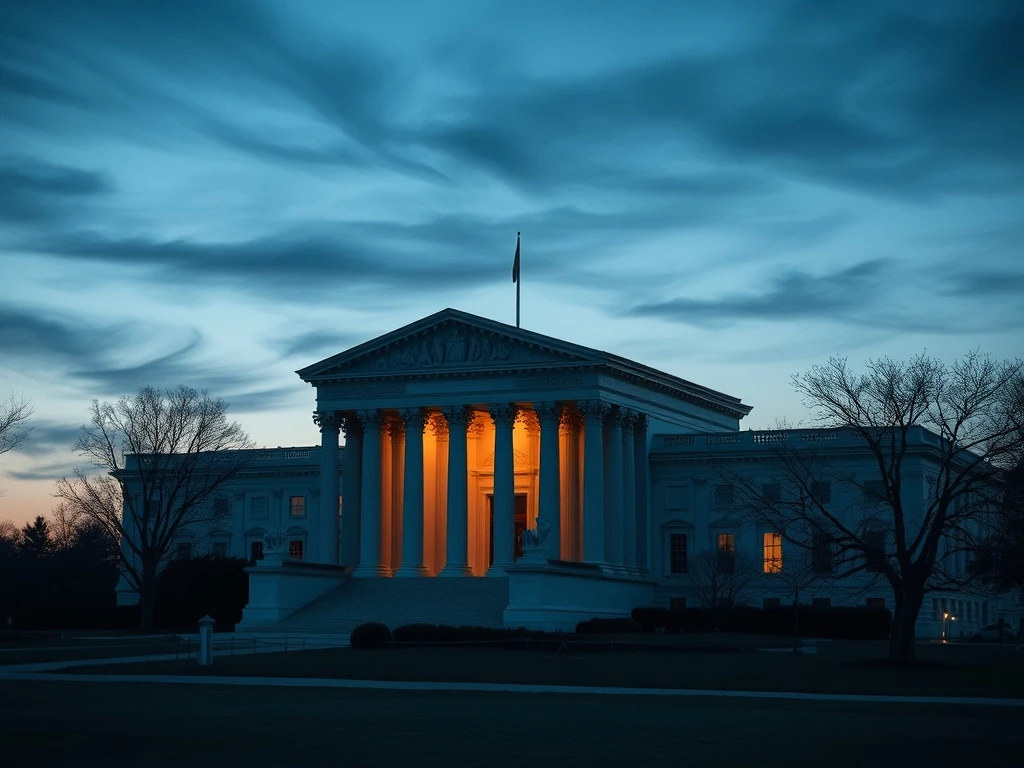
WASHINGTON, D.C. — January 2025 marks a pivotal constitutional moment as President Donald Trump declares he will pursue alternative measures should the Supreme Court issue an unfavorable ruling on his tariff policies, setting the stage for a historic clash between executive authority and judicial review that could reshape American trade governance for decades.
Trump Tariffs Supreme Court Battle: Constitutional Foundations
President Trump’s recent statement about pursuing other measures following an adverse Supreme Court decision represents more than routine political rhetoric. This declaration touches fundamental constitutional questions about presidential power under Article II. The executive branch has historically enjoyed broad discretion in trade matters, particularly under the International Emergency Economic Powers Act and the Trading with the Enemy Act. However, recent legal challenges question whether specific tariff implementations exceed statutory authority.
Legal scholars note that the current Supreme Court, with its current composition, faces unprecedented questions about the scope of presidential trade powers. The Court’s 2024 term includes several cases examining executive authority boundaries. Consequently, President Trump’s statement signals potential constitutional tension between branches of government. This tension could manifest through various alternative measures the administration might pursue.
Historical Context of Presidential Trade Authority
Presidents have exercised trade authority through multiple mechanisms throughout American history. For instance, President Franklin D. Roosevelt used executive orders extensively during the New Deal era. Similarly, President Richard Nixon imposed import surcharges in 1971 without explicit congressional authorization. More recently, President George W. Bush utilized Section 201 safeguards against steel imports in 2002. These historical precedents provide context for understanding the current administration’s position.
The legal landscape changed significantly with the 2018 tariffs imposed under Section 232 of the Trade Expansion Act of 1962. These tariffs targeted steel and aluminum imports on national security grounds. Multiple legal challenges followed, questioning both the statutory interpretation and constitutional validity of these actions. The Supreme Court’s eventual ruling will address whether the president’s national security determinations receive judicial deference or face stricter scrutiny.
Potential Alternative Measures and Legal Pathways
Should the Supreme Court rule against the current tariff framework, the administration possesses several alternative pathways to achieve similar policy objectives. These alternatives exist within existing statutory frameworks and constitutional interpretations. Each option carries distinct legal implications and potential challenges.
Key alternative measures could include:
- Executive Orders Under Different Statutes: The administration might utilize alternative legal authorities, such as Section 301 of the Trade Act of 1974, which addresses unfair trade practices.
- National Emergency Declarations: The International Emergency Economic Powers Act provides broad authority during declared national emergencies.
- Negotiated Trade Agreements: Bilateral agreements could achieve similar protectionist outcomes without unilateral tariff impositions.
- Legislative Collaboration: Working with Congress to pass new trade legislation explicitly authorizing desired measures.
- Regulatory Actions: Implementing non-tariff barriers through regulatory changes in agencies like Customs and Border Protection.
Each alternative presents unique constitutional questions. For example, using national emergency declarations for primarily economic purposes might face legal challenges regarding the definition of “emergency.” Similarly, regulatory actions could encounter administrative law challenges under the Administrative Procedure Act. The administration’s choice of alternative measures will significantly impact separation of powers dynamics.
Economic Implications and Global Trade Relations
The potential Supreme Court ruling and subsequent administration response carry substantial economic implications. Global supply chains have adjusted to the existing tariff regime since 2018. A sudden shift in policy implementation could disrupt these adaptations. Furthermore, trading partners have developed responses to U.S. tariff policies, including retaliatory measures and World Trade Organization challenges.
International trade experts emphasize that alternative measures might provoke different responses from trading partners. For instance, using Section 301 actions instead of Section 232 tariffs could change legal arguments in WTO disputes. Similarly, negotiated agreements might reduce immediate trade tensions but create longer-term structural changes. The global trading system faces uncertainty regardless of the Supreme Court’s decision.
| Legal Authority | Scope of Power | Judicial Review Standard | Historical Usage |
|---|---|---|---|
| Section 232 | National security imports | Highly deferential | Steel/aluminum tariffs (2018) |
| Section 301 | Unfair trade practices | Moderate scrutiny | China technology transfer (2018) |
| IEEPA | National emergencies | Variable by emergency | Various sanctions programs |
| TWEA | War or national emergency | Highly deferential | Historical trade restrictions |
Separation of Powers and Constitutional Interpretation
The Supreme Court’s decision will address fundamental separation of powers questions. Historically, the Court has granted substantial deference to presidential national security determinations. However, recent jurisprudence shows increased willingness to examine executive actions more closely. The Court’s approach will signal its view on the appropriate balance between branches in trade policy.
Constitutional law experts identify several key questions the Court must address. First, does the statutory language grant the president essentially unlimited discretion? Second, what standard of review applies to presidential determinations under relevant statutes? Third, how do constitutional separation of powers principles constrain statutory interpretations? The answers to these questions will shape executive authority for future administrations.
Legal precedent provides conflicting guidance. The 1976 case of United States v. Curtiss-Wright Export Corporation emphasized broad presidential power in foreign affairs. Conversely, the 1983 case of INS v. Chadha reinforced congressional control over delegated authority. More recently, the 2020 case of Department of Homeland Security v. Regents of the University of California showed the Court’s willingness to examine procedural regularity in executive actions. These precedents create a complex legal landscape.
Political Implications and Electoral Context
The Supreme Court’s ruling arrives during a significant electoral period. Trade policy remains a contentious political issue with substantial voter attention. The administration’s response to an unfavorable ruling will likely feature prominently in political discourse. Furthermore, congressional reactions will reflect broader debates about executive power and trade policy.
Historical patterns suggest that Supreme Court decisions on presidential power during election years receive heightened scrutiny. The Court’s institutional legitimacy considerations might influence its reasoning. Similarly, the administration’s choice of alternative measures will consider political implications alongside legal and economic factors. This multidimensional calculus makes the situation particularly complex.
Conclusion
President Trump’s statement about pursuing alternative measures following an unfavorable Supreme Court ruling on tariffs represents a critical moment in American constitutional governance. The Trump tariffs Supreme Court decision will address fundamental questions about presidential authority, separation of powers, and trade policy implementation. Regardless of the specific outcome, the ruling and subsequent administration response will shape executive power boundaries for future presidents. This constitutional clash demonstrates the ongoing tension between policy objectives and legal constraints in American governance.
FAQs
Q1: What specific Supreme Court case is President Trump referencing regarding tariffs?
The administration faces multiple legal challenges to its tariff policies, including cases questioning the use of Section 232 national security authority for steel and aluminum tariffs. Several circuit courts have issued conflicting rulings, creating a high probability of Supreme Court review.
Q2: What constitutional authority does the president have to impose tariffs?
The Constitution grants Congress primary authority over international trade under the Commerce Clause. However, Congress has delegated significant authority to the president through various statutes, including the Trade Expansion Act of 1962, the Trade Act of 1974, and the International Emergency Economic Powers Act.
Q3: How might alternative measures differ from current tariff policies?
Alternative measures could include different legal authorities (such as Section 301 instead of Section 232), different implementation mechanisms (regulatory changes instead of tariff increases), or different policy approaches (negotiated agreements instead of unilateral actions). Each alternative carries distinct legal and economic implications.
Q4: What happens if the Supreme Court rules against the tariffs?
An unfavorable ruling would likely invalidate specific tariff implementations under current legal authorities. The administration would need to either cease those specific measures or implement alternative approaches using different legal justifications. The ruling might also establish precedents limiting future presidential trade actions.
Q5: How have other countries responded to U.S. tariff policies?
Trading partners have implemented retaliatory tariffs, filed World Trade Organization complaints, and pursued alternative trade agreements. Responses have varied by country and specific industry impacts. The European Union, China, Canada, and Mexico have all implemented countermeasures against U.S. tariffs.
Related News
- Nordic Pension Funds Reassess US Holdings Amid Soaring Geopolitical Risk
- Alchemy Pay Expands U.S. Regulatory Reach with Four New Money Transmitter Licenses, Boosting Crypto Payment Legitimacy
- Trump Xi Meetings 2025: Stunning Revelation of Four Potential Summits Reshapes Global Diplomacy