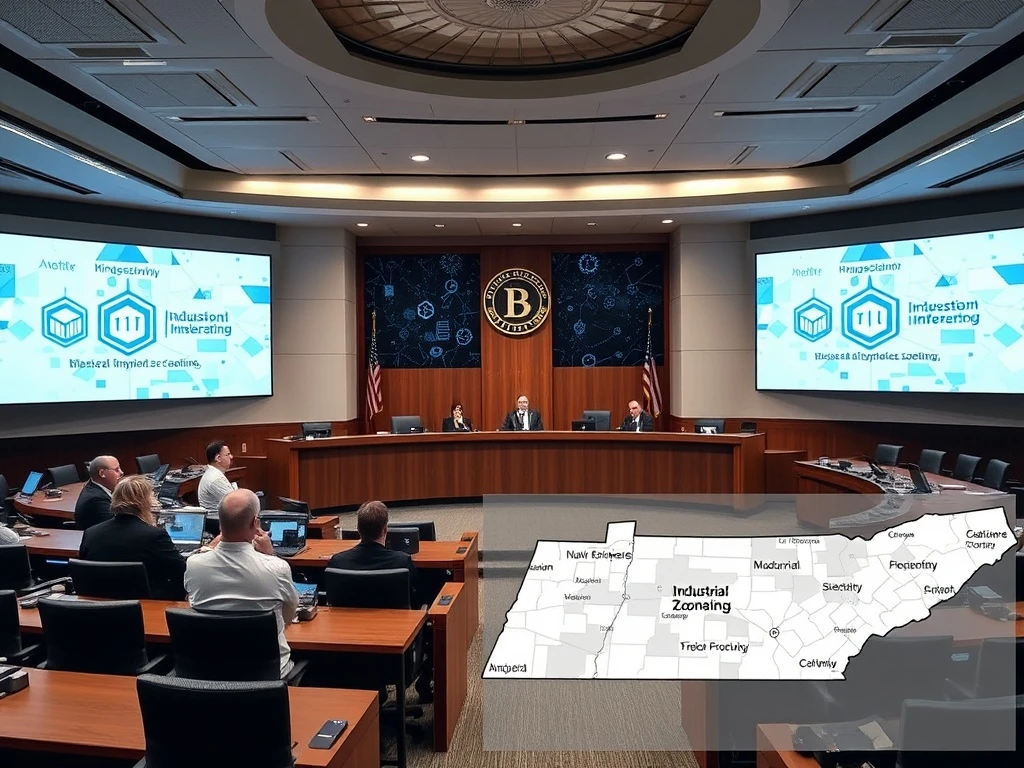
In a decisive move that signals growing municipal acceptance of digital asset infrastructure, the Kingsport, Tennessee city council has approved a pivotal zoning ordinance to permit cryptocurrency mining operations and data centers within specified areas. This landmark decision, reported initially by industry publication Cointelegraph, represents a strategic effort to attract technology investment while establishing regulatory guardrails. Consequently, the measure now advances toward final implementation, requiring one additional procedural vote to become active law. This development positions Kingsport at the forefront of a national conversation about local governance and emerging technology.
Crypto Mining Zoning Ordinance Receives Council Approval
The Kingsport City Council formally passed the new zoning amendment during a recent legislative session. This ordinance specifically designates certain industrial and commercial zones as permissible locations for cryptocurrency mining facilities and associated data centers. Importantly, the council designed the legislation to address community concerns about noise, energy use, and visual impact. Therefore, operators must comply with strict site planning and operational standards. For instance, the rules may include requirements for soundproofing, electrical infrastructure upgrades, and aesthetic screening.
Furthermore, this regulatory framework aims to provide clarity for both investors and residents. Previously, the legal status of such operations remained ambiguous under existing zoning codes. Now, prospective firms understand exactly where and how they can establish facilities. This clarity reduces investment risk and streamlines the permitting process. Additionally, the city anticipates generating new revenue through business taxes and utility payments. The council’s action follows months of committee review and public commentary, reflecting a measured approach to policy-making.
Tennessee’s Evolving Stance on Cryptocurrency Infrastructure
Kingsport’s decision occurs within a broader state context. Tennessee has gradually emerged as a potentially favorable location for blockchain and digital asset companies. The state offers relatively low electricity costs, a temperate climate that reduces cooling expenses for data centers, and a business-friendly regulatory environment. Several other municipalities across the state have also begun evaluating similar zoning adjustments. However, Kingsport’s ordinance appears particularly comprehensive, potentially serving as a model for other cities.
Comparatively, states like Texas and New York have experienced both booms and regulatory clashes with crypto mining. Tennessee’s approach seems more cautious and structured. The Kingsport measure likely includes provisions for energy consumption reporting and community benefit agreements. This proactive stance helps mitigate common criticisms of the industry, such as grid strain and limited local job creation. By setting rules upfront, the city hopes to avoid the conflicts seen elsewhere.
- Energy Considerations: The ordinance reportedly addresses power usage, possibly requiring miners to use renewable energy credits or participate in demand-response programs.
- Economic Incentives: The city may offer phased tax abatements tied to capital investment and job creation metrics.
- Technical Standards: Facilities must meet specific benchmarks for noise decibel levels, security, and network redundancy.
Expert Analysis on Municipal Crypto Policy
Urban planning and technology policy experts view Kingsport’s move as part of a significant trend. “Municipalities are no longer passive observers of the crypto economy,” notes Dr. Elena Rodriguez, a professor of urban policy at the University of Tennessee. “They are actively crafting land-use policies that balance economic opportunity with community welfare. Kingsport’s ordinance is noteworthy because it integrates crypto mining into the existing industrial planning framework rather than treating it as a unique outlier.” This integration normalizes the industry and could encourage more stable, long-term investment.
Moreover, the decision reflects increased understanding of blockchain technology’s physical infrastructure needs. Data centers for mining require substantial space, power, and connectivity. Zoning determines where these resource-intensive operations can viably locate. By creating a dedicated pathway, Kingsport signals to the market that it is open for business. This could attract ancillary businesses, including equipment suppliers, maintenance firms, and cybersecurity services. The overall economic multiplier effect could be substantial for the local economy.
The Path to Final Implementation and Industry Response
The approved ordinance now moves to a final ratification vote, typically a formality following the council’s initial passage. This second vote is scheduled for the next council meeting. Upon final approval, the city’s planning department will begin accepting and processing applications. Industry response has been cautiously optimistic. Several mining companies have already expressed interest in the region, citing the clear regulatory environment as a major advantage.
Potential applicants are likely reviewing site options within the newly zoned areas. These areas are presumably chosen for their robust electrical infrastructure and appropriate land use compatibility. The city may also establish a dedicated point of contact within its economic development office to guide companies through the process. This level of coordination demonstrates a professional approach to fostering a new industry sector. It also helps ensure that development proceeds in an orderly and beneficial manner.
| Component | Description | Purpose |
|---|---|---|
| Zoning Districts | Specific industrial (I-3) and planned commercial zones | To concentrate activity in suitable areas away from residential neighborhoods |
| Permitting Process | Special use permit required with public hearing | To ensure community input and council oversight for each project |
| Operational Standards | Noise limits, visual screening, security plans | To mitigate impact on surrounding properties and ensure safety |
| Energy Management | Potential requirements for load management plans | To coordinate with local utilities and minimize grid disruption |
Conclusion
The Kingsport City Council’s approval of zoning for crypto mining operations marks a forward-thinking step in municipal economic development. By establishing a clear, regulated pathway for cryptocurrency mining and data centers, the city positions itself to capitalize on a growing technological sector while proactively managing its community impacts. This decision reflects a nuanced understanding of both opportunity and responsibility. The final implementation vote will soon solidify this policy, potentially making Kingsport, Tennessee a case study for other cities navigating the integration of digital asset infrastructure into their physical and economic landscapes. The focus on structured crypto mining zoning demonstrates how local governments can adapt to technological innovation.
FAQs
Q1: What exactly did the Kingsport City Council approve?
The council approved a zoning ordinance amendment that allows cryptocurrency mining facilities and data centers to operate in specifically designated industrial and commercial zones within the city, subject to conditions and a special use permit process.
Q2: Is the law effective immediately?
No. The ordinance requires one additional procedural vote by the council for final adoption. This is typically a formality following the initial passage, after which the law will be codified and the planning department can begin accepting applications.
Q3: Why would a city want to allow crypto mining?
Cities may pursue it for economic development reasons. Crypto mining operations can bring significant capital investment, increase utility revenue, create technical jobs, and attract related technology businesses, diversifying the local tax base.
Q4: What are common concerns about crypto mining, and how does this ordinance address them?
Common concerns include high energy consumption, noise from cooling systems, and limited high-skilled job creation. Kingsport’s ordinance reportedly addresses these through potential energy use plans, noise level limits, site design standards, and possibly linking incentives to job creation.
Q5: Could this decision affect residential property values or quality of life?
The ordinance is designed to minimize impact by restricting these facilities to appropriate non-residential zones and imposing operational standards. Properly sited and regulated facilities in industrial areas are unlikely to directly affect residential neighborhoods.
Q6: How does Tennessee’s approach compare to other states?
Tennessee, through actions like Kingsport’s, appears to be taking a more planned and regulated approach compared to some states with outright bans or, conversely, no regulations. It focuses on integrating the industry with local planning goals and utility capabilities.
Related News
- John McAfee Auction: Unsettling Personal Artifacts Reveal Cybersecurity Pioneer’s Chaotic Legacy
- SEC CFTC Crypto Event: Crucial Joint Meeting Signals Regulatory Unity for Digital Assets
- Trump’s 25% Iran Tariff Threat Sparks Global Crypto Market Uncertainty in 2025