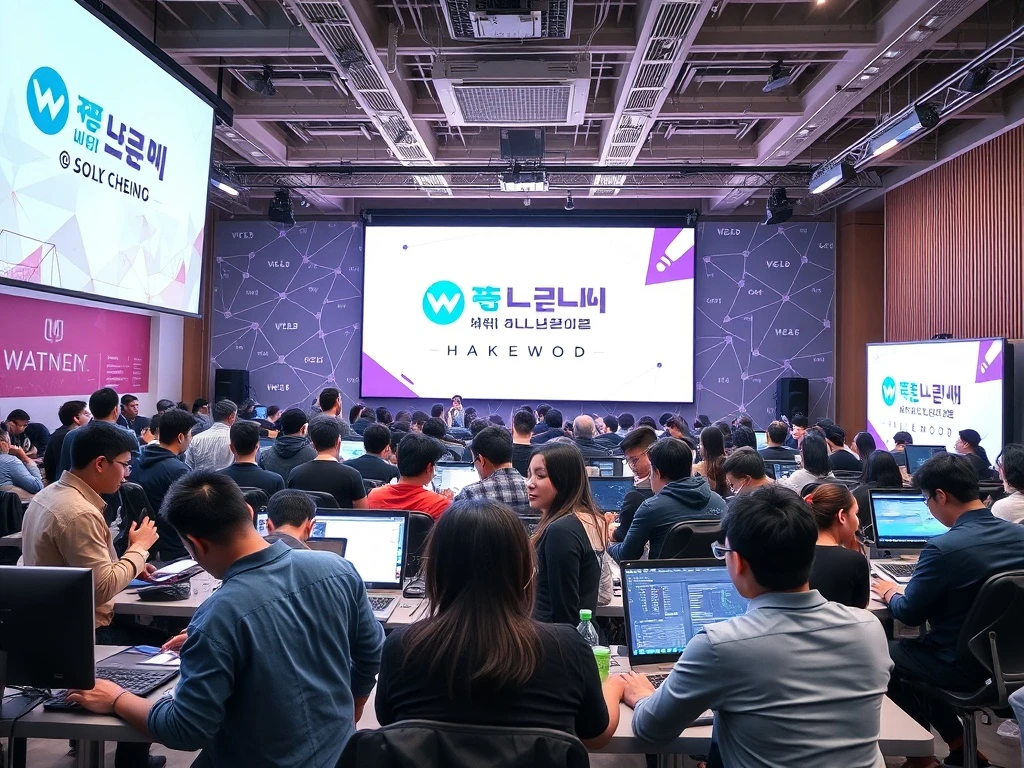
In a significant move for the Asian blockchain ecosystem, Worldcoin (WLD) has officially announced it will host the inaugural World Build Korea Hackathon in Seoul during 2026. This ambitious event, set against the backdrop of one of the world’s most technologically advanced cities, represents a concrete step toward solving one of the digital age’s most persistent challenges: reliably distinguishing real human users from artificial intelligence, bots, and Sybil accounts. Consequently, the hackathon will task participants with planning and developing prototype Web3 services that mandate verification through World ID, Worldcoin’s privacy-preserving digital identity protocol. The initiative has already garnered support from a consortium of prominent South Korean blockchain societies and media partners, signaling strong local interest in identity-centric innovation.
World Build Korea Hackathon Core Mission and Structure
The central thesis of the World Build Korea Hackathon is the development of practical applications that require proof of unique personhood. This focus directly addresses growing concerns about AI-generated content, automated spam, and fraudulent online activities that undermine digital trust and governance. Participants will utilize World ID to design and build functional prototypes of “Miniapps”—compact, purpose-built applications accessible exclusively to verified users. Furthermore, the event outlines several high-potential verticals for these prototypes, creating a framework for targeted innovation. These key areas include:
- Artificial Intelligence (AI): Developing systems where AI interactions or content generation are gated by human verification to prevent misuse.
- Web3 & DeFi: Creating financial or decentralized applications that use proof-of-personhood for fair distribution, governance, or access.
- Social Platforms & Community Tools: Building online spaces resistant to bots and fake accounts, fostering genuine human interaction.
- Gaming: Designing games or economies where player identity prevents cheating, multi-account exploitation, and ensures fair play.
- Governance Systems: Prototyping democratic tools for organizations or protocols where one-person-one-vote is cryptographically enforced.
The hackathon offers a total prize pool of $5,000, providing direct incentive for high-quality submissions. More importantly, top-performing teams will gain invaluable networking opportunities and the potential for future collaboration within the expanding global Worldcoin ecosystem. This pathway from prototype to potential integration is a crucial draw for serious developers and entrepreneurs.
Strategic Context and South Korean Blockchain Landscape
The choice of Seoul as the host city is a strategically calculated decision, not a coincidence. South Korea boasts one of the most vibrant and tech-savvy cryptocurrency and blockchain communities globally. The nation’s high internet penetration rate, widespread adoption of digital services, and government initiatives like the “Digital New Deal” create a fertile ground for Web3 experimentation. Moreover, South Korean users are famously active in both gaming and social media, two sectors directly targeted by the hackathon’s theme. The event’s supporting organizations reflect this deep local expertise. Key backing societies include Decipher, Oracle, BADG, Identei, Ewhachain, SKKrypto, Layer-A, and De-Butler—groups renowned for fostering developer education and blockchain advocacy within the country.
Media partnerships further amplify the event’s reach and credibility. Partners such as HumanLabs, TokenPost, Crypto News Room, and 071Labs ensure coverage will extend throughout the Korean tech press and into international circles. This collaborative model between a global project like Worldcoin and established local entities demonstrates a nuanced approach to ecosystem building. It leverages global technology while respecting and integrating with regional expertise and networks.
The Rising Imperative for Proof-of-Personhood
The hackathon’s focus arrives at a critical juncture. The explosive advancement of generative AI has made distinguishing between human and machine output increasingly difficult. Simultaneously, Sybil attacks—where a single entity creates many fake identities to manipulate a system—remain a fundamental vulnerability in online voting, airdrops, and social networks. Traditional solutions like Know Your Customer (KYC) checks often compromise privacy and are inaccessible to global populations. Worldcoin’s approach, centered on World ID, aims to provide a privacy-preserving, global standard for proving humanness without revealing personal data. A hackathon dedicated to building applications on this primitive is essentially a large-scale test of its utility and a catalyst for its adoption. Experts in digital identity often argue that the “killer app” for proof-of-personhood has yet to be built; this event in Seoul is designed to discover it.
Potential Impacts and Future Trajectory
The World Build Korea Hackathon has the potential to yield several tangible outcomes beyond the immediate prototypes. First, it serves as a concentrated talent discovery mechanism, identifying developers and teams in East Asia who are proficient in World ID integration and human-centric design. Second, successful projects could evolve into standalone startups or features within existing platforms, demonstrating real-world use cases that drive further investment and development in the identity layer. Third, the event strengthens Worldcoin’s presence and partnerships in a key Asian market, which is vital for any project with aspirations of global scale.
The timeline leading to the 2026 event will likely involve preparatory workshops, developer onboarding sessions, and increased dialogue between Worldcoin’s team and the Korean blockchain community. This build-up period is essential for ensuring high-quality participation and aligning project goals with local developer interests. The ultimate success metric will not just be the number of applicants, but the novelty and feasibility of the Miniapps produced. Projects that elegantly solve a clear problem using World ID will be the most significant contributors to the ecosystem’s long-term vision.
Conclusion
The announcement of the World Build Korea Hackathon marks a pivotal, action-oriented chapter in Worldcoin’s mission to create a more trustworthy internet. By converging in Seoul—a hub of technological innovation and crypto adoption—the project is leveraging local energy to tackle a global issue. The focus on building verified-human-only applications across AI, Web3, social, and gaming domains addresses pressing digital challenges with practical ingenuity. While the $5,000 prize pool will attract participants, the greater rewards lie in the networking, collaboration opportunities, and the chance to shape the early infrastructure of a verified digital economy. As the event approaches, the global blockchain community will be watching Seoul closely, anticipating the innovative prototypes that emerge from this unique convergence of identity technology and developer creativity.
FAQs
Q1: What is the primary goal of the World Build Korea Hackathon?
The primary goal is to foster the development of prototype Web3 services and “Miniapps” that require verification of real human users through World ID, effectively creating use cases that combat bots, AI impersonation, and Sybil attacks.
Q2: Who can participate in the hackathon, and what is required?
While specific eligibility criteria will be detailed closer to the event, it is typically open to developers, designers, and entrepreneurs. Participants will need to form teams and utilize Worldcoin’s World ID protocol to build their project prototypes focused on the outlined verticals like AI, gaming, or social platforms.
Q3: Why was Seoul, South Korea, chosen as the host city?
Seoul is a global leader in technology adoption, cryptocurrency trading, and gaming culture. South Korea’s advanced digital infrastructure and highly engaged blockchain community provide an ideal ecosystem for testing and promoting human-verification-based applications.
Q4: What are “Miniapps” in the context of this event?
For this hackathon, Miniapps refer to compact, functional application prototypes built on or integrated with the Worldcoin/World ID ecosystem. They are designed to perform specific tasks or offer services exclusively to users who have verified their unique personhood.
Q5: What happens to the winning projects after the hackathon concludes?
Beyond the monetary prize, top teams gain networking opportunities and potential for future collaboration within the Worldcoin ecosystem. This could include further development support, mentorship, or pathways to integrate successful concepts into larger platforms or initiatives.
Related News
- Strategic Boost: Brevis’s Incentra Platform Launches Exclusive Rewards Campaign for STAK Holders
- Gold and Silver Shatter Records with Stunning Rally as Bitcoin Stumbles Behind
- Strategic Bitcoin Reserve: Kansas Pioneers Bold State-Level Crypto Legislation in 2025