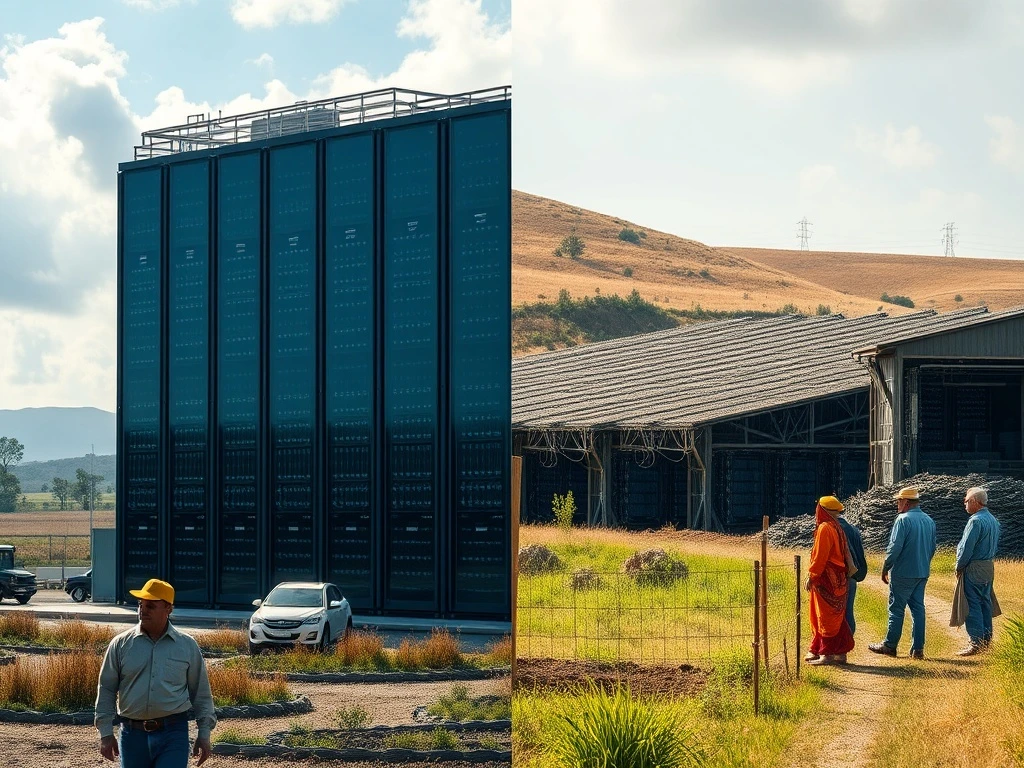
As artificial intelligence infrastructure expands globally in 2025, industry leaders increasingly recognize a crucial lesson from Bitcoin mining’s turbulent history: local communities matter profoundly in technology deployment strategies. The parallel between these two energy-intensive industries reveals important patterns about community relations, regulatory challenges, and sustainable growth models that will shape technological development for years to come.
Bitcoin Mining’s Hard-Earned Community Lessons
Bitcoin mining operations faced significant community backlash throughout the 2020s, particularly in regions where facilities appeared without proper engagement. For instance, mining companies initially focused primarily on energy costs and regulatory frameworks while underestimating local concerns about noise, visual impact, and resource competition. This approach created conflicts that delayed projects and increased operational costs substantially.
Communities in Texas, New York, and Washington State demonstrated how organized opposition could reshape mining operations through zoning restrictions, noise ordinances, and environmental reviews. Consequently, successful mining companies eventually developed comprehensive community relations programs that included transparency about energy consumption, local hiring initiatives, and infrastructure improvements. These adaptations proved essential for long-term operational stability.
The Regulatory Evolution of Mining Operations
Between 2020 and 2024, regulatory frameworks evolved significantly in response to community concerns. Municipalities implemented specific requirements for cryptocurrency mining facilities, including mandatory community benefit agreements, environmental impact assessments, and noise mitigation measures. This regulatory evolution created a template that AI infrastructure developers now study carefully as they plan new data center deployments.
AI Infrastructure Faces Similar Community Challenges
Artificial intelligence companies now encounter comparable community dynamics as they establish data centers for training large language models and running inference workloads. These facilities require substantial energy resources, water for cooling systems, and physical space that often competes with local needs. Community concerns about AI infrastructure mirror earlier worries about mining operations, including:
- Energy competition with residential and commercial users
- Water resource allocation during drought conditions
- Infrastructure strain on local power grids and roads
- Visual and noise impacts on community character
- Economic displacement through increased property values
Recent projects in Arizona, Iowa, and Georgia demonstrate how community engagement strategies directly influence project timelines and approval processes. Proactive companies now conduct extensive community consultations before finalizing site selections, learning from Bitcoin mining’s earlier mistakes.
Comparative Analysis: Energy Consumption Patterns
The energy requirements of both industries create similar community impacts, though with distinct characteristics. Bitcoin mining operations typically seek consistent, low-cost power sources, often locating near renewable energy projects or stranded power assets. AI data centers require both massive energy inputs and sophisticated cooling systems, creating different but equally significant community considerations.
| Metric | Bitcoin Mining | AI Infrastructure |
|---|---|---|
| Average Facility Size | 50-100 MW | 100-300 MW |
| Primary Energy Concern | Cost consistency | Reliability & capacity |
| Cooling Requirements | Moderate air cooling | Advanced liquid cooling |
| Community Benefit Agreements | Now standard practice | Increasingly required |
| Local Hiring Expectations | Limited technical roles | Mixed technical & support |
Expert Perspectives on Community Integration
Industry analysts emphasize that early and transparent community engagement represents the most effective strategy for technology deployment. Dr. Elena Rodriguez, infrastructure researcher at Stanford University, notes: “The Bitcoin mining industry developed community relations protocols through painful experience. AI companies now benefit from these established frameworks, allowing them to implement proven engagement strategies from project inception.”
Similarly, Michael Chen, who leads sustainability initiatives for a major cloud provider, observes: “We study mining operations as case studies in community dynamics. Their evolution from isolated facilities to community-integrated operations provides valuable lessons about long-term operational stability.”
Strategic Approaches to Community Engagement
Forward-thinking companies now implement comprehensive community engagement strategies before announcing new facilities. These approaches include establishing community advisory boards, creating local workforce development programs, and designing facilities with community aesthetics in mind. Some companies even involve community representatives in site selection processes to ensure alignment with local development goals.
Successful engagement strategies typically feature several key components:
- Transparent communication about project timelines and impacts
- Economic benefit sharing through local contracting and hiring
- Environmental mitigation measures that exceed requirements
- Long-term partnership frameworks beyond initial construction
- Educational initiatives that build local technical capacity
These strategies reflect lessons learned from Bitcoin mining operations that initially neglected community concerns. Companies that implement them early experience smoother regulatory approvals and stronger community support throughout project lifecycles.
Technological Innovations Reducing Community Impact
Both industries now invest in technologies that minimize community disruption. Bitcoin mining operations increasingly utilize waste heat recovery systems that provide heating for local buildings or industrial processes. AI data centers implement advanced cooling technologies that reduce water consumption and noise emissions. These innovations address specific community concerns while improving operational efficiency.
Modular design approaches allow both types of facilities to scale gradually with community capacity. This contrasts with earlier approaches that deployed maximum capacity immediately, overwhelming local infrastructure. Gradual scaling enables communities to adjust to increased demands on power grids, water systems, and transportation networks.
The Economic Balancing Act
Communities face complex decisions when evaluating technology infrastructure projects. While these facilities bring tax revenue and high-paying jobs, they also create demands on local resources. Successful projects now feature detailed economic impact analyses that transparently present both benefits and costs. This balanced approach builds trust and enables informed community decision-making.
Conclusion
AI infrastructure development clearly inherits Bitcoin mining’s crucial lesson about community engagement. The parallel experiences of these two technology sectors demonstrate that successful deployment requires more than technical excellence and regulatory compliance. Genuine community partnership represents the foundation for sustainable operations in an increasingly interconnected world. As both industries continue evolving, their shared experiences with community dynamics will shape best practices for all energy-intensive technology deployments moving forward.
FAQs
Q1: What specific community concerns do AI data centers share with Bitcoin mining operations?
Both types of facilities generate concerns about energy consumption, infrastructure strain, visual impact, noise pollution, and competition for local resources like water and land. Communities also worry about long-term economic impacts and environmental consequences.
Q2: How have Bitcoin mining companies improved their community relations over time?
Successful mining operations now implement comprehensive engagement strategies including community benefit agreements, local hiring initiatives, environmental mitigation measures, transparent communication about operations, and sometimes revenue sharing or infrastructure improvements for host communities.
Q3: What advantages do AI companies have in learning from Bitcoin mining’s experiences?
AI infrastructure developers benefit from established community engagement frameworks, regulatory precedents, proven communication strategies, and technological solutions that address common concerns. They can implement these lessons from project inception rather than through reactive adjustments.
Q4: How do energy requirements differ between AI infrastructure and Bitcoin mining?
While both require substantial energy, AI data centers typically need more sophisticated power reliability and quality for sensitive computing equipment. They also require advanced cooling systems that often use significant water resources, whereas Bitcoin mining operations primarily need consistent, low-cost power with simpler air cooling.
Q5: What role do local regulations play in shaping technology infrastructure deployment?
Municipal and regional regulations increasingly require community benefit agreements, environmental impact assessments, noise mitigation plans, and local hiring commitments. These regulations have evolved through experiences with Bitcoin mining and now apply similarly to AI infrastructure projects.
Related News
- Ledger IPO: Bold $4 Billion Public Offering Signals Crypto Market Confidence Under Trump Era
- Crypto Funds Exposed: Stunning $90M Illicit Fortune Revealed by Cybercriminal’s Online Boast
- Bitcoin Soars: BTC Price Shatters $90,000 Barrier in Historic Surge