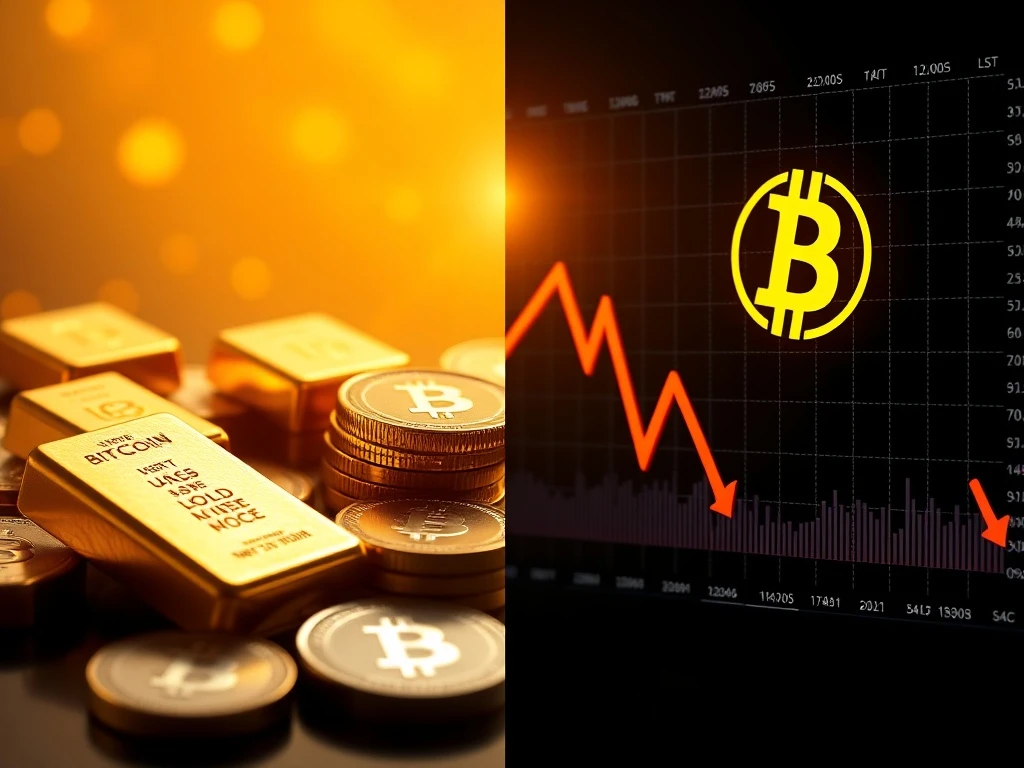
Global financial markets witnessed a remarkable divergence in March 2025 as gold and silver prices surged to unprecedented levels, approaching historic thresholds not seen in decades, while Bitcoin and other major cryptocurrencies experienced significant underperformance during the same period. This striking contrast between traditional safe-haven assets and digital currencies has captured the attention of investors, economists, and policymakers worldwide, signaling potential shifts in global risk sentiment and monetary policy expectations.
Gold and Silver Achieve Record-Breaking Performance
Precious metals markets experienced extraordinary momentum throughout early 2025, with gold breaking through the $2,800 per ounce barrier for the first time in history. Simultaneously, silver demonstrated even more dramatic gains, approaching the $40 per ounce mark that has remained elusive since 2012. The London Bullion Market Association reported consecutive daily records throughout February and March, with trading volumes increasing by approximately 47% compared to the same period last year. Central bank purchases, particularly from emerging economies, have contributed substantially to this sustained rally. According to World Gold Council data, global central banks added 1,136 tons to their reserves in 2024, marking the second-highest annual total on record. Furthermore, institutional investors have significantly increased their exposure to precious metals through exchange-traded funds (ETFs), with total holdings reaching their highest levels since 2020.
Drivers Behind the Precious Metals Surge
Multiple interconnected factors have propelled gold and silver to their current elevated positions. Geopolitical tensions in Eastern Europe and the Middle East have intensified throughout early 2025, driving traditional safe-haven demand. Additionally, persistent inflationary pressures in major economies have maintained real interest rates at historically low levels, reducing the opportunity cost of holding non-yielding assets like precious metals. The weakening of several major currencies against the U.S. dollar has paradoxically boosted dollar-denominated commodity prices, creating a complex currency dynamic that has benefited gold particularly. Industrial demand for silver has also strengthened significantly, with photovoltaic solar panel manufacturing consuming approximately 20% more silver in 2024 than previous estimates projected. The following table illustrates key price milestones achieved in recent weeks:
| Asset | Price on Jan 1, 2025 | Current Price (March 2025) | Percentage Increase |
|---|---|---|---|
| Gold (per ounce) | $2,150 | $2,785 | 29.5% |
| Silver (per ounce) | $28.50 | $38.75 | 36.0% |
| Platinum (per ounce) | $1,020 | $1,185 | 16.2% |
Bitcoin’s Unexpected Underperformance
While precious metals soared, Bitcoin and the broader cryptocurrency market displayed notable weakness during the same period. Bitcoin failed to maintain momentum above the $55,000 resistance level it briefly touched in January 2025, subsequently declining to approximately $48,000 by mid-March. This represents a 12.7% decrease from its early-year highs, contrasting sharply with traditional assets’ performance. Several factors have contributed to this divergence:
- Regulatory developments: Multiple jurisdictions have introduced stricter cryptocurrency regulations
- Institutional rotation: Some hedge funds have reduced crypto exposure in favor of traditional assets
- Technical factors: Bitcoin’s volatility has remained elevated compared to historical norms
- Macroeconomic conditions: Rising interest rate expectations have affected risk assets broadly
Market analysts note that cryptocurrency correlations with traditional risk assets have increased in recent months, potentially reducing their diversification benefits. The total cryptocurrency market capitalization has declined by approximately 15% from its February peak, with altcoins generally underperforming Bitcoin during the correction.
Historical Context and Market Implications
The current divergence between precious metals and cryptocurrencies represents a significant departure from patterns observed during previous market cycles. Traditionally, both asset classes have sometimes moved in tandem during periods of monetary uncertainty or currency debasement concerns. However, the 2025 dynamic suggests investors may be differentiating between these alternative assets more deliberately. Gold’s millennia-long history as a store of value appears to be resonating with institutional investors seeking stability amid geopolitical and economic uncertainty. Meanwhile, Bitcoin’s relatively brief history and technological complexities may be contributing to its current underperformance. This divergence raises important questions about portfolio construction and risk management strategies for the coming quarters.
Expert Analysis and Future Projections
Financial analysts and commodity specialists have offered varied perspectives on the sustainability of current trends. Dr. Evelyn Reed, Chief Commodities Strategist at Global Markets Research, notes: “The gold and silver rally reflects fundamental shifts in global monetary architecture rather than temporary sentiment fluctuations. Central bank accumulation patterns suggest this trend may persist through 2025.” Conversely, cryptocurrency analysts point to Bitcoin’s upcoming halving event in 2028 as a potential catalyst for renewed interest. However, they acknowledge that regulatory clarity remains a prerequisite for sustained institutional participation. Technical analysis indicates gold may face resistance near the psychologically significant $3,000 level, while silver could encounter selling pressure approaching $42-45 ranges that previously served as major resistance zones. Bitcoin’s chart patterns suggest potential support around $45,000, though a break below this level could signal further weakness.
Global Economic Backdrop and Monetary Policy
The broader economic environment continues to influence all asset classes significantly. Major central banks maintain cautious monetary policies, with the Federal Reserve, European Central Bank, and Bank of England all signaling gradual approaches to interest rate normalization. Inflation metrics, while moderating from peak levels, remain above most central bank targets in developed economies. This creates a complex environment where traditional safe-haven assets like gold benefit from residual inflation concerns, while risk assets like cryptocurrencies face headwinds from reduced liquidity and higher discount rates. Emerging market dynamics further complicate the picture, with countries like China and India demonstrating robust physical gold demand despite currency fluctuations and trade imbalances.
Investment Implications and Portfolio Considerations
The current market divergence presents both challenges and opportunities for investors. Traditional 60/40 stock-bond portfolios have faced renewed pressure as correlations between asset classes shift unexpectedly. Many portfolio managers are reconsidering allocation strategies, with some increasing precious metals exposure while maintaining reduced cryptocurrency positions. The role of alternative assets in diversified portfolios has become a subject of intense debate among investment committees. Key considerations include:
- Correlation benefits: Assets that perform differently under various market conditions
- Liquidity requirements: The ability to enter and exit positions efficiently
- Storage and security costs: Physical versus digital asset considerations
- Regulatory compliance: Evolving legal frameworks across jurisdictions
Financial advisors generally recommend maintaining balanced exposure while avoiding extreme concentration in any single asset class, regardless of recent performance trends.
Conclusion
The remarkable divergence between soaring precious metals and lagging cryptocurrency markets in early 2025 highlights the complex dynamics of modern financial systems. Gold and silver have demonstrated their enduring appeal as stores of value during periods of uncertainty, approaching historic levels that reflect both fundamental demand and macroeconomic conditions. Meanwhile, Bitcoin’s relative underperformance suggests digital assets continue to evolve within the broader financial ecosystem, facing distinct challenges and opportunities. Investors should monitor these developments closely, recognizing that asset class relationships may continue to evolve as global economic conditions change. The gold and silver rally, combined with Bitcoin’s current position, offers valuable insights into market sentiment and risk perceptions as we progress through 2025.
FAQs
Q1: Why are gold and silver prices reaching record highs?
Gold and silver prices are surging due to multiple factors including geopolitical tensions, persistent inflation concerns, strong central bank purchasing, currency fluctuations, and increased industrial demand for silver in renewable energy technologies.
Q2: How much have gold and silver increased in 2025?
Gold has increased approximately 29.5% from $2,150 to $2,785 per ounce, while silver has risen about 36% from $28.50 to $38.75 per ounce between January and March 2025.
Q3: Why is Bitcoin underperforming compared to precious metals?
Bitcoin faces regulatory uncertainty, institutional portfolio rotation toward traditional assets, technical resistance levels, and sensitivity to changing interest rate expectations, all contributing to its relative underperformance.
Q4: Are gold and silver good investments during market uncertainty?
Historically, precious metals have served as effective hedges during periods of geopolitical tension, currency volatility, and inflationary pressure, though past performance doesn’t guarantee future results.
Q5: Could Bitcoin recover and outperform precious metals later in 2025?
While possible, Bitcoin’s recovery would likely require favorable regulatory developments, renewed institutional interest, and improved market sentiment toward risk assets generally.
Related News
- Bitcoin’s Dramatic Rebound: How Suspected Japanese FX Intervention Fueled the $91,000 Recovery
- ARK Invest ETF Filing for CoinDesk Crypto 20 Index Sparks Revolutionary Shift in Digital Asset Access
- USDT Whale Transfer: Stunning $247 Million Move to Bitfinex Sparks Market Scrutiny