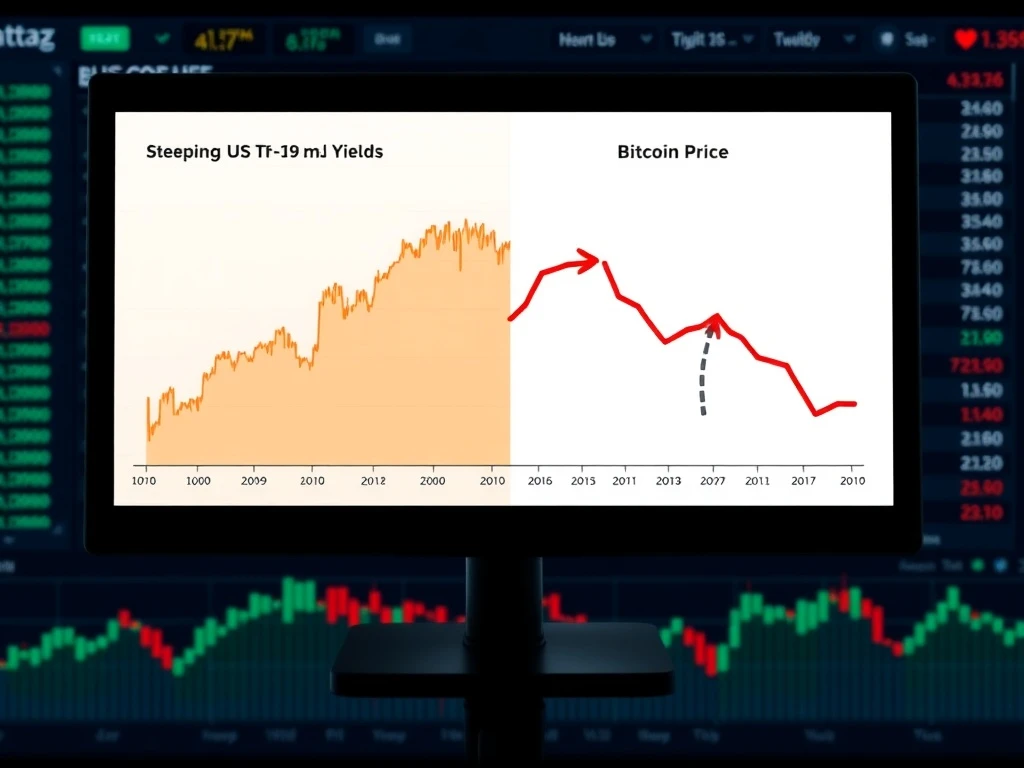
NEW YORK, March 2025 – The widening spread between 2-year and 30-year US Treasury yields has reached its highest level since 2021, creating significant downward pressure on Bitcoin prices as traditional financial dynamics increasingly influence cryptocurrency markets. This development marks a crucial moment where macroeconomic forces directly impact digital asset valuations, signaling deeper integration between traditional and crypto financial systems.
Understanding the Widening US Treasury Yield Spread
The Treasury yield spread represents the difference between short-term and long-term government bond interest rates. Currently, the gap between 2-year and 30-year Treasury yields has expanded dramatically, indicating shifting market expectations about future economic conditions. This widening typically signals investor anticipation of higher long-term inflation or changing Federal Reserve policies.
David Roberts, head of fixed income at Nedgroup Investments, explains this phenomenon clearly. “A widening Treasury spread signifies rising long-term yields,” Roberts states. “This movement reflects broader global bond market dynamics, including recent sell-offs in Japanese government bonds that have contributed to increasing US Treasury yields.”
Several factors drive this yield curve steepening:
- Inflation expectations: Investors demand higher compensation for long-term lending
- Monetary policy shifts: Changing Federal Reserve interest rate projections
- Global capital flows: International bond market movements affecting US yields
- Economic growth forecasts: Revised expectations for future economic expansion
The Historical Context of Yield Spread Movements
Yield spread behavior provides valuable historical context for current market conditions. The last time spreads reached similar levels in 2021, Bitcoin experienced significant volatility. However, the cryptocurrency market has matured substantially since then, with increased institutional participation and regulatory clarity changing how traditional financial indicators affect digital assets.
Historical data reveals clear patterns between yield spreads and risk asset performance. During previous widening periods, investors typically rotated from growth-oriented assets toward more stable, income-generating investments. This pattern now extends to cryptocurrency markets as institutional adoption increases correlation with traditional financial indicators.
How Treasury Yields Create Downward Pressure on Bitcoin
Higher long-term Treasury yields fundamentally alter investment calculus across all asset classes. For Bitcoin specifically, several mechanisms transmit this pressure:
Opportunity Cost Increases: Rising yields on risk-free government bonds make holding non-yielding assets like Bitcoin relatively less attractive. Investors can now earn substantial returns without taking cryptocurrency volatility risk.
Portfolio Rebalancing: Institutional investors frequently adjust allocations based on changing risk-return profiles. Higher Treasury yields often trigger rebalancing away from volatile assets toward more stable income generators.
Liquidity Effects: Changing yield environments affect overall market liquidity conditions. Tighter monetary conditions typically reduce available capital for speculative investments including cryptocurrencies.
Roberts emphasizes this connection directly. “A sustained increase in long-term yields could adversely affect Bitcoin,” he notes. “Higher interest rates increase the burden of holding non-yielding assets, making volatility-sensitive assets like Bitcoin more likely to face downward price pressure.”
| Asset Class | Typical Response to Widening Spread | Primary Mechanism |
|---|---|---|
| Bitcoin/Cryptocurrency | Downward Pressure | Increased opportunity cost, reduced risk appetite |
| Growth Stocks | Mixed to Negative | Higher discount rates reduce future earnings value |
| Value Stocks | Generally Positive | Better positioned for higher rate environments |
| Real Estate | Negative | Higher mortgage rates reduce affordability |
| Gold | Mixed | Inflation hedge vs. higher opportunity cost |
The Global Bond Market Connection
International bond market movements significantly influence US Treasury yields. Recent sell-offs in Japanese government bonds have created ripple effects across global fixed income markets. As Japanese yields rise, international investors reallocate capital, affecting US Treasury prices and yields through interconnected global capital flows.
This global connection means Bitcoin now responds to financial developments worldwide, not just domestic US conditions. The cryptocurrency’s price action increasingly reflects its status as a truly global asset class influenced by international monetary policy and capital movements.
Bitcoin’s Evolving Relationship with Traditional Finance
Bitcoin’s sensitivity to Treasury yield movements represents a maturation phase for cryptocurrency markets. Initially operating largely independently from traditional finance, digital assets now demonstrate increasing correlation with established financial indicators. This evolution reflects several developments:
Institutional Adoption: Major financial institutions now incorporate Bitcoin into traditional portfolio frameworks, applying conventional risk management approaches to cryptocurrency allocations.
Regulatory Integration: Evolving regulatory frameworks create clearer connections between crypto and traditional markets, facilitating capital flows and analytical comparisons.
Market Structure Development: Sophisticated trading infrastructure now links cryptocurrency markets with traditional financial systems, enabling more efficient price discovery and capital allocation.
This integration means traditional financial analysis increasingly applies to cryptocurrency markets. Macroeconomic indicators, monetary policy developments, and bond market movements now regularly influence Bitcoin price action alongside cryptocurrency-specific factors.
Comparing Bitcoin to Other Non-Yielding Assets
Bitcoin’s response to yield changes shares characteristics with other non-yielding assets while maintaining unique attributes. Like gold, Bitcoin faces opportunity cost pressure from rising yields. However, Bitcoin’s higher volatility and different adoption trajectory create distinct response patterns.
Key differences include:
- Adoption curve: Bitcoin continues experiencing network growth effects
- Technological development: Ongoing protocol improvements affect utility value
- Regulatory environment: Evolving legal frameworks create unique risks and opportunities
- Market maturity: Still developing liquidity and institutional participation
Market Implications and Future Outlook
The current yield spread widening carries significant implications for cryptocurrency investors and traditional market participants alike. Several developments warrant close monitoring:
Federal Reserve Policy: Central bank decisions regarding interest rates and quantitative tightening will directly affect yield spread dynamics and, consequently, Bitcoin price pressure.
Inflation Trajectory: Persistent inflation could maintain pressure on long-term yields, extending the challenging environment for non-yielding assets.
Global Economic Conditions: International growth patterns and monetary policies will influence capital flows between traditional and cryptocurrency markets.
Cryptocurrency Adoption: Continued institutional and retail adoption could potentially offset some yield-related pressure through increased network utility and demand.
Market participants should prepare for potentially increased volatility as Bitcoin navigates this changing yield environment. Historical patterns suggest adaptation periods where cryptocurrency markets adjust to new financial realities, often creating both challenges and opportunities for informed investors.
Risk Management Considerations
Current market conditions necessitate careful risk management approaches. Investors should consider portfolio adjustments that account for changing yield environments while maintaining appropriate cryptocurrency allocations based on individual risk tolerance and investment horizons.
Effective strategies might include:
- Diversification: Balancing cryptocurrency exposure with yield-generating assets
- Position sizing: Adjusting allocation percentages based on changing risk profiles
- Hedging approaches: Utilizing traditional financial instruments to manage crypto exposure
- Time horizon alignment: Matching investment strategies with appropriate holding periods
Conclusion
The widening US Treasury yield spread creates significant downward pressure on Bitcoin prices through multiple transmission mechanisms. Higher long-term yields increase the opportunity cost of holding non-yielding assets while encouraging portfolio rebalancing away from volatility-sensitive investments. This development highlights Bitcoin’s evolving integration with traditional financial systems and its increasing responsiveness to macroeconomic indicators. Market participants must now consider Treasury yield movements alongside cryptocurrency-specific factors when analyzing Bitcoin price action and making investment decisions. The relationship between yield spreads and Bitcoin prices will likely continue evolving as both traditional and cryptocurrency markets mature and interact more extensively.
FAQs
Q1: What exactly is the US Treasury yield spread?
The yield spread represents the difference between short-term and long-term US government bond interest rates, specifically comparing instruments like 2-year and 30-year Treasury securities. This spread indicates market expectations about future economic conditions and monetary policy.
Q2: Why does a widening yield spread affect Bitcoin prices?
A widening spread typically means rising long-term yields, which increases the opportunity cost of holding non-yielding assets like Bitcoin. Higher risk-free returns available from government bonds make volatile assets less attractive to many investors, creating selling pressure.
Q3: How significant is the current yield spread widening?
The spread between 2-year and 30-year Treasury yields has reached its highest level since 2021, representing a substantial move that signals important shifts in market expectations about inflation, growth, and monetary policy.
Q4: Are all cryptocurrencies affected equally by yield changes?
While yield changes affect the broader cryptocurrency market, Bitcoin typically shows the strongest correlation with traditional financial indicators due to its status as a benchmark digital asset with substantial institutional ownership.
Q5: Could Bitcoin eventually become less sensitive to yield changes?
Yes, as Bitcoin develops additional utility beyond pure speculation and store of value, and as its adoption curve progresses, its price action may become less correlated with traditional financial indicators, though complete decoupling seems unlikely given increasing market integration.
Related News
- Silver Price Shatters $100 Barrier in Stunning Market Repricing
- Binance Stock Tokens: The Bold Potential Return of Crypto-Traditional Market Bridges
- Bitcoin Supercycle Prediction: Changpeng Zhao’s Stunning 2026 Forecast at Davos