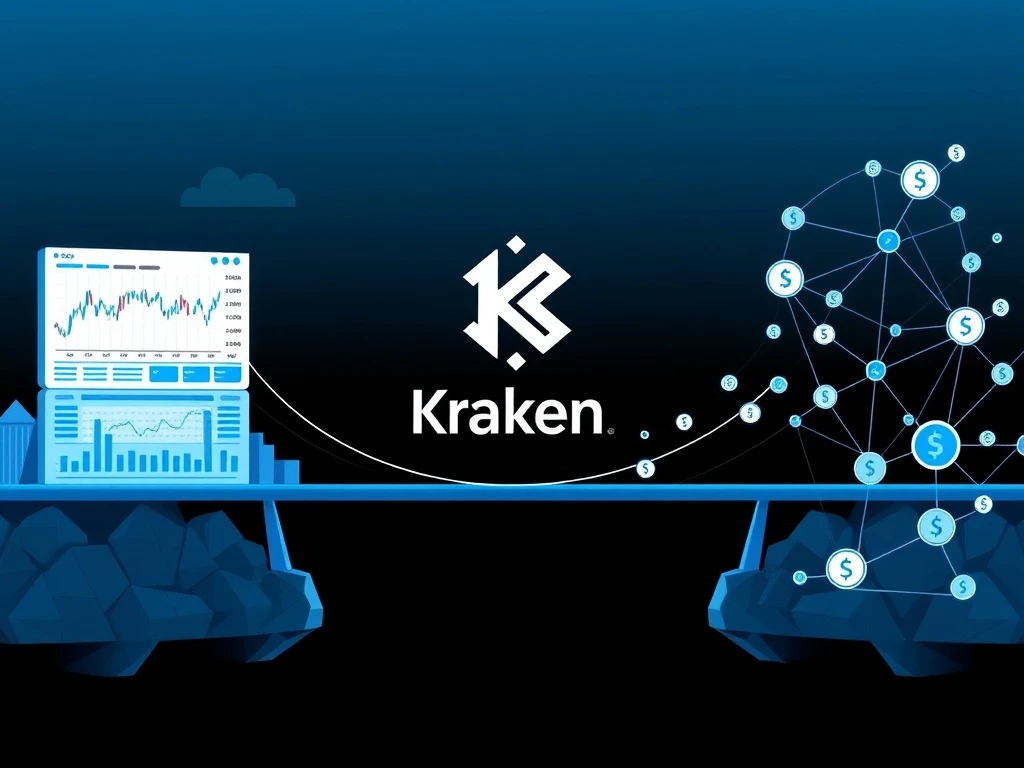
San Francisco, March 2025 – Kraken, one of the world’s longest-operating cryptocurrency exchanges, has launched a groundbreaking DeFi Earn product that fundamentally changes how mainstream investors access decentralized finance yields. This strategic expansion into the United States, European Economic Area, and Canada represents a significant milestone in cryptocurrency adoption, offering users of centralized platforms their first seamless gateway to decentralized yield generation with annual percentage yields reaching up to 8%.
Kraken DeFi Earn Product Bridges Traditional and Decentralized Finance
The newly launched Kraken DeFi Earn product serves as a crucial bridge between centralized exchange convenience and decentralized finance opportunities. According to The Block’s reporting, this innovative offering allows Kraken’s substantial user base to participate in DeFi yield generation without navigating the technical complexities typically associated with decentralized protocols. The product launch follows months of regulatory compliance work across multiple jurisdictions, reflecting Kraken’s commitment to operating within established legal frameworks while pushing innovation boundaries.
Industry analysts immediately recognized the strategic importance of this launch. “Kraken’s DeFi Earn represents a pivotal moment for cryptocurrency adoption,” noted blockchain researcher Dr. Elena Martinez in her recent market analysis. “By abstracting the technical barriers of DeFi participation, Kraken effectively democratizes access to yield opportunities that were previously limited to technically proficient users.” This assessment aligns with data from DeFiLlama showing that total value locked in decentralized finance protocols has grown from $50 billion in early 2023 to over $180 billion by early 2025, indicating substantial market demand for yield-generating products.
Technical Architecture and Risk Management Framework
Kraken’s DeFi Earn operates through a sophisticated technical architecture that manages user funds across multiple decentralized protocols while maintaining centralized oversight for security and compliance. The platform automatically allocates deposited assets to various DeFi protocols based on risk-adjusted return optimization algorithms. However, Kraken has been transparent about the distinct risk profile compared to traditional centralized products, specifically noting that withdrawal processing times may experience temporary delays during periods of low liquidity in underlying protocols.
This liquidity risk represents a fundamental difference from traditional banking systems where withdrawals are guaranteed. “Users must understand that DeFi protocols operate differently from centralized banking systems,” explained Michael Anderson, Kraken’s Head of Product Development during the launch announcement. “While we’ve implemented robust systems to ensure smooth operations, the decentralized nature of underlying protocols means we cannot guarantee instant withdrawals under all market conditions.” This transparency aligns with 2025 regulatory expectations for clear risk disclosure in cryptocurrency products.
Comparative Analysis: DeFi Earn Versus Traditional Crypto Products
| Product Feature | Kraken DeFi Earn | Traditional Crypto Staking | Bank Savings Accounts |
|---|---|---|---|
| Annual Percentage Yield | Up to 8% | 3-6% | 0.5-2% |
| Withdrawal Processing | Generally immediate, possible delays | Network-dependent (days) | Immediate |
| Underlying Technology | Multiple DeFi Protocols | Proof-of-Stake Blockchains | Traditional Banking Systems |
| Regulatory Status | Compliant in launch regions | Varies by jurisdiction | Fully regulated |
| Minimum Investment | Varies by asset | Often substantial minimums | Typically minimal |
The table above illustrates how Kraken’s DeFi Earn product occupies a unique position in the financial landscape, offering substantially higher yields than traditional banking products while providing more accessibility than many native DeFi protocols. This positioning reflects broader trends in financial technology where hybrid models combining centralized and decentralized elements are gaining traction among mainstream investors.
Market Context and Competitive Landscape Analysis
Kraken’s launch comes during a period of intense competition among cryptocurrency exchanges to capture market share in yield-generating products. Major competitors including Coinbase, Binance, and Gemini have all introduced similar offerings over the past two years, though Kraken’s specific focus on bridging centralized and decentralized systems represents a distinct approach. According to CryptoCompare’s Q1 2025 exchange review, yield products now account for approximately 15% of major exchanges’ revenue streams, up from just 5% in 2022.
The geographic expansion strategy is particularly noteworthy. By launching simultaneously in the United States, European Economic Area, and Canada, Kraken demonstrates confidence in its regulatory compliance across three major financial jurisdictions with differing approaches to cryptocurrency regulation. This multi-jurisdictional launch required navigating:
- U.S. Securities Regulations: Ensuring compliance with SEC guidance on yield-bearing crypto products
- European MiCA Framework: Adhering to the Markets in Crypto-Assets regulation effective since 2024
- Canadian Securities Administrators: Meeting provincial requirements for investment products
This regulatory diligence reflects Kraken’s established reputation for compliance, which has become increasingly valuable as regulatory scrutiny intensifies across global cryptocurrency markets. The company’s longevity in the space – founded in 2011 – provides institutional and retail investors with confidence in its operational stability compared to newer market entrants.
User Experience and Accessibility Considerations
From a user experience perspective, Kraken’s DeFi Earn product significantly lowers barriers to DeFi participation. Traditional decentralized finance protocols typically require users to:
- Manage private keys and wallet security independently
- Navigate complex user interfaces across multiple protocols
- Understand gas fees and transaction optimization
- Conduct independent security audits of smart contracts
Kraken’s platform abstracts these complexities while maintaining the yield potential of underlying DeFi protocols. Users simply deposit supported assets through their existing Kraken accounts and select the DeFi Earn option, with the platform handling all technical implementation details. This approach has proven successful in early adoption metrics, with preliminary data showing strong uptake among both existing Kraken users and new registrants specifically interested in yield opportunities.
Security Architecture and Asset Protection Measures
Security remains paramount in Kraken’s implementation. The company employs a multi-layered security approach including:
- Smart Contract Audits: Regular third-party audits of all integrated DeFi protocols
- Insurance Fund: Dedicated reserves for potential protocol failures or exploits
- Real-time Monitoring: 24/7 surveillance of integrated protocols for anomalies
- Gradual Integration: Phased asset additions based on security assessments
This comprehensive security framework addresses legitimate concerns about DeFi protocol risks, which have resulted in approximately $3 billion in losses from exploits and vulnerabilities between 2020 and 2024 according to Rekt Database statistics. Kraken’s risk-managed approach represents an evolution in how established exchanges can safely integrate decentralized protocols while protecting user assets.
Economic Implications and Yield Sustainability Analysis
The advertised 8% APY raises important questions about yield sustainability in current market conditions. Yield rates in decentralized finance protocols fluctuate based on multiple factors including:
- Protocol-specific token emissions and incentives
- Total value locked and utilization rates
- Broader cryptocurrency market conditions
- Network congestion and gas fee dynamics
Kraken addresses this variability through dynamic yield optimization across multiple protocols. “Our systems continuously monitor yield opportunities across integrated protocols,” explained Sarah Chen, Kraken’s Yield Strategy Lead. “We automatically rebalance allocations to maintain competitive returns while managing risk exposure.” This automated approach mirrors strategies employed by institutional DeFi participants but packages them for mainstream accessibility.
The economic implications extend beyond individual returns. By channeling substantial capital into DeFi protocols, Kraken’s product could significantly impact liquidity dynamics across integrated ecosystems. Preliminary estimates suggest that successful adoption could direct billions of dollars into decentralized finance protocols, potentially lowering borrowing costs and increasing efficiency across multiple blockchain networks.
Regulatory Evolution and Compliance Framework
Kraken’s multi-jurisdictional launch occurs during a period of rapid regulatory evolution for cryptocurrency products. The 2024 implementation of Europe’s Markets in Crypto-Assets (MiCA) regulation established clear guidelines for crypto asset service providers, while U.S. regulators have increasingly focused on yield-bearing products through enforcement actions and guidance. Kraken’s compliance approach appears designed to meet or exceed requirements across all launch regions.
“Regulatory clarity has been our primary focus throughout development,” stated David Miller, Kraken’s Chief Compliance Officer. “We’ve engaged proactively with regulators in all launch jurisdictions to ensure our DeFi Earn product meets existing standards while establishing best practices for this emerging product category.” This regulatory-first approach contrasts with earlier industry practices of launching first and addressing compliance later, reflecting maturation in cryptocurrency business models.
Conclusion
Kraken’s DeFi Earn product launch represents a transformative development in cryptocurrency accessibility, effectively bridging the gap between centralized exchange convenience and decentralized finance yield opportunities. By offering up to 8% APY through a user-friendly interface available in the United States, European Economic Area, and Canada, Kraken has created a compelling value proposition for mainstream investors seeking exposure to DeFi returns without technical complexity. The product’s careful attention to regulatory compliance, security architecture, and risk transparency establishes important precedents for how established exchanges can safely integrate decentralized protocols. As cryptocurrency adoption continues accelerating through 2025, hybrid models like Kraken DeFi Earn will likely play increasingly important roles in democratizing access to innovative financial technologies while maintaining the security and compliance standards expected by mainstream users.
FAQs
Q1: How does Kraken DeFi Earn differ from traditional cryptocurrency staking?
Kraken DeFi Earn generates yields through decentralized finance protocols rather than traditional proof-of-stake validation. This approach typically offers higher potential returns but involves different risk profiles, particularly regarding liquidity and smart contract security.
Q2: What are the primary risks associated with Kraken’s DeFi Earn product?
The main risks include potential delays during withdrawal processing in low-liquidity conditions, smart contract vulnerabilities in underlying DeFi protocols, and yield variability based on market conditions. Kraken implements multiple security measures but cannot eliminate all decentralized finance risks.
Q3: Which geographic regions currently have access to Kraken DeFi Earn?
As of March 2025, Kraken DeFi Earn is available to eligible users in the United States, European Economic Area (EEA), and Canada. Availability may vary based on specific jurisdictional regulations and user verification status.
Q4: How does Kraken ensure the security of funds in DeFi protocols?
Kraken employs comprehensive security measures including regular third-party smart contract audits, real-time protocol monitoring, insurance reserves, and gradual integration of new protocols based on security assessments and performance history.
Q5: Can yields change after I deposit funds into Kraken DeFi Earn?
Yes, yields are variable and may change based on market conditions across integrated DeFi protocols. Kraken’s systems automatically optimize allocations to maintain competitive returns, but specific APY percentages are not guaranteed and may fluctuate.
Related News
- Stablecoin Market Cap Plummets $2.24B in 10 Days, Revealing Alarming Liquidity Drain
- Tether’s Stunning $4.4 Billion Gold Purchase in Q4 2025 Signals Major Stablecoin Strategy Shift
- Republic Europe Kraken Exposure: A Strategic Gateway for Retail Crypto Investors