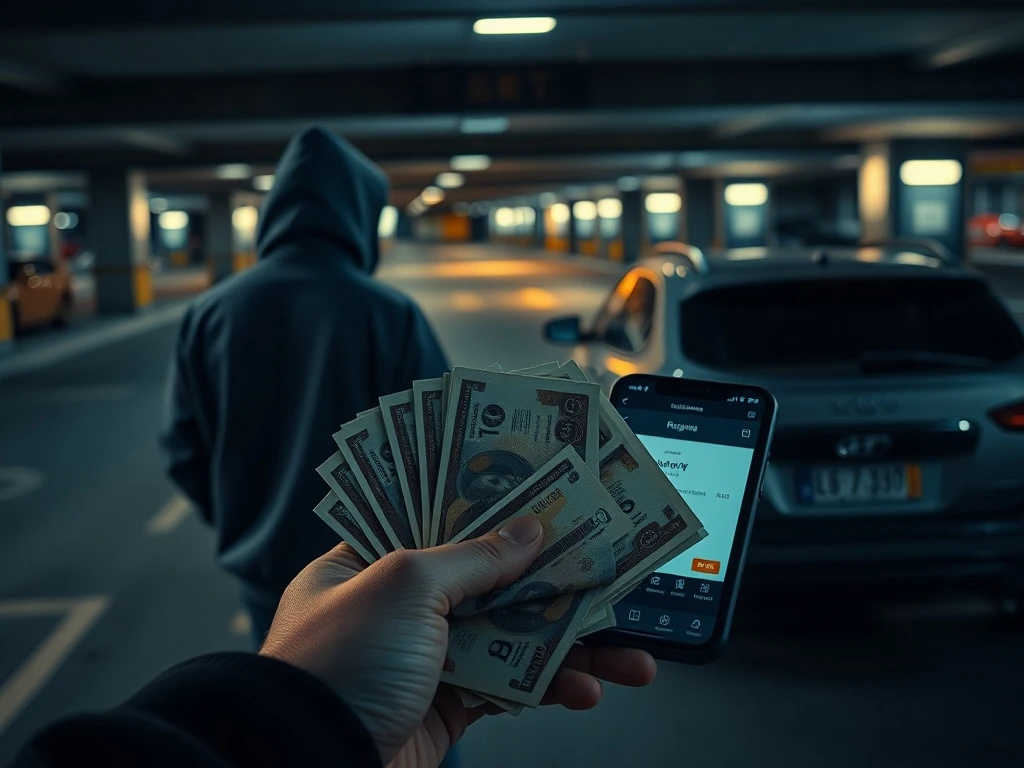
In a stark reminder of the physical dangers lurking in the digital asset world, Seoul police have arrested two teenage males for allegedly orchestrating a brazen cryptocurrency scam, stealing 28 million won (approximately $20,700 USD) in a fake in-person deal. This incident, reported by MBC News and under investigation by the Seoul Gangnam Police Station, underscores the critical security risks that persist even in one of the world’s most technologically advanced cities. The arrest highlights a growing trend where online deception transitions into real-world crime, exploiting the pseudo-anonymous and often trust-based nature of peer-to-peer crypto trading.
Anatomy of a Crypto Scam: The Gangnam Parking Lot Heist
According to official reports, the alleged crime unfolded with precise timing. The suspects arranged to meet the victim for an in-person cryptocurrency transaction in the affluent Cheongdam-dong neighborhood of Gangnam-gu, Seoul. The meeting point was an apartment parking lot, a location chosen perhaps for its relative privacy and quick escape routes. At around 10:00 a.m. UTC on January 27, the exchange was set to occur. However, instead of completing the digital transfer, the teens are accused of taking the physical cash—28 million won—and fleeing the scene immediately. This type of scam, often called a “cash-and-dash” in peer-to-peer (P2P) circles, bypasses digital security entirely, targeting the fundamental vulnerability of face-to-face meetings.
Furthermore, law enforcement agencies globally note a rise in such hybrid crimes. The process typically follows a clear pattern: negotiation on a P2P platform, agreement to meet in person, and then the execution of theft at the moment of exchange. Consequently, the Seoul case is not an isolated event but part of a broader, concerning pattern. The Gangnam Police Station’s investigation will likely focus on digital footprints, including communications and platform histories, to build a robust case.
The Persistent Risk of In-Person Crypto Trades
Despite the proliferation of secure, regulated exchanges, many traders seek out P2P deals for better rates or to avoid identity checks. This environment, however, is fraught with risk. In-person transactions remove the protective escrow services that reputable online P2P platforms offer. Once cash changes hands in a secluded location, the victim has little recourse if the promised digital assets never arrive. Security experts consistently advise against large, in-person cash trades for this exact reason. The Seoul incident serves as a potent case study in the potential consequences.
Global Context: Cryptocurrency Crime and Law Enforcement Response
The arrest in Seoul occurs against a backdrop of intensifying global scrutiny on cryptocurrency-related crime. In 2024, INTERPOL and national bodies like South Korea’s Financial Intelligence Unit (FIU) significantly enhanced their tracking and investigative capabilities for digital asset fraud. South Korea, in particular, has implemented stringent regulations, including the Travel Rule, which mandates the sharing of sender and receiver information for crypto transfers. While these rules target exchanges, crimes like the Gangnam scam exploit the unregulated gaps between them.
Moreover, the involvement of teenagers is a notable and troubling aspect. It suggests that the technical barriers to executing certain crypto scams are low, requiring more social engineering savvy than coding skill. Law enforcement data from various jurisdictions indicates a slight increase in younger perpetrators being involved in financial cybercrimes, often lured by the perception of easy money and anonymous digital currencies.
- Escrow Services: Always use platform-mediated escrow for P2P trades. The third party holds the crypto until payment is confirmed.
- Public Venues: If a meet-up is unavoidable, choose a secure, public, and well-surveilled location like a police station lobby or a bank.
- Verification: Verify the counterparty’s identity as much as possible before agreeing to a deal, though this can be challenging.
- Transaction Limits: Avoid dealing in large, physical cash amounts. Use bank transfers or other traceable payment methods for significant sums.
Legal Implications and Investigative Pathways in South Korea
The Seoul Gangnam Police Station’s investigation will proceed under South Korea’s robust financial crime statutes. The teens face serious charges, likely including fraud and theft. The fact that the medium of exchange was intended to be cryptocurrency adds layers of complexity but does not diminish the criminal act of stealing physical cash. Prosecutors will need to prove intent and deception, which often relies on digital evidence from messaging apps and trading platforms.
Additionally, South Korea’s Act on Reporting and Using Specified Financial Transaction Information provides authorities with tools to trace crypto flows. If the suspects attempted to convert or use the stolen fiat money to purchase cryptocurrencies, those transactions could be traced through regulated exchanges. The police investigation, therefore, has a dual track: solving the immediate theft and potentially uncovering any related digital asset laundering.
Expert Insight on Preventing Transactional Fraud
Financial crime analysts emphasize that education is the first line of defense. New entrants to the cryptocurrency market are often the most vulnerable to social engineering tactics. Experts recommend treating in-person deals with extreme skepticism. “The promise of a better rate or privacy should never override basic security principles,” notes a analyst from a Seoul-based blockchain security firm. “Use the official channels with built-in protections. If a deal seems too good to be true, or pressures you into an unsafe meeting, it almost certainly is a scam.” This professional perspective reinforces that technological innovation must be matched by user vigilance.
Conclusion
The arrest of two teens for a $20,700 cryptocurrency scam in Seoul is a critical reminder that the crypto ecosystem’s risks are not confined to the digital realm. This fake crypto deal illustrates how traditional crimes adapt to new financial technologies, preying on those seeking deals outside secured systems. As the Seoul Gangnam Police Station continues its investigation, the case underscores the importance of using secure, traceable methods for all transactions and the ongoing need for public awareness about the tactics of digital asset scammers. Ultimately, safety in the cryptocurrency space requires combining technological tools with common-sense personal security practices.
FAQs
Q1: What exactly happened in the Seoul crypto scam?
The police allege two teenagers arranged an in-person meeting to sell cryptocurrency, took 28 million won (about $20,700 USD) in cash from the buyer in a Gangnam parking lot, and then fled without delivering the digital assets.
Q2: Why are in-person cryptocurrency trades considered risky?
They often lack the escrow protections of online platforms, occur in potentially isolated locations, and involve untraceable cash, making them prime targets for theft and fraud.
Q3: What is South Korea’s stance on cryptocurrency crime?
South Korea has implemented strict regulations, including the Travel Rule, and authorities like the Financial Intelligence Unit actively investigate crypto-related fraud, treating it as a serious financial crime.
Q4: How can I safely conduct a peer-to-peer (P2P) crypto trade?
Use reputable P2P platforms with built-in escrow services, avoid large cash transactions, verify the counterparty’s reputation, and never agree to meet in secluded, private locations.
Q5: What should I do if I become a victim of a similar crypto scam?
Immediately contact your local law enforcement agency. Provide all evidence, including communication logs, transaction details, and any information about the counterparty. Also, report the incident to the platform where the deal was arranged.
Related News
- Steak ‘n Shake Bitcoin Strategy Soars: $15 Million Treasury Expansion Signals Corporate Confidence
- Security Token OTC Exchange Licenses Face Critical Delay as South Korea’s FSC Postpones Final Decision
- Perpetual Futures Prediction Market Revolution: SOON’s 100xSOON Platform Launches with Unprecedented 10,000x Leverage