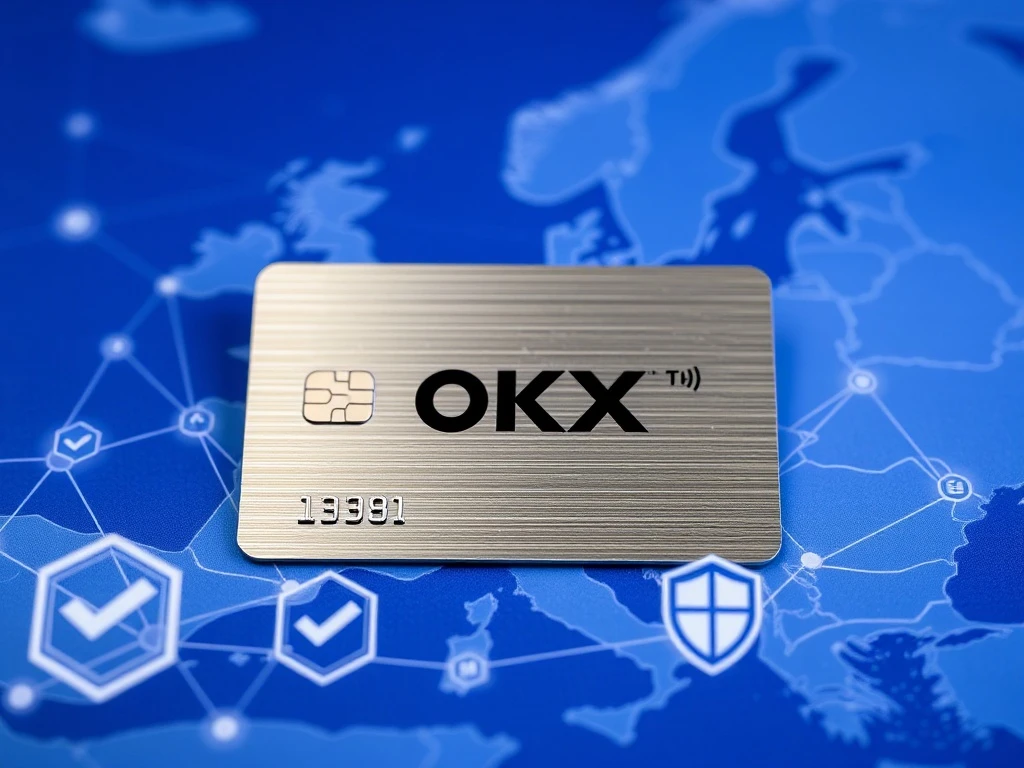
LONDON, March 2025 – OKX, one of the world’s leading cryptocurrency exchanges, has officially launched its compliant decentralized finance payment system and physical card across the European Economic Area. This strategic expansion represents a significant milestone in bridging traditional financial infrastructure with decentralized protocols while operating within established regulatory frameworks. The launch follows months of regulatory consultations and technological development, positioning OKX as a pioneer in regulated DeFi accessibility.
OKX DeFi Card Bridges Traditional and Decentralized Finance
The newly introduced payment system enables users to seamlessly convert and spend digital assets across millions of merchants throughout Europe. Importantly, the platform maintains full compliance with the European Union’s Markets in Crypto-Assets (MiCA) regulations and anti-money laundering directives. This compliance framework distinguishes OKX’s offering from previous crypto card implementations that faced regulatory challenges. The system integrates directly with decentralized protocols while maintaining necessary oversight mechanisms.
European regulators have increasingly focused on creating clear guidelines for cryptocurrency services. Consequently, OKX developed its payment infrastructure in consultation with multiple national financial authorities. The exchange secured necessary electronic money institution licenses in several jurisdictions before launching the pan-European service. This preparatory work ensures the platform operates legally across all 31 EEA member states without regulatory interruptions.
Technical Architecture and Security Protocols
The payment system employs a sophisticated technical architecture that balances decentralization with compliance requirements. When users initiate transactions, the system automatically converts selected cryptocurrencies to euros through licensed payment processors. These conversions occur in real-time using aggregated liquidity from both centralized and decentralized exchanges. Meanwhile, transaction monitoring systems screen all payments against established compliance databases.
Security measures incorporate multiple layers of protection including biometric authentication and hardware security modules. The physical card features EMV chip technology alongside contactless payment capabilities. Additionally, users can generate virtual cards for online transactions through the OKX mobile application. All card transactions settle through established payment networks while maintaining appropriate record-keeping for regulatory purposes.
European Regulatory Landscape for DeFi Payments
The European Union has established increasingly comprehensive regulations for cryptocurrency services through the MiCA framework. These regulations categorize different types of crypto assets and establish licensing requirements for service providers. OKX’s payment system specifically complies with provisions for crypto-asset service providers (CASPs) and electronic money institutions (EMIs). The exchange worked extensively with regulators to ensure its DeFi integration met all necessary standards.
National regulators across Europe have implemented MiCA provisions with some jurisdictional variations. Germany’s Federal Financial Supervisory Authority (BaFin) and France’s Autorité des Marchés Financiers (AMF) have been particularly active in establishing clear guidelines. OKX engaged with these authorities throughout the development process. The resulting payment system incorporates region-specific requirements while maintaining consistent user experience across borders.
Key regulatory considerations included:
- Transaction monitoring for anti-money laundering compliance
- Consumer protection mechanisms and dispute resolution procedures
- Capital reserve requirements for payment service providers
- Data privacy protections under GDPR regulations
- Interoperability standards with traditional banking infrastructure
Market Impact and Competitive Positioning
The launch positions OKX competitively against established crypto card providers and traditional financial institutions exploring digital asset integration. While several companies offer cryptocurrency payment cards in Europe, few integrate directly with DeFi protocols while maintaining full regulatory compliance. This differentiation could attract users seeking both decentralized finance access and traditional spending capabilities.
Traditional banks have gradually increased their cryptocurrency offerings, but most remain separated from DeFi ecosystems. OKX’s integrated approach provides users with direct access to decentralized lending, borrowing, and yield generation protocols. Users can potentially earn yield on assets before converting them for payments. This functionality creates unique value propositions compared to conventional banking products.
| Provider | DeFi Integration | Regulatory Status | Geographic Coverage |
|---|---|---|---|
| OKX Payment System | Direct protocol access | Full MiCA compliance | 31 EEA countries |
| Traditional Bank Cards | Limited or none | Banking regulations | Varies by institution |
| Other Crypto Cards | Typically indirect | Mixed compliance | Often limited |
User Experience and Functional Capabilities
The OKX payment system offers multiple interface options including mobile applications and web platforms. Users can manage their payment cards, track transactions, and adjust security settings through intuitive interfaces. The system supports numerous cryptocurrencies including Bitcoin, Ethereum, and various stablecoins. Conversion rates display transparently before transaction confirmation, with clear fee structures presented to users.
Functionality extends beyond basic payment processing to include budgeting tools and spending analytics. Users can set category-specific spending limits and receive real-time notifications for all transactions. The system also supports recurring payments for subscription services, bridging another gap between traditional and crypto-native financial management. These features address common user concerns about cryptocurrency usability for everyday expenses.
Integration with Existing DeFi Ecosystems
The payment system connects directly with major DeFi protocols through secure application programming interfaces. Users can interact with lending platforms, decentralized exchanges, and yield aggregators without leaving the OKX ecosystem. This integration reduces friction for users moving assets between different financial applications. The architecture maintains appropriate separation between regulated payment components and decentralized protocol interactions.
Smart contract functionality enables automated financial strategies across the integrated ecosystem. For example, users could program rules to automatically convert yield earnings to spending balances. Alternatively, they might set thresholds for rebalancing between different asset types. These programmable features demonstrate how regulated systems can incorporate decentralized finance innovations while maintaining necessary oversight.
Future Development Roadmap and Expansion Plans
OKX has outlined additional features for subsequent releases throughout 2025 and 2026. Planned enhancements include expanded cryptocurrency support, additional DeFi protocol integrations, and advanced financial management tools. The company also indicated potential expansion beyond Europe following regulatory approvals in other jurisdictions. These developments could further bridge global financial systems with decentralized networks.
The exchange plans to introduce business-oriented features for merchants accepting cryptocurrency payments. These tools would simplify accounting, tax reporting, and currency conversion for commercial users. Additionally, OKX is exploring integration with traditional point-of-sale systems to increase merchant adoption. Such developments could accelerate cryptocurrency’s transition from investment asset to practical payment medium.
Industry Expert Perspectives on the Launch
Financial technology analysts have noted the significance of compliant DeFi payment systems. Dr. Elena Rodriguez, fintech researcher at the European Blockchain Center, commented, “This launch demonstrates that regulatory compliance and decentralized finance innovation aren’t mutually exclusive. The careful architecture shows how traditional financial oversight can coexist with protocol-based systems.” Her analysis highlights the balancing act between innovation and regulation in emerging financial technologies.
Banking industry observers have similarly noted the competitive implications. Michael Chen, payments analyst at FinTech Insights, observed, “Traditional banks now face pressure to accelerate their digital asset strategies. OKX’s integrated approach sets new expectations for cryptocurrency usability.” These perspectives underscore how the launch influences broader financial industry developments beyond immediate cryptocurrency markets.
Conclusion
The OKX DeFi card and payment system launch across Europe represents a significant advancement in cryptocurrency integration with traditional finance. By maintaining full regulatory compliance while providing direct DeFi access, OKX addresses longstanding challenges in digital asset usability. The system’s architecture demonstrates how decentralized protocols can interface with established financial infrastructure. This development could accelerate cryptocurrency adoption for everyday transactions while supporting continued DeFi innovation within appropriate regulatory frameworks.
FAQs
Q1: What countries does the OKX DeFi card currently serve?
The payment system operates throughout the European Economic Area, covering all 31 member states including EU countries plus Iceland, Liechtenstein, and Norway.
Q2: How does OKX ensure regulatory compliance for DeFi transactions?
The system incorporates licensed payment processors, transaction monitoring systems, and compliance protocols aligned with MiCA regulations and national financial authority requirements.
Q3: Can users earn yield on assets before spending them?
Yes, the integrated platform allows users to participate in DeFi protocols for yield generation, then convert assets for payments through the connected payment system.
Q4: What cryptocurrencies does the payment system support?
The initial launch supports major cryptocurrencies including Bitcoin, Ethereum, and several stablecoins, with plans to expand support based on user demand and regulatory considerations.
Q5: How does this differ from other cryptocurrency payment cards?
OKX’s system uniquely combines direct DeFi protocol integration with full regulatory compliance, whereas many alternatives offer either compliance or DeFi access but not both simultaneously.
Related News
- Robinhood’s Revolutionary Leap: Launching Tokenized Trading and DeFi Features to Transform Retail Finance
- Fidelity Stablecoin Launch Imminent: How This Game-Changing Move Could Reshape Crypto Markets
- Bitcoin Long-Term Holders Unleash Intense Selling Pressure, Sparking Market Uncertainty