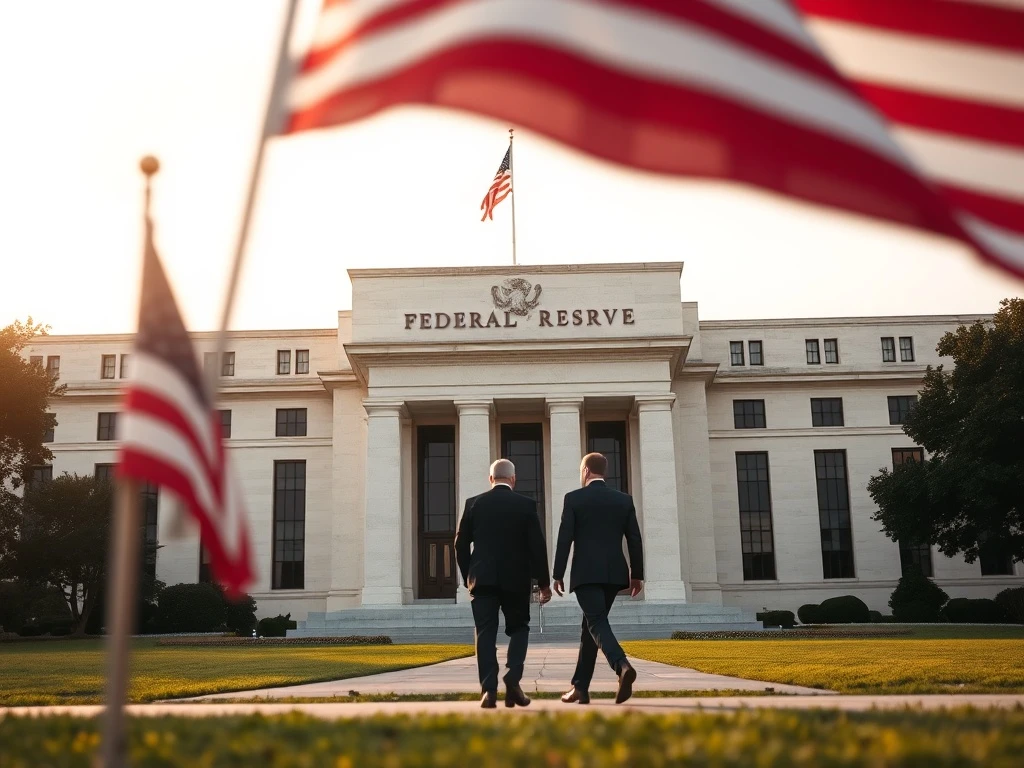
WASHINGTON, D.C. — March 15, 2025 — Treasury Secretary Scott Bessent has revealed a significant development in U.S. economic leadership, announcing that President Donald Trump could nominate a candidate for the next Federal Reserve Chair within one to two weeks. This critical announcement, made during an exclusive interview with Yahoo Finance, signals a pivotal moment for monetary policy and financial markets. The Federal Reserve Chair nomination represents one of the most consequential economic appointments, directly influencing interest rates, inflation management, and financial stability for years to come.
Federal Reserve Chair Nomination Timeline Accelerates
Treasury Secretary Scott Bessent provided the specific timeline during his recent media appearance. He confirmed the administration’s accelerated selection process for this crucial position. The current Federal Reserve leadership transition has generated substantial attention from economists, investors, and policymakers worldwide. Consequently, markets have begun pricing in potential policy shifts based on different candidate profiles.
The Federal Reserve operates as the United States’ central banking system. Its Chair wields enormous influence over the nation’s economic trajectory. Historically, Fed Chair nominations have occurred during the final year of a presidential term. However, this accelerated timeline suggests strategic planning by the administration. The nomination must undergo Senate confirmation, adding another layer of political consideration.
Historical Context of Federal Reserve Leadership Transitions
Federal Reserve Chair appointments have consistently shaped economic history. For instance, Paul Volcker’s appointment in 1979 marked a turning point in inflation control. Similarly, Alan Greenspan’s lengthy tenure defined monetary policy for nearly two decades. More recently, Jerome Powell’s leadership navigated unprecedented economic challenges. Each transition period created market uncertainty and policy evaluation windows.
The table below illustrates recent Federal Reserve Chair transitions and their economic contexts:
| Chair | Appointment Year | Economic Context |
|---|---|---|
| Jerome Powell | 2018 | Post-financial crisis normalization |
| Janet Yellen | 2014 | Quantitative easing unwinding |
| Ben Bernanke | 2006 | Pre-financial crisis expansion |
This historical perspective demonstrates how leadership changes often coincide with economic inflection points. The upcoming nomination occurs amid complex global economic conditions. These include persistent inflation concerns, geopolitical tensions, and technological transformation in financial systems.
Market Implications and Economic Considerations
Financial markets immediately reacted to Secretary Bessent’s timeline revelation. Bond yields showed increased volatility following the announcement. Equity markets displayed sector-specific movements based on perceived policy preferences. Market analysts have identified several key considerations for the nomination process:
- Monetary Policy Continuity: Will the nominee maintain current approaches or implement significant changes?
- Inflation Management: How will the candidate address ongoing price stability challenges?
- Financial Regulation: What stance will the nominee take on banking supervision and digital assets?
- International Coordination: How will the candidate engage with global central banking counterparts?
These considerations will influence investor confidence and economic forecasting. Furthermore, they will determine policy predictability during the transition period.
Potential Candidates and Selection Criteria
While the administration has not revealed specific names, several candidates typically emerge during Federal Reserve Chair selection processes. These generally include current Federal Reserve governors, regional Fed presidents, and respected economists. The selection criteria usually emphasize several professional attributes:
First, monetary policy expertise remains paramount. Second, crisis management experience proves valuable. Third, communication skills significantly impact policy effectiveness. Fourth, political navigation ability ensures confirmation success. Finally, international stature supports global economic coordination.
Previous administrations have balanced technical competence with political considerations. The Trump administration’s previous Fed appointments provide clues about potential preferences. However, each nomination presents unique circumstances and requirements.
Expert Perspectives on the Nomination Process
Economic experts have weighed in on the accelerated nomination timeline. Dr. Sarah Jensen, former Federal Reserve economist, notes, “The one-to-two week window suggests the administration has narrowed its candidate list considerably. This accelerated pace could indicate either urgency or preparation completeness.”
Similarly, financial historian Michael Torres observes, “Historical Fed transitions during election years create additional complexity. Markets typically prefer clarity and continuity during uncertain periods.” These expert insights highlight the nomination’s broader significance beyond immediate personnel decisions.
Central banking specialists emphasize the importance of institutional independence. The Federal Reserve’s credibility depends significantly on perceived separation from political pressures. Consequently, the nomination process and subsequent Senate confirmation hearings will scrutinize this aspect thoroughly.
Global Economic Implications
The Federal Reserve Chair nomination carries international consequences. Global financial markets closely monitor U.S. monetary policy decisions. International trade relationships often respond to dollar valuation changes. Developing economies particularly depend on predictable Fed policies for their own economic planning.
Major central banks, including the European Central Bank and Bank of Japan, coordinate policies with the Federal Reserve. Leadership changes can temporarily disrupt these established relationships. However, institutional frameworks generally ensure continuity in international cooperation.
Emerging market economies face particular vulnerability during Fed transitions. Capital flows often respond to perceived policy shifts. Currency valuations adjust to changing interest rate expectations. Debt management becomes more complex during periods of uncertainty.
Conclusion
Treasury Secretary Scott Bessent’s announcement regarding the Federal Reserve Chair nomination timeline marks a significant moment in U.S. economic governance. The potential nomination within one to two weeks underscores the administration’s prioritization of monetary policy leadership. This Federal Reserve Chair nomination will shape economic conditions for years, influencing everything from mortgage rates to employment levels. Market participants, policymakers, and citizens will monitor developments closely as this critical decision approaches. The nomination’s ultimate impact will depend on the candidate’s qualifications, confirmation process, and subsequent policy decisions.
FAQs
Q1: What is the significance of the Federal Reserve Chair position?
The Federal Reserve Chair leads the United States central bank, controlling monetary policy, interest rates, and financial system stability. This position influences inflation, employment, and economic growth through policy decisions.
Q2: Who currently has authority to nominate the Federal Reserve Chair?
The President of the United States nominates Federal Reserve Chairs, who then require confirmation by the Senate. This constitutional process ensures both executive and legislative branch involvement.
Q3: How long does the Federal Reserve Chair serve once confirmed?
Federal Reserve Chairs serve four-year terms, renewable at the President’s discretion. However, they may complete their terms as Board of Governors members even without Chair reappointment.
Q4: What happens during the transition between Federal Reserve Chairs?
The Federal Reserve maintains institutional continuity through its staff and Board of Governors. Policy decisions continue during transitions, though markets often experience increased volatility until new leadership establishes clear directions.
Q5: How might this nomination affect everyday Americans?
Federal Reserve policies influence mortgage rates, car loans, credit card interest, and savings account yields. Employment levels and economic stability also connect to monetary policy decisions made by the Fed Chair.
Related News
- SEC Tokenized Securities Guidance: Landmark 2025 Rules Transform Digital Asset Regulation
- XRP Secures Decisive Victory as Federal Court Dismisses Major Class-Action Lawsuit
- Coinbase Listing Roadmap Sparks Excitement with HYPE Token Addition