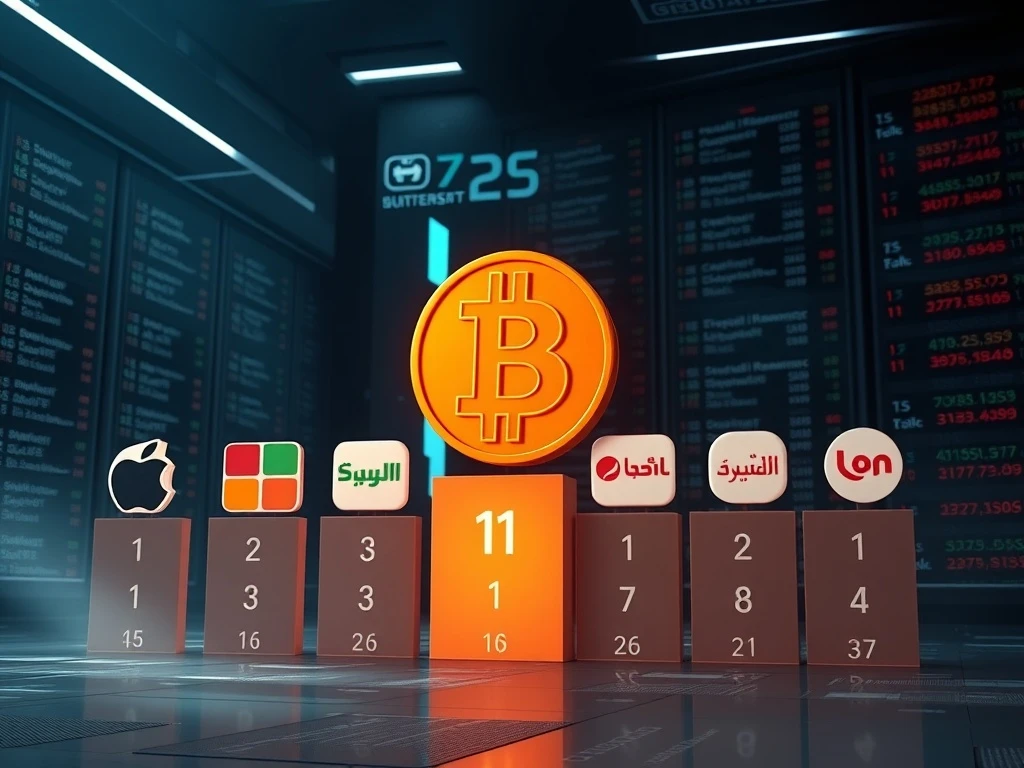
In a significant shift for digital asset markets, Bitcoin has fallen out of the elite list of the top 10 largest assets by market capitalization globally. According to analysis reported by The Block, the pioneering cryptocurrency now ranks 11th, surpassed by the state-owned oil giant Saudi Aramco. This development, observed in early 2025, marks a notable moment in the evolving relationship between traditional finance and the crypto sector, highlighting the intense volatility and macroeconomic pressures facing digital assets.
Bitcoin Market Cap Decline and Ranking Shift
The descent from the top 10 represents a concrete metric for Bitcoin’s recent price struggles. Market capitalization, calculated by multiplying the current price by the total supply of coins, serves as a key benchmark for comparing asset classes. Consequently, a sustained price decline directly erodes this valuation. Data from financial analytics platforms confirms that Bitcoin’s market cap dipped below that of Saudi Aramco, the world’s most valuable publicly traded company. This event underscores the cryptocurrency’s sensitivity to broader financial currents, including interest rate policies and investor risk appetite.
For context, the current top 10 by market cap is dominated by technology corporations and essential commodities. The list includes:
- Technology Titans: Microsoft, Apple, and Nvidia.
- Energy Behemoths: Saudi Aramco and Exxon Mobil.
- Consumer Giants: Amazon and Alphabet (Google).
Bitcoin’s exit from this group places it just outside a club representing trillions of dollars in established enterprise value. This ranking is dynamic, however, and has changed several times throughout Bitcoin’s history during previous bull and bear cycles.
Analyzing the Causes Behind the Drop
Several interconnected factors have contributed to the pressure on Bitcoin’s price and, by extension, its market valuation. Primarily, a restrictive monetary policy environment from major central banks has increased the opportunity cost of holding non-yielding assets like cryptocurrencies. Furthermore, regulatory uncertainty in key markets continues to weigh on institutional adoption momentum. Geopolitical tensions and their impact on global liquidity have also prompted a flight to traditional safe-haven assets over digital ones.
Market analysts point to on-chain data showing reduced activity from large holders, often called “whales.” Simultaneously, trading volumes across major exchanges have contracted, indicating a period of consolidation and caution. It is crucial to note that Bitcoin’s inherent volatility means its market cap ranking has always been fluid compared to the more stable valuations of mature multinational corporations.
Historical Context and Market Cycles
This is not Bitcoin’s first volatility-driven ranking change. During the bull market peak in late 2021, Bitcoin’s market cap briefly surpassed $1.2 trillion, placing it above companies like Tesla and Meta. The asset has oscillated within the global rankings based on its explosive growth phases and subsequent corrections. This historical pattern suggests that while the drop from the top 10 is symbolically important, it reflects a phase within a longer-term cycle. The cryptocurrency’s finite supply of 21 million coins continues to be a fundamental design element that differentiates it from corporate equity.
The Implications for the Cryptocurrency Ecosystem
Bitcoin’s status as the flagship cryptocurrency means its performance heavily influences the broader digital asset market. A declining Bitcoin price often creates downward pressure on altcoins. This correlation can affect total market capitalization for the entire crypto sector, potentially reducing its relative size compared to traditional finance. Nevertheless, some analysts view these periods as necessary consolidations that build a stronger foundation for future growth.
The event also sparks discussion about valuation methodologies. Comparing the market cap of a decentralized protocol to the equity value of a revenue-generating corporation involves different fundamentals. Proponents argue Bitcoin’s value derives from its properties as a decentralized store of value and settlement network, not corporate profits. This philosophical difference remains a central debate in financial circles.
Conclusion
Bitcoin’s exit from the top 10 global assets by market cap is a stark indicator of its recent price decline and the challenging macro environment. While symbolically significant, this shift occurs within the context of the asset’s known volatility and historical market cycles. The ranking highlights the ongoing comparison between innovative digital assets and established traditional equities. Moving forward, Bitcoin’s ability to reclaim a top-tier position will likely depend on broader adoption, regulatory clarity, and shifts in global monetary policy. The market will continue to watch this metric closely as a barometer for crypto’s standing in the global financial hierarchy.
FAQs
Q1: What does it mean for Bitcoin to fall out of the top 10 assets by market cap?
It means the total market value of all Bitcoin in circulation has decreased below that of the tenth-largest asset, currently Saudi Aramco. This is a direct result of a declining Bitcoin price and reflects a shift in investor sentiment and valuation relative to major traditional companies.
Q2: Has Bitcoin been in the top 10 before?
Yes. Bitcoin has entered and exited the top 10 rankings multiple times throughout its history, particularly during strong bull markets when its price and market capitalization surge dramatically.
Q3: Is market cap the best way to compare Bitcoin to a company like Apple?
Not directly. A company’s market cap reflects its equity value based on expected future profits. Bitcoin’s market cap reflects the aggregated price of its fixed supply of coins, valued as a digital commodity or store of value. The comparison is popular but involves different underlying value propositions.
Q4: What are the main factors causing Bitcoin’s price and market cap to decline?
Key factors include high interest rates (making safe assets more attractive), regulatory uncertainty, reduced risk appetite in macroeconomic downturns, and potential profit-taking by investors after previous rallies.
Q5: Could Bitcoin re-enter the top 10?
Absolutely. Given its historical volatility, a significant price increase, often driven by events like a new bull market, the approval of major financial products like spot ETFs in new regions, or a shift in macro conditions, could propel its market cap back above other large assets.
Related News
- Upbit Delists GoChain (GO) in Shocking March 3 Move, Citing User Protection Concerns
- Bitcoin Plummets as Warsh Fed Chair Speculation Sparks Market Panic
- Polymarket’s Stunning Success Fuels Legitimacy of Onchain Prediction Markets, Says Tech Entrepreneur