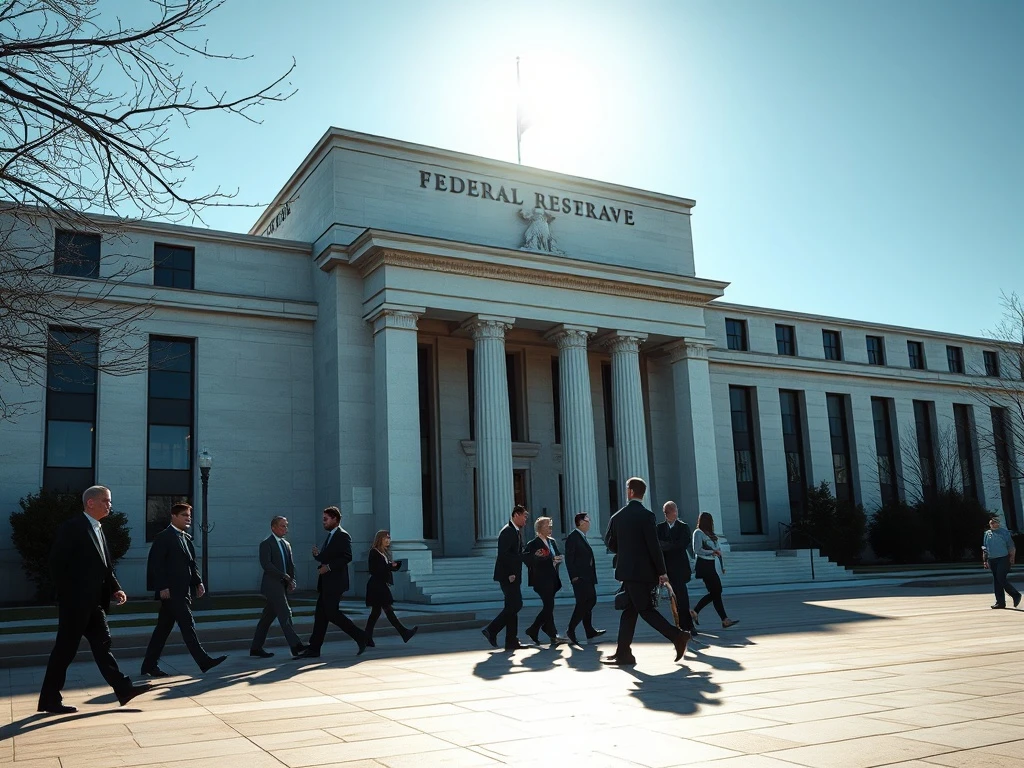
WASHINGTON, D.C. – January 15, 2025 – President Donald Trump declared that his Federal Reserve Chair nominee, former Fed Governor Kevin Warsh, would implement interest rate reductions without requiring White House pressure, according to reports from Walter Bloomberg. This statement immediately sparked intense analysis about monetary policy direction and central bank independence.
Federal Reserve nominee Kevin Warsh faces immediate scrutiny
President Trump’s comments about his Federal Reserve nominee generated immediate reactions across financial markets. Kevin Warsh, who served as a Fed Governor from 2006 to 2011, brings substantial experience to the position. Market analysts quickly began examining his historical policy positions and public statements. Furthermore, they compared his approach to current economic conditions.
The nomination comes during a period of economic transition in early 2025. Global inflation patterns show significant variation across regions. Meanwhile, employment figures remain strong in the United States. However, productivity growth has moderated in recent quarters. These conditions create a complex backdrop for monetary policy decisions.
Historical context of Federal Reserve leadership transitions
Federal Reserve leadership changes always attract significant attention. The central bank’s decisions influence everything from mortgage rates to business investment. Historically, Fed Chairs have navigated between political expectations and economic realities. For instance, Paul Volcker famously prioritized inflation control during the 1980s. Conversely, Alan Greenspan developed a reputation for market-sensitive policymaking.
Kevin Warsh’s potential appointment follows several notable Fed leadership periods. Janet Yellen emphasized labor market recovery after the 2008 financial crisis. Jerome Powell then navigated the pandemic-era economic disruptions. Each chair brought distinct philosophical approaches to monetary policy. Warsh’s background suggests particular attention to financial stability concerns.
Expert analysis of Warsh’s monetary policy philosophy
Monetary policy experts immediately examined Warsh’s record and writings. His tenure as a Fed Governor coincided with the 2008 financial crisis. During that period, he participated in unprecedented policy responses. Academic papers and speeches reveal his thinking about central banking challenges. Specifically, he has written about the limitations of monetary policy tools.
Several economists noted Warsh’s concerns about financial market distortions. He has previously questioned the effectiveness of prolonged low interest rates. Additionally, he has emphasized the importance of clear communication strategies. These positions suggest a nuanced approach to rate-setting decisions. However, they don’t necessarily predict specific policy actions in 2025.
Interest rate policy implications for 2025 economy
The prospect of interest rate reductions carries significant economic implications. Lower borrowing costs typically stimulate business investment and consumer spending. However, they can also contribute to inflationary pressures over time. The Federal Reserve must balance these competing considerations carefully.
Current economic indicators present a mixed picture for policymakers. Consider these key data points from early 2025:
- Inflation rate: 2.8% year-over-year (moderating from 2024 peaks)
- Unemployment rate: 3.9% (near historical lows)
- GDP growth: 2.1% annualized (moderate expansion)
- Manufacturing index: 52.4 (slight expansion territory)
These conditions don’t clearly dictate a specific monetary policy direction. Consequently, Fed decisions will require careful judgment about future economic trends.
Central bank independence and political considerations
President Trump’s comments about his Fed nominee raised questions about central bank independence. The Federal Reserve traditionally operates without direct political influence. This independence allows policymakers to make difficult decisions when necessary. For example, raising interest rates to combat inflation often proves politically unpopular.
Historical examples demonstrate the importance of this institutional arrangement. Arthur Burns faced criticism for allegedly accommodating political pressures during the 1970s. Most economists believe this contributed to the Great Inflation period. Modern Fed Chairs generally emphasize their commitment to data-driven decision-making. They typically avoid commenting on political matters directly.
Comparative analysis of global central bank approaches
Global central banks face similar policy challenges in 2025. The European Central Bank continues navigating post-pandemic recovery patterns. Meanwhile, the Bank of Japan maintains its yield curve control framework. These institutions provide useful comparison points for Federal Reserve decisions.
International monetary policy coordination has increased in recent years. Central bankers regularly communicate about global economic developments. This cooperation helps manage cross-border financial flows. However, each institution ultimately responds to domestic economic conditions. National priorities sometimes create policy divergences.
Financial market reactions and investor implications
Financial markets responded immediately to the nomination news. Bond yields adjusted to reflect potential policy changes. Equity markets showed mixed reactions across different sectors. Banking stocks particularly reflected the interest rate implications.
Investors now face several important considerations. Lower interest rates typically benefit certain asset classes. However, they may signal concerns about economic growth prospects. Portfolio managers must balance these competing signals carefully. Diversification remains crucial during periods of policy uncertainty.
Conclusion
President Trump’s declaration about Federal Reserve nominee Kevin Warsh highlights important monetary policy questions. The potential for interest rate reductions without White House pressure suggests confidence in Warsh’s policy approach. However, the actual Federal Reserve decisions will depend on evolving economic data. Central bank independence remains crucial for maintaining economic stability. Financial markets and policymakers will closely monitor confirmation proceedings and subsequent policy statements.
FAQs
Q1: Who is Kevin Warsh and what is his background?
Kevin Warsh served as a Federal Reserve Governor from 2006 to 2011. He participated in monetary policy decisions during the 2008 financial crisis. Previously, he worked in investment banking and served in the White House.
Q2: How does the Federal Reserve Chair nomination process work?
The President nominates a candidate for Federal Reserve Chair. The Senate Banking Committee then holds confirmation hearings. Finally, the full Senate votes on the nomination. The process typically takes several months to complete.
Q3: What factors influence Federal Reserve interest rate decisions?
The Federal Reserve considers multiple economic indicators. These include inflation rates, employment figures, and GDP growth. Financial market conditions and global economic developments also influence decisions.
Q4: Why is central bank independence important?
Central bank independence allows policymakers to make decisions based on economic data rather than political considerations. This helps maintain long-term price stability and financial system integrity.
Q5: How do interest rate changes affect the average consumer?
Interest rate changes influence borrowing costs for mortgages, auto loans, and credit cards. They also affect savings account yields and investment returns. Consequently, they impact household financial decisions significantly.
Related News
- Bitcoin Price Prediction: Stunning $6.5M Forecast by Bitwise CIO as Central Banks Eye Adoption
- WisdomTree Crypto AUM Reveals Stunning $2.24 Billion Institutional Commitment in 2025
- Coinbase CEO’s Chilly Davos Reception Reveals Stark Divide in Cryptocurrency Regulation Debate