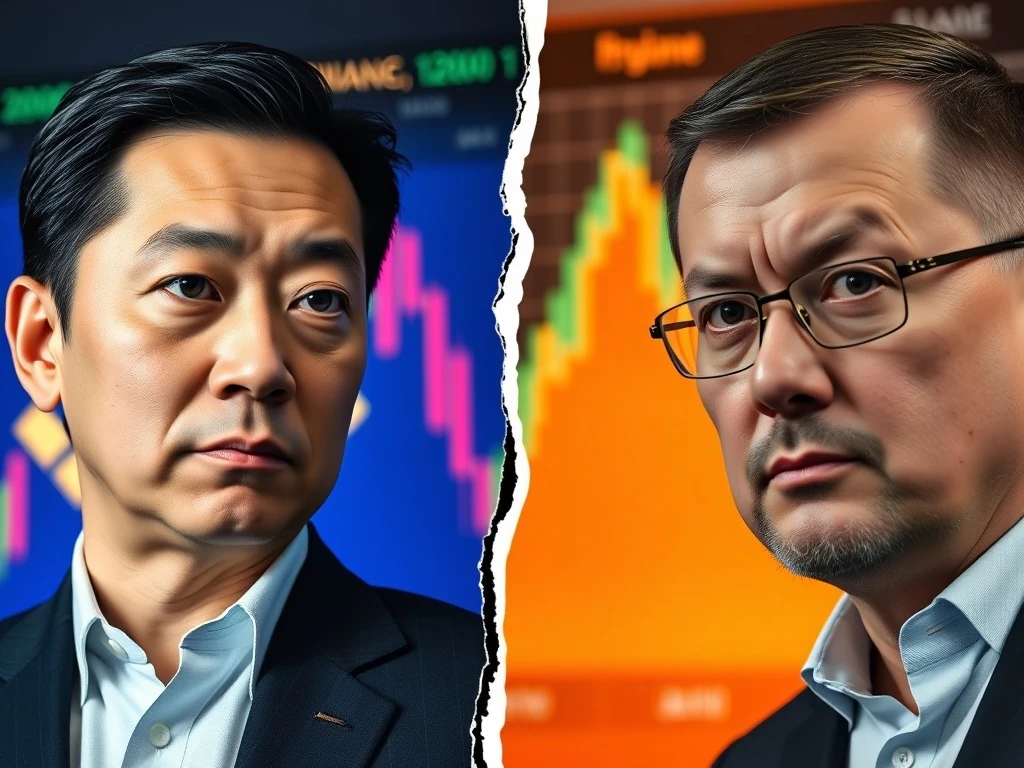
In a move that has sent ripples through the digital asset industry, Binance founder Changpeng Zhao has severed a key social media connection with Solana co-founder Anatoly Yakovenko. This decisive action, reported by PA News on October 11, 2025, follows public criticism of Binance’s role in a significant market downturn. The incident underscores the fragile alliances and high-stakes tensions that define leadership within the volatile cryptocurrency sector.
Changpeng Zhao Severs Ties Following Market Criticism
Changpeng Zhao, universally known as CZ, unfollowed Anatoly Yakovenko on the social media platform X. This development occurred directly after Yakovenko shared a post from OKX founder Xu Mingxing. Consequently, the shared content placed blame on Binance for the dramatic cryptocurrency flash crash on October 10, 2025. Market data shows the crash temporarily erased over $200 billion in global market capitalization within a 24-hour period. Therefore, this social media gesture is widely interpreted as a professional rebuke. It highlights how online interactions between crypto executives can signal deeper market fractures.
Industry analysts immediately scrutinized the event’s context. The flash crash itself was triggered by a complex confluence of factors. These factors included leveraged liquidations on major exchanges and concerning macroeconomic data. However, Xu Mingxing’s post specifically cited Binance’s liquidation engine and its market dominance as primary catalysts. By amplifying this critique, Yakovenko, a respected figure in the blockchain space, indirectly challenged Binance’s market operations. CZ’s response, though silent, was unequivocal. The unfollow action represents a modern form of corporate diplomacy in the digital age.
Anatomy of the October 2025 Cryptocurrency Flash Crash
To understand the gravity of the social fallout, one must examine the market event that precipitated it. The flash crash on October 10, 2025, saw Bitcoin’s price plummet by approximately 22% in under six hours. Altcoins, including Solana’s SOL token, experienced even steeper declines. Subsequently, the cascade of liquidations overwhelmed several trading platforms. Notably, Binance, as the world’s largest exchange by volume, processed a significant portion of these forced trades.
Experts point to several contributing elements beyond any single entity’s control:
- Aggressive Leverage: Widespread use of high leverage (10x-25x) across perpetual futures markets.
- Macroeconomic Pressure: Unexpectedly hawkish comments from the U.S. Federal Reserve regarding digital asset regulations.
- Technical Cascade: A large, multi-million dollar long position was liquidated, triggering stop-loss orders down the price ladder.
- Market Sentiment: Pre-existing anxiety over regulatory clarity in major economies.
Exchange founders often engage in public debate during such volatility. They aim to explain market mechanics or defend their platforms. Xu Mingxing’s decision to publicly assign blame, and Yakovenko’s choice to share it, moved the discussion from technical to accusatory. This shift fundamentally altered the conversation’s tone.
Expert Analysis on Executive Communication and Market Impact
Dr. Elara Finch, a professor of Digital Economics at Stanford University, provides crucial context. “The social graphs of crypto founders are not personal; they are professional balance sheets,” she states. “An unfollow from a figure like CZ is a calibrated signal. It communicates disapproval to a vast audience without a formal statement that could move markets further. It’s a non-verbal cue in a hyper-verbal industry.”
Furthermore, this incident reflects the evolving nature of the blockchain ecosystem. In its early years, a unified front against traditional finance was common. Now, as projects like Solana achieve massive scale and compete for users, underlying tensions surface. The relationship between Binance, which listed SOL early and supported its ecosystem, and Solana Labs has historically been symbiotic. This event tests that symbiosis. Market observers will now watch for tangible effects, such as changes in Binance’s promotional support for Solana-based projects or shifts in liquidity provisioning.
The Ripple Effects on Binance and Solana Perceptions
The public disagreement between two of crypto’s most prominent leaders has immediate and potential long-term consequences. In the short term, community forums and social media are rife with speculation. Some Solana proponents view CZ’s action as an overreaction, potentially harming the collaborative spirit of Web3. Conversely, Binance supporters see Yakovenko’s share as a breach of unwritten industry courtesy during a crisis.
From a market structure perspective, the event raises questions about centralization of power. Binance’s immense influence over liquidity and token discovery is a perennial topic. Criticism from other major exchange founders amplifies this debate. The table below contrasts key metrics between the involved entities, highlighting their market positions:
| Entity | Primary Role | Key Metric (Approx.) | Market Influence |
|---|---|---|---|
| Binance | Cryptocurrency Exchange | ~60% of global spot volume | Liquidity hub, token listings |
| Solana (SOL) | Blockchain Protocol | ~$80B market cap pre-crash | Smart contract platform, DeFi/NFT hub |
| OKX | Cryptocurrency Exchange | ~15% of global spot volume | Major competitor, derivatives focus |
Ultimately, the long-term impact may be minimal if professional communications resume privately. However, if the rift deepens, it could influence developer and investor allegiance. Projects might reconsider building exclusively on one chain or listing on one exchange. This incident serves as a reminder that in decentralized finance, the actions of centralized figures remain profoundly influential.
Conclusion
The decision by Changpeng Zhao to unfollow Anatoly Yakovenko is a microcosm of larger dynamics within cryptocurrency leadership. It stems directly from the volatile October 2025 flash crash and the subsequent assignment of blame to Binance. This event transcends mere social media drama. It reflects the intense pressures of managing multi-billion dollar networks in the public eye. Moreover, it highlights how communication between founders can sway community sentiment and potentially alter competitive landscapes. As the market recovers, the industry will watch closely to see if this represents a temporary disagreement or a more significant strategic realignment between two of its most powerful pillars.
FAQs
Q1: Why did Changpeng Zhao unfollow the Solana founder?
Changpeng Zhao unfollowed Anatoly Yakovenko after Yakovenko shared a post by OKX’s founder that criticized Binance’s role in the major cryptocurrency market crash on October 10, 2025. The action is widely seen as a professional response to public criticism.
Q2: What caused the October 2025 cryptocurrency flash crash?
The flash crash was caused by a combination of factors including large-scale leveraged position liquidations, adverse macroeconomic news, and a cascading effect of stop-loss orders. It was a market-wide event, though discussions focused on the role of major exchanges like Binance due to their high trading volumes.
Q3: Is this unfollow likely to affect the Solana (SOL) price or Binance support?
In the immediate term, the impact is likely more sentimental than technical. No direct changes to Binance’s support for Solana have been announced. Long-term effects would depend on whether this signals a deeper strategic rift or remains an isolated incident of public disagreement.
Q4: How common are public disputes between crypto founders?
While collaboration is often emphasized, public disagreements on market mechanics, technology, or regulation are not uncommon. However, a direct social media disconnection between figures of this stature is a notable and less frequent event, given their platforms’ interconnected ecosystems.
Q5: What does this incident reveal about power dynamics in crypto?
This incident underscores that despite the decentralized ethos of blockchain, the actions and relationships of a few key centralized founders and executives still wield significant influence over market perception, community sentiment, and potentially, ecosystem development.
Related News
- Bitcoin Stagnation: The Surprising Divergence as Gold and Stocks Soar in 2025
- Jupiter Launches Revolutionary Solana Ecosystem Explorer: Unprecedented Transparency for Crypto Investors
- Bitcoin Price Plummets Below $83,000: Analyzing the Sudden Market Shift