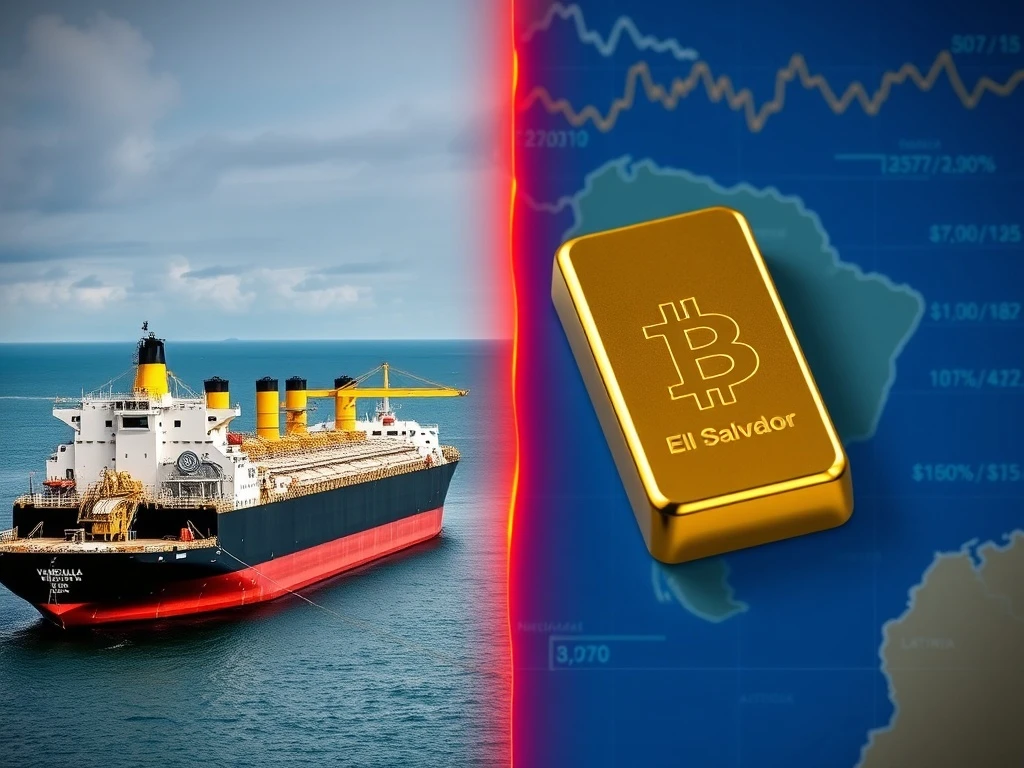
CARACAS/SAN SALVADOR, March 2025 – In a remarkable development reshaping Latin American economic dynamics, Venezuela has officially resumed crude oil shipments to the United States after a six-year hiatus, while El Salvador’s government has executed a strategic acquisition of physical gold during a recent market dip. These parallel movements signal significant shifts in regional financial strategies and commodity market positioning.
Venezuela’s Oil Resurgence and US Market Re-Entry
The Venezuelan state oil company PDVSA confirmed shipments of 2.5 million barrels to US refineries this month. This development follows the gradual easing of sanctions and represents the first substantial export since 2019. Industry analysts immediately noted the transaction’s importance for global energy markets. Consequently, this resumption could potentially alter Western Hemisphere energy flows significantly.
Venezuela possesses the world’s largest proven oil reserves at approximately 304 billion barrels. The country’s production had plummeted from 3.2 million barrels daily in the 1990s to under 400,000 barrels by 2023. However, recent production increases to 850,000 barrels daily demonstrate measurable recovery. This resurgence occurs alongside renewed diplomatic engagements between Caracas and Washington.
Economic Implications and Market Reactions
Energy market specialists highlight several immediate consequences. First, US Gulf Coast refineries specifically configured for heavy Venezuelan crude can resume optimal operations. Second, Venezuela gains crucial hard currency inflows to stabilize its fragile economy. Third, global oil markets experience increased supply diversity during ongoing geopolitical uncertainties.
The table below illustrates Venezuela’s oil production and export recovery:
| Year | Daily Production (Barrels) | US Exports (Barrels) | Primary Destinations |
|---|---|---|---|
| 2022 | 717,000 | 0 | China, India |
| 2023 | 783,000 | 0 | China, Cuba |
| 2024 | 820,000 | 0 | Asia, Caribbean |
| 2025 (Q1) | 850,000 | 2.5M (monthly) | US, Europe, Asia |
El Salvador’s Strategic Gold Acquisition
Simultaneously, El Salvador’s Ministry of Finance announced a substantial gold purchase executed during a 7% price correction in February 2025. President Nayib Bukele’s administration continues diversifying national reserves beyond its pioneering Bitcoin treasury. The Central Reserve Bank of El Salvador now holds physical gold alongside its cryptocurrency assets.
This dual-reserve strategy represents a novel approach to sovereign wealth management. El Salvador became the first country to adopt Bitcoin as legal tender in September 2021. The government subsequently accumulated approximately 2,800 BTC through various purchases. Now, adding physical gold creates a hybrid digital-physical reserve system.
The Gold-Bitcoin Correlation Strategy
Financial experts observe that El Salvador’s strategy leverages distinct asset characteristics. Gold provides historical stability during market turbulence. Bitcoin offers potential asymmetric growth and technological innovation exposure. Together, they potentially create a balanced reserve portfolio. The government purchased gold specifically when prices retreated from record highs above $2,400 per ounce.
Key aspects of El Salvador’s reserve strategy include:
- Diversification: Reducing reliance on traditional fiat currencies
- Inflation Hedge: Protecting against global monetary expansion
- Sovereign Independence: Minimizing exposure to foreign monetary policies
- Technological Leadership: Positioning as a digital finance innovator
Regional Economic Context and Crypto Integration
These developments occur within broader Latin American economic transformations. Several nations increasingly explore digital asset integration alongside traditional commodity exports. Venezuela maintains its Petro cryptocurrency project despite oil export resumptions. Brazil and Argentina have implemented central bank digital currency pilots. Meanwhile, Panama considers Bitcoin legalization proposals.
The region demonstrates unique cryptocurrency adoption patterns. Remittance corridors drive significant usage. Inflationary pressures encourage alternative stores of value. Young populations exhibit high digital asset familiarity. Consequently, Latin America represents one of cryptocurrency’s fastest-growing markets globally.
Expert Analysis on Dual Commodity-Digital Strategies
Dr. Elena Marquez, Latin American economics professor at Universidad de los Andes, explains the strategic thinking. “Venezuela leverages its natural resource wealth for immediate economic stabilization,” she notes. “Conversely, El Salvador builds long-term value through strategic asset accumulation. Both approaches address specific national circumstances while participating in global financial evolution.”
Energy analyst Michael Chen from the Global Commodities Institute adds perspective. “Venezuela’s oil return affects global supply calculations,” he states. “Meanwhile, El Salvador’s gold purchase signals how nations might balance traditional and digital assets. These developments collectively illustrate Latin America’s evolving economic positioning.”
Market Impacts and Future Projections
The Venezuelan oil resurgence potentially affects several market segments. US energy independence calculations may adjust slightly. OPEC+ production decisions could consider additional Western Hemisphere supply. Venezuelan economic recovery might gradually reduce migration pressures. Regional energy infrastructure investments could follow.
El Salvador’s strategy influences digital asset markets differently. Sovereign Bitcoin accumulation demonstrates ongoing institutional interest. Gold purchases during dips suggest sophisticated market timing. The hybrid reserve model might inspire other developing economies. Technological infrastructure development accompanies these financial moves.
Regulatory and Geopolitical Considerations
Both developments involve complex regulatory landscapes. Venezuela’s oil exports require ongoing sanctions compliance monitoring. El Salvador’s asset strategy operates within evolving cryptocurrency regulations. International Monetary Fund discussions continue regarding El Salvador’s financial innovations. Regional banking systems adapt to these changing paradigms.
Geopolitically, Venezuela’s US engagement signals possible diplomatic thawing. El Salvador’s independent financial path demonstrates sovereign policy experimentation. Other Latin American nations observe these approaches carefully. Global financial institutions monitor implications for traditional monetary systems.
Conclusion
Venezuela’s resumed oil exports to the United States and El Salvador’s strategic gold acquisition represent significant Latin American economic developments in early 2025. These parallel movements illustrate diverse approaches to national wealth management and global market participation. Venezuela leverages its substantial natural resources for immediate economic benefit. Meanwhile, El Salvador pioneers hybrid digital-physical reserve strategies. Both developments warrant close observation by energy markets, cryptocurrency analysts, and economic policymakers worldwide. The Latin American region continues demonstrating innovative approaches to economic challenges and opportunities.
FAQs
Q1: When did Venezuela last export oil to the United States before 2025?
Venezuela last exported significant oil volumes to the United States in 2019 before sanctions severely restricted transactions. Minor exceptions occurred through specific licenses, but the March 2025 shipments represent the first substantial resumption.
Q2: How much gold did El Salvador purchase during the recent price dip?
The Salvadoran government has not disclosed exact quantities, confirming only a “substantial strategic acquisition” during February 2025’s 7% gold price correction. Analysts estimate purchases between 1-2 tons based on available reserve data.
Q3: Does Venezuela still use the Petro cryptocurrency alongside oil exports?
Yes, Venezuela maintains the Petro cryptocurrency project as a parallel financial instrument. The government continues promoting Petro for domestic transactions and international settlements, though oil exports primarily involve traditional currency payments.
Q4: How does El Salvador store its Bitcoin and gold reserves?
El Salvador stores Bitcoin reserves in cold wallet custody with multisignature security protocols. Physical gold remains in secured vaults at the Central Reserve Bank with additional international depository arrangements for diversification.
Q5: What impact might Venezuelan oil have on global prices?
Initial impacts appear moderate since Venezuela’s current production represents approximately 1% of global supply. However, sustained export growth could provide additional market stability, particularly if production continues recovering toward historical levels.
Related News
- Cryptocurrency Futures Liquidations Trigger Alarming $100 Million Hourly Market Shock
- Bitcoin Price Plummets: BTC Falls Below $77,000 in Sudden Market Shift
- Bitcoin Derivatives Markets Experience Crucial Reset as Traders Prudently Reduce Leverage Exposure