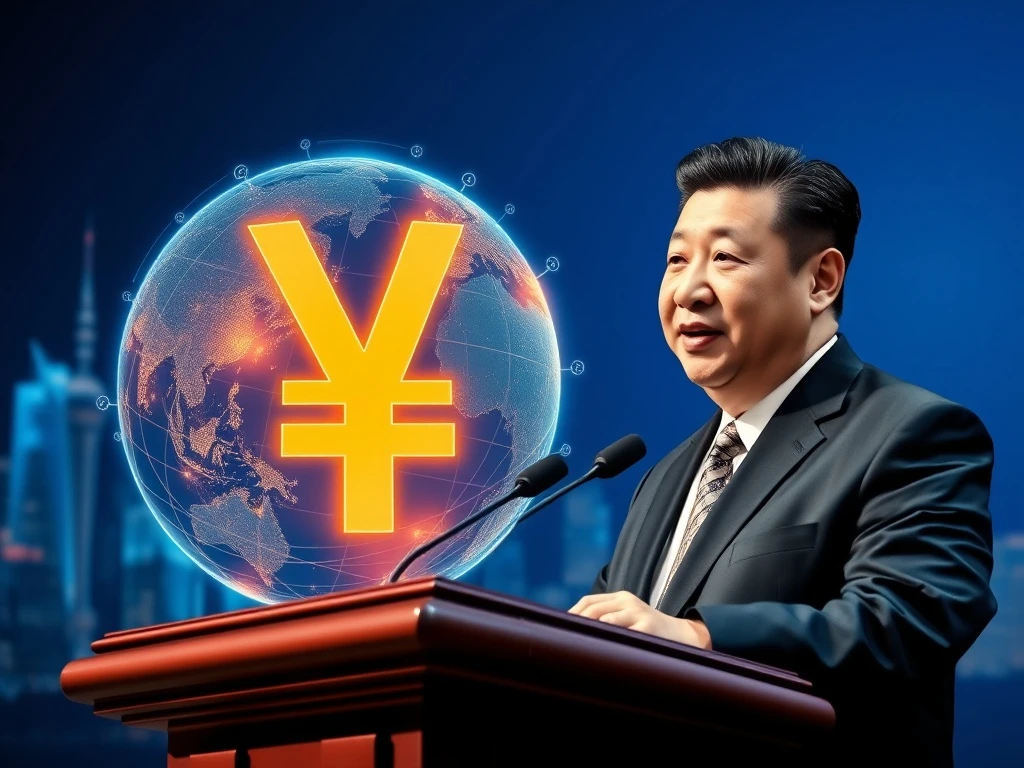
BEIJING, March 2025 – Chinese President Xi Jinping has unveiled comprehensive strategic plans to transform the yuan into what he describes as a “powerful” global reserve currency, marking a significant escalation in China’s decades-long campaign to internationalize its currency and reshape the international monetary system. This announcement comes at a pivotal moment in global finance, as geopolitical tensions and shifting economic alliances create new opportunities for currency diversification among nations seeking alternatives to traditional Western-dominated financial systems.
China’s Strategic Push for Yuan Reserve Currency Status
President Xi’s recent address to the Central Financial Work Conference outlined a multi-pronged approach to elevate the yuan’s international standing. The Chinese government plans to accelerate financial market reforms while expanding currency swap agreements with trading partners. Furthermore, China will promote the use of yuan in commodity pricing, particularly for energy and raw materials. These measures represent the most coordinated effort yet to challenge the US dollar’s longstanding dominance in global reserves, which currently stands at approximately 58% according to IMF data.
The timing of this announcement coincides with several global developments. Many emerging economies have expressed growing interest in reducing their dollar exposure. Additionally, China’s expanding trade networks through initiatives like the Belt and Road provide natural channels for yuan internationalization. The country’s substantial gold reserves, which have increased steadily over the past decade, offer potential backing for greater currency confidence. These factors collectively create what analysts describe as the most favorable conditions yet for yuan internationalization.
The Digital Yuan’s Crucial Role in Currency Internationalization
China’s central bank digital currency (CBDC), known as the digital yuan or e-CNY, represents a cornerstone of this strategy. Unlike cryptocurrencies, the digital yuan is a sovereign digital currency issued and backed by the People’s Bank of China. Its design facilitates cross-border transactions with reduced reliance on Western financial messaging systems like SWIFT. Pilot programs have already demonstrated the technology’s capability for international trade settlements. These programs show transaction times reduced from days to seconds.
The digital currency offers several advantages for international adoption. It provides traceability and transparency that can combat money laundering. The technology enables programmable features for targeted monetary policy. It reduces transaction costs for cross-border payments significantly. These features make the digital yuan particularly attractive to developing economies seeking more efficient financial infrastructure. Over 260 million individual wallets and significant corporate adoption indicate strong domestic foundation for international expansion.
Expert Analysis: The Path to Reserve Currency Status
Financial historians note that reserve currency status typically requires several fundamental conditions. These include deep and liquid financial markets that foreign investors can access freely. The currency must be widely used in international trade and investment. The issuing country needs political and economic stability that inspires long-term confidence. Furthermore, there must be adequate hedging instruments available to manage currency risk. China has made progress on all these fronts but faces particular challenges with capital account liberalization.
Dr. Li Wei, Professor of International Finance at Peking University, explains the historical context. “The transition from sterling to dollar dominance took decades and required two world wars. Today’s shift would be unprecedented in peacetime. China’s approach combines gradual financial opening with strategic partnerships. The digital yuan adds a technological dimension that previous currency transitions lacked.” This technological advantage could accelerate adoption among countries seeking to modernize their financial systems without relying on Western infrastructure.
Global Implications and Economic Impact Analysis
The potential elevation of yuan to reserve currency status carries profound implications for global finance. International corporations would need to adjust their treasury management strategies significantly. Central banks worldwide would reconsider their reserve allocation models. Global commodity markets might see pricing shifts away from exclusive dollar denomination. These changes would create both opportunities and challenges across the international financial landscape.
| Currency | Percentage of Reserves | Change Since 2020 |
|---|---|---|
| US Dollar | 58.4% | -6.2% |
| Euro | 20.0% | +0.8% |
| Japanese Yen | 5.3% | -0.5% |
| British Pound | 4.8% | -0.3% |
| Chinese Yuan | 2.9% | +1.2% |
| Other Currencies | 8.6% | +5.0% |
This diversification trend has accelerated since 2022. Sanctions against Russia prompted many countries to reassess currency risk. Developing economies particularly seek alternatives to dollar dependency. China’s expanding trade relationships provide natural channels for yuan usage. However, full reserve currency status requires more than bilateral agreements. It demands deep, liquid financial markets that remain open during periods of stress.
Challenges and Considerations for Yuan Internationalization
Despite ambitious plans, China faces significant hurdles in achieving reserve currency status. Capital controls limit foreign access to Chinese financial markets. Concerns about rule of law and property rights persist among international investors. The currency’s managed float system differs from freely convertible reserve currencies. Geopolitical tensions may discourage some countries from deepening financial ties with China. These factors collectively constrain the yuan’s rapid ascent in global finance.
International response has been measured but attentive. The European Central Bank continues monitoring digital currency developments. ASEAN nations increasingly include yuan in regional settlement mechanisms. BRICS countries discuss alternative financial infrastructure. Meanwhile, the United States maintains that dollar dominance reflects deep, transparent markets rather than political design. This complex landscape ensures that any currency transition will be gradual rather than abrupt.
Technological Infrastructure and Implementation Timeline
China has developed substantial technological infrastructure to support yuan internationalization. The Cross-Border Interbank Payment System (CIPS) provides an alternative to SWIFT. Digital yuan infrastructure integrates with existing banking systems seamlessly. Blockchain technology enables smart contracts for trade finance applications. These systems demonstrate China’s commitment to building parallel financial infrastructure rather than merely participating in existing systems.
Implementation will likely follow a phased approach according to financial analysts. Phase one focuses on regional adoption through Belt and Road partnerships. Phase two expands to commodity trading partners in Africa and Latin America. Phase three targets broader institutional adoption by central banks and sovereign wealth funds. This gradual expansion allows for system refinement and risk management at each stage. The timeline remains flexible based on both domestic reforms and international reception.
Conclusion
China’s explicit push for yuan reserve currency status represents a strategic inflection point in global finance. President Xi’s announcement signals accelerated efforts to position the yuan as a viable alternative to the US dollar. The integration of digital currency technology with traditional financial diplomacy creates novel pathways for international adoption. While significant challenges remain regarding capital account liberalization and market confidence, the combination of economic scale, technological innovation, and strategic partnerships positions the yuan for increased global prominence. The coming years will test whether China’s currency can achieve the liquidity, stability, and trust required for true reserve status, potentially reshaping international financial architecture for decades to come.
FAQs
Q1: What does “reserve currency status” mean for the yuan?
A reserve currency is held by central banks and major financial institutions as part of their foreign exchange reserves. For the yuan, achieving this status means other countries would voluntarily hold significant amounts of Chinese currency to facilitate international trade, service debt, and influence exchange rates, similar to how they currently hold US dollars, euros, and yen.
Q2: How does the digital yuan differ from cryptocurrencies like Bitcoin?
The digital yuan is a central bank digital currency (CBDC) issued and backed by the People’s Bank of China, making it legal tender with sovereign guarantee. Unlike decentralized cryptocurrencies, it maintains centralized control, offers stability through direct central bank management, and integrates with existing monetary policy tools rather than operating outside traditional financial systems.
Q3: What immediate changes might occur if the yuan becomes a reserve currency?
Immediate effects could include reduced transaction costs for China’s trading partners, increased usage of yuan in commodity contracts, greater inclusion in IMF Special Drawing Rights baskets, and potentially lower borrowing costs for Chinese entities internationally. However, China would also face increased scrutiny of its monetary policies and pressure to maintain currency stability.
Q4: Which countries are most likely to adopt the yuan as a reserve currency first?
Countries with strong trade ties to China through Belt and Road initiatives, those seeking to reduce dollar dependency due to geopolitical considerations, and nations with existing currency swap agreements with China represent likely early adopters. Southeast Asian nations, Russian-aligned economies, and some African trading partners have already increased yuan usage in bilateral trade.
Q5: How might this affect ordinary Chinese citizens and businesses?
For Chinese citizens and businesses, internationalization could mean easier cross-border transactions, reduced currency exchange costs for imports and exports, and potentially greater international investment opportunities. However, it might also lead to increased volatility from global market forces and require adjustments to domestic financial policies to maintain stability amid greater international capital flows.
Related News
- XRP Plunges: Digital Asset Crashes to $1.52 Amidst Frightening Middle East Escalation
- Bitmine’s Devastating $6.9B Unrealized Loss on Ethereum Holdings Shakes Institutional Crypto Confidence
- Trend Research ETH Deposit: Massive 20K Ethereum Transfer Sparks Market Analysis