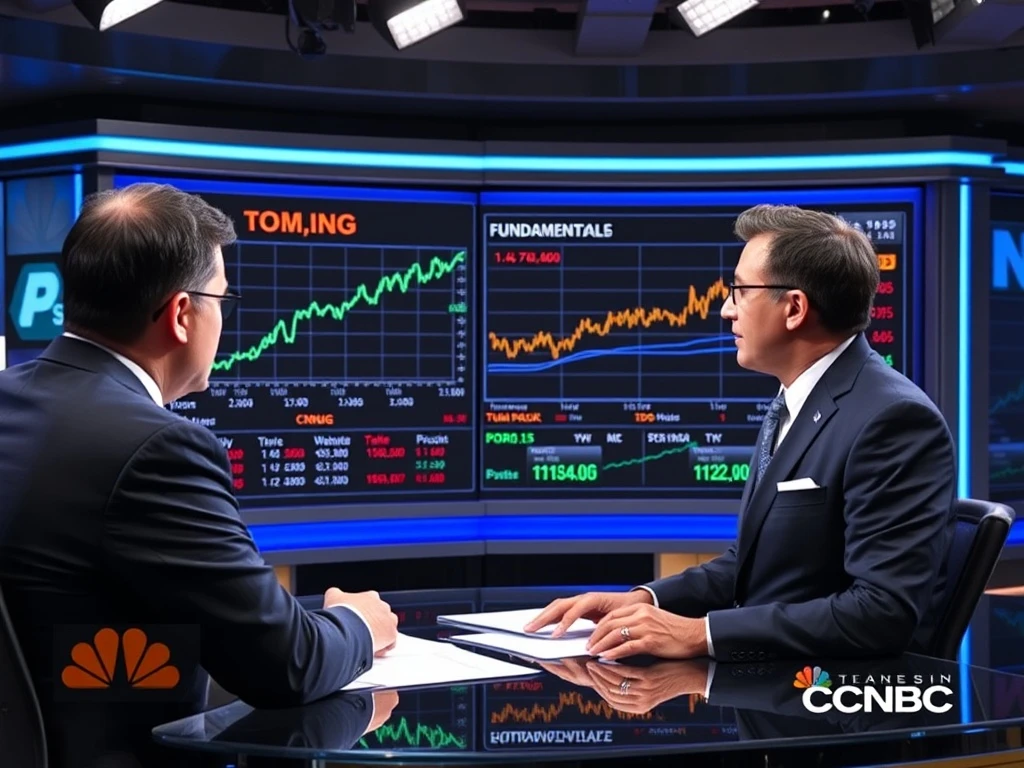
NEW YORK, March 2025 – Financial markets received a significant signal today as Fundstrat Chairman Tom Lee declared the cryptocurrency market approaching its bottom. During a CNBC Squawk Box appearance, Lee presented compelling evidence suggesting digital assets may soon rebound. His analysis points toward improving fundamentals despite recent market turbulence. This perspective arrives during a period of heightened investor uncertainty across global financial markets.
Crypto Market Bottom Analysis: Understanding the Current Correction
Tom Lee identified specific factors driving recent cryptocurrency declines. He attributed the correction primarily to capital rotation toward traditional safe-haven assets. Gold and silver experienced substantial inflows during this period. Simultaneously, uncertainty surrounding U.S. monetary and regulatory policy created additional headwinds. These combined forces pressured digital asset valuations throughout early 2025.
Market data supports Lee’s observations about capital rotation. Gold prices increased approximately 18% during the first quarter. Silver demonstrated even stronger performance with 22% gains. Meanwhile, the total cryptocurrency market capitalization declined roughly 15% during the same period. This inverse correlation suggests investors sought traditional stores of value amid economic uncertainty.
Several technical indicators now suggest potential stabilization. The Crypto Fear and Greed Index recently reached levels historically associated with market bottoms. Trading volumes have increased during price declines, indicating accumulation. Furthermore, Bitcoin’s 200-week moving average continues providing support despite multiple tests.
Fundamental Improvements Driving Potential Recovery
Tom Lee emphasized strengthening cryptocurrency fundamentals despite price weakness. Network activity metrics show consistent growth across major blockchain platforms. Daily active addresses increased 12% year-over-year for Bitcoin. Ethereum’s decentralized finance ecosystem continues expanding despite market conditions. These usage metrics often precede price appreciation historically.
Institutional adoption maintains its upward trajectory throughout 2025. Major financial institutions continue developing cryptocurrency custody solutions. Regulatory clarity has improved in several key jurisdictions. Additionally, traditional finance integration accelerates through exchange-traded products and structured offerings.
Technological advancements provide another fundamental tailwind. Layer-2 scaling solutions now process over 60% of Ethereum transactions. Bitcoin’s Lightning Network capacity increased 40% since January. These improvements enhance utility and reduce transaction costs significantly. Such developments typically support long-term valuation growth.
Historical Context and Market Cycle Analysis
Current market conditions resemble previous cryptocurrency cycle bottoms. The 2018-2019 bear market lasted approximately 15 months before recovery began. Similar patterns emerged during 2014-2015 and 2022-2023 periods. Each cycle featured extended consolidation followed by renewed institutional interest.
Previous bottoms coincided with specific fundamental developments. The 2019 recovery followed Bitcoin’s hash rate reaching new highs. The 2023 rebound aligned with major financial institutions announcing custody services. Current conditions show similar fundamental strengthening despite price weakness.
Market structure improvements differentiate this cycle from previous ones. Regulatory frameworks now exist in major markets including the European Union and United Kingdom. Traditional market infrastructure providers offer cryptocurrency services. These developments reduce systemic risks compared to earlier cycles.
Policy Impacts and Macroeconomic Considerations
U.S. policy uncertainty represents a significant factor in recent market movements. Federal Reserve interest rate decisions create volatility across risk assets. Regulatory developments regarding digital asset classification add additional complexity. However, progress continues toward comprehensive cryptocurrency legislation.
International policy developments provide counterbalancing support. The European Union’s Markets in Crypto-Assets regulation took full effect in December 2024. Asian financial hubs including Singapore and Hong Kong established clear regulatory frameworks. These developments create global standards for cryptocurrency operations.
Macroeconomic conditions present mixed signals for digital assets. Inflation rates continue moderating in major economies. Global growth projections remain stable for 2025. Currency volatility creates demand for alternative stores of value. These factors historically supported cryptocurrency adoption during similar periods.
Expert Perspectives and Market Sentiment Indicators
Tom Lee’s analysis aligns with several other market observers. Bloomberg Intelligence recently noted improving cryptocurrency fundamentals. JPMorgan analysts identified decreasing selling pressure from various sources. Goldman Sachs reported increased client inquiries about digital asset exposure.
Market sentiment indicators show extreme pessimism typically preceding reversals. The put/call ratio for Bitcoin options reached historically elevated levels. Short interest across cryptocurrency derivatives increased substantially. Social media sentiment analysis reveals negative extremes not seen since previous market bottoms.
On-chain metrics provide additional confirmation signals. Bitcoin’s realized price now exceeds market price by approximately 8%. Long-term holder supply reached new all-time highs recently. Exchange balances continue declining as investors move assets to cold storage. These behaviors typically precede market recoveries.
Conclusion
Tom Lee’s crypto market bottom prediction rests on multiple converging factors. Fundamental improvements across blockchain networks provide underlying strength. Policy developments create clearer operating environments despite current uncertainty. Historical patterns suggest current conditions may represent cycle transition points. While markets remain volatile, improving fundamentals could support recovery as capital flows stabilize. Investors should monitor network metrics alongside price action for confirmation signals.
FAQs
Q1: What specific fundamentals does Tom Lee reference for crypto recovery?
Lee cites increasing network activity, institutional adoption progress, and technological advancements. These include growing daily active addresses, expanding DeFi ecosystems, and improved scaling solutions across major blockchain platforms.
Q2: How does gold strength affect cryptocurrency markets?
During periods of uncertainty, investors often rotate toward traditional safe-haven assets like gold. This capital movement can temporarily pressure digital asset valuations despite improving fundamentals in both markets.
Q3: What policy uncertainties concern cryptocurrency investors currently?
Primary concerns include U.S. regulatory classification, tax treatment developments, and central bank digital currency implications. International policy coordination and enforcement approaches also create uncertainty.
Q4: How long do cryptocurrency market cycles typically last?
Historical cycles show approximately 4-year patterns from peak to peak. Bear market phases within these cycles typically last 12-18 months before fundamental improvements drive recovery phases.
Q5: What indicators confirm a genuine market bottom?
Confirmation requires multiple signals including sustained fundamental improvement, decreasing selling pressure, increasing accumulation metrics, and positive capital flow reversals. No single indicator provides definitive confirmation.
Related News
- Bitcoin Recovery Soars to $79K as Analysts Sound Alarm on Potential $50K Correction
- Bitcoin Whale Transfer: Stunning $274 Million Move from Coinbase Institutional to Mystery Wallet
- Kevin Warsh’s Crucial Federal Reserve Role: Markets Brace for Hawk, Dove, or Volcker Moment