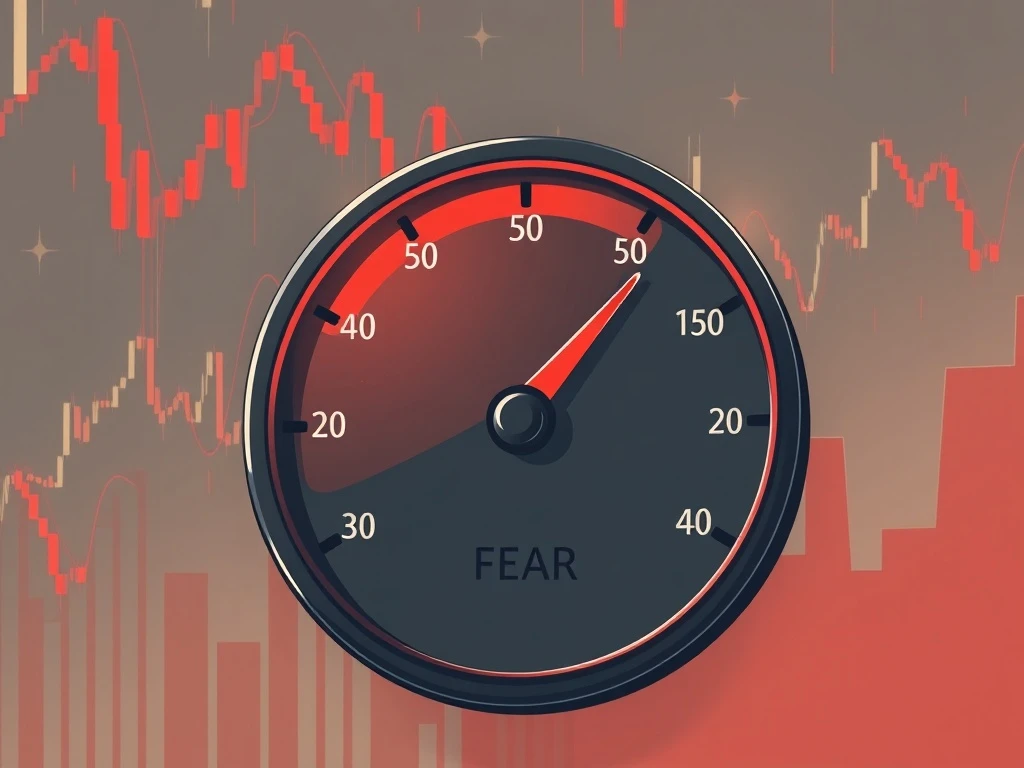
The cryptocurrency market sentiment gauge, known as the Crypto Fear & Greed Index, has plunged to a concerning level of 12, cementing a prolonged period of ‘Extreme Fear’ among investors globally as of late April 2025. This critical metric, a composite of multiple market and social signals, now hovers perilously close to its historical lows, triggering analysis and caution across trading desks and investment firms. Consequently, understanding the drivers and implications of this reading is essential for any market participant navigating the current volatile landscape.
The Crypto Fear & Greed Index Dives Deeper into Extreme Fear
Published by the data analytics firm Alternative.me, the Crypto Fear & Greed Index serves as a daily barometer for investor psychology. The index fell two points from the previous day to settle at 12. This score resides firmly in the ‘Extreme Fear’ zone, which the model defines as any reading between 0 and 25. The index operates on a scale from 0 to 100, where 0 signifies maximum fear and 100 represents maximum greed. Historically, sustained periods in the Extreme Fear territory have often preceded significant market inflection points, though they do not guarantee an immediate reversal.
Market analysts closely monitor this indicator because it quantifies the often-irrational emotional swings that drive cryptocurrency prices. The current reading of 12 is not an isolated data point but part of a broader trend of negative sentiment that has persisted for several weeks. This persistent fear stems from a confluence of macroeconomic pressures, regulatory uncertainties, and technical market breakdowns observed across major exchanges.
Decoding the Index: A Multi-Factor Sentiment Machine
The index’s calculation is methodical and transparent, aggregating data from six distinct sources to avoid reliance on any single metric. This multi-factor approach enhances its reliability as a sentiment tool. The components and their respective weights are as follows:
- Volatility (25%): This measures current price swings against historical averages. Elevated volatility, especially to the downside, significantly increases the fear score.
- Market Volume (25%): Trading volume and momentum are analyzed. Unusual selling pressure on high volume contributes to fear, while sustained buying volume suggests greed.
- Social Media (15%): Sentiment analysis on platforms like Twitter and Reddit gauges public mood. Currently, the tone is overwhelmingly cautious and negative.
- Surveys (15%): Periodic polls of the cryptocurrency community provide direct insight into investor expectations.
- Dominance (10%): Bitcoin’s share of the total crypto market cap is tracked. Rising dominance can indicate a ‘flight to safety’ during fear, which is often observed now.
- Trends (10%): Google search volume for cryptocurrency-related terms is analyzed. Declining search interest frequently correlates with fear or disinterest.
This structured methodology ensures the index reflects a holistic view of market psychology rather than just price action. For instance, even if prices stabilize, continued negative social media buzz and low search volume can keep the index in fearful territory.
Historical Context and Comparative Analysis
Placing the current reading of 12 into historical context provides crucial perspective. The index has reached single-digit levels during major crypto winters, such as the prolonged bear market of 2018-2019 and the post-FTX collapse turmoil of late 2022. A comparative table illustrates key historical fear events:
| Period | Approx. Index Low | Market Context |
|---|---|---|
| Jan 2025 | 12 | Current reading amid macro uncertainty |
| Nov 2022 | 6 | FTX collapse and contagion fears |
| Mar 2020 | 8 | Global COVID-19 market crash |
| Dec 2018 | 8 | End of the 2017 bull market cycle |
While the current level is severe, it has not yet breached the absolute lows seen during true market crises. However, the duration of this Extreme Fear phase is becoming a focal point for analysts. Extended fear can lead to capitulation, where weary investors exit positions en masse, potentially setting a market bottom.
Market Impacts and Trader Psychology
The prevailing Extreme Fear sentiment manifests in several observable market behaviors. First, derivatives markets show elevated funding rates for perpetual swaps, often turning negative, indicating traders are paying to hold short positions. Second, the futures market may exhibit a sustained backwardation, where futures prices trade below the spot price. Third, on-chain data from firms like Glassnode often reveals an increase in coins moving to exchanges, a potential precursor to selling.
Furthermore, investor psychology during such phases typically shifts from profit-seeking to capital preservation. Discussions within communities center on risk management, dollar-cost averaging strategies, and the fundamental long-term value of blockchain technology rather than short-term price speculation. This behavioral shift, while born of fear, can create a more stable foundation for future growth as weak hands exit the market.
The Role of External Macroeconomic Factors
It is impossible to analyze crypto market sentiment in a vacuum. The Extreme Fear reading coincides with a complex global macroeconomic environment in 2025. Persistent inflation concerns in major economies, shifting interest rate policies by central banks like the Federal Reserve, and geopolitical tensions continue to influence all risk assets, including cryptocurrencies. Traders often treat Bitcoin and other major digital assets as high-beta risk-on investments. Consequently, when traditional markets like equities face pressure, cryptocurrency markets frequently experience amplified volatility and negative sentiment, as reflected in the Fear & Greed Index.
Conclusion
The Crypto Fear & Greed Index reading of 12 provides a stark, quantitative measure of the Extreme Fear currently dominating cryptocurrency markets. This sentiment, derived from volatility, volume, social data, and surveys, highlights a period of significant investor anxiety and caution. While historically such extreme readings have sometimes marked areas of long-term opportunity, they primarily serve as a warning about prevailing market psychology. Navigating this environment requires a disciplined focus on fundamentals, risk management, and a long-term perspective, separating emotional noise from technological and economic reality.
FAQs
Q1: What does a Crypto Fear & Greed Index score of 12 mean?
A score of 12 falls into the ‘Extreme Fear’ classification (0-25). It indicates that current market data and social sentiment overwhelmingly reflect panic, caution, and negative expectations among cryptocurrency investors.
Q2: How is the Fear & Greed Index calculated?
The index is a composite score based on six factors: market volatility (25%), trading volume and momentum (25%), social media sentiment (15%), surveys (15%), Bitcoin’s market dominance (10%), and Google search trends (10%).
Q3: Has the index been this low before?
Yes. The index has reached similar or lower levels during major market crises, such as the COVID-19 crash in March 2020 (score ~8) and the collapse of the FTX exchange in November 2022 (score ~6).
Q4: Is Extreme Fear a good time to buy cryptocurrency?
While not a timing tool, extreme fear can indicate potential market bottoms. Some long-term investors use periods of extreme fear for strategic, dollar-cost-averaging purchases, acknowledging high short-term risk for potential long-term reward.
Q5: Does the index predict future price movements?
The index is a sentiment indicator, not a direct price predictor. It reflects current emotions, which are often contrarian indicators. Sustained extreme fear can precede market rebounds, but it does not guarantee them and prices can always fall further.
Related News
- Coinbase Premium Plummets: Revealing Alarming Institutional Selling Pressure on Bitcoin
- BTC Perpetual Futures: Revealing the Slight Bearish Tilt Across Top Exchanges
- South African Stablecoin Revolution: Major Firms Launch Groundbreaking Rand-Backed Digital Currency