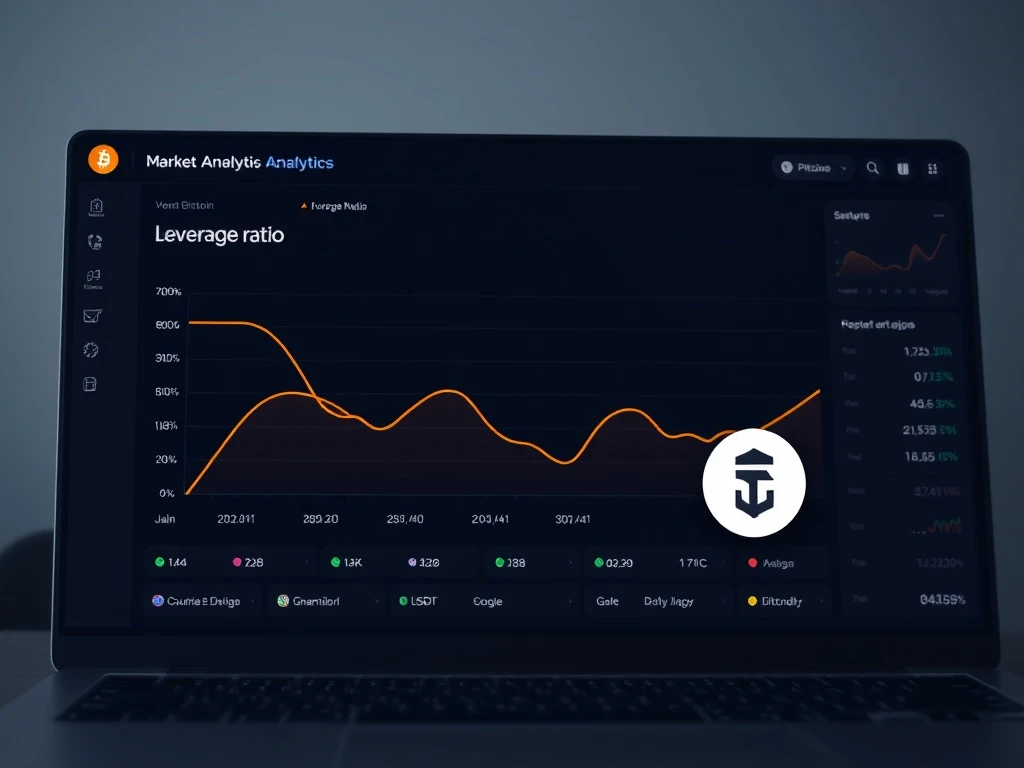
In a significant development for cryptocurrency markets, CryptoQuant CEO Ki Young Ju has revealed that leverage in the BTC/USDT perpetual futures market is cooling rapidly, potentially returning to levels not seen since before the landmark approval of spot Bitcoin ETFs. This crucial shift, announced via social media platform X on February 15, 2025, signals a major change in market dynamics after two years of sustained speculative pressure.
Bitcoin Futures Leverage Enters Critical Correction Phase
CryptoQuant’s proprietary data indicates the estimated leverage ratio in Bitcoin perpetual futures markets is declining toward January 2024 levels. This represents a substantial reversal from the elevated conditions that dominated 2023 and 2024. The cooling follows an extended period where excessive long leverage persisted, primarily driven by institutional inflows from entities like MicroStrategy and the unprecedented success of spot Bitcoin exchange-traded funds.
Market analysts immediately recognized the importance of this development. The leverage ratio measures the amount of borrowed capital traders use relative to their own capital in futures positions. Consequently, elevated ratios typically indicate heightened speculation and potential market fragility. The current decline suggests traders are reducing their risk exposure, potentially anticipating increased market stability or preparing for reduced volatility.
Historical Context of BTC/USDT Futures Leverage
To understand this shift, we must examine the leverage trajectory throughout 2024. In November 2024, Ki Young Ju previously highlighted that leverage in the BTC/USDT futures market had reached 2.7 times the level recorded at the beginning of that year. This dramatic increase coincided with substantial institutional adoption and regulatory milestones. The CEO warned at that time about potential significant pain from a leverage unwind, regardless of Bitcoin’s price direction.
The table below illustrates key leverage ratio milestones:
| Period | Leverage Ratio Status | Key Market Drivers |
|---|---|---|
| January 2024 | Baseline Level | Pre-ETF approval market conditions |
| November 2024 | 2.7x Baseline | Post-ETF inflows, institutional accumulation |
| February 2025 | Declining to ~January 2024 | Market cooling, risk reduction |
Several factors contributed to the sustained high leverage period. First, spot Bitcoin ETF approvals created sustained bullish sentiment. Second, corporate accumulation strategies, particularly by MicroStrategy, provided fundamental support. Third, low volatility periods encouraged traders to increase leverage for better returns. Finally, competitive funding rates in perpetual markets made leveraged positions more accessible.
Expert Analysis of Market Implications
Financial risk analysts interpret this leverage decline through multiple lenses. Reduced leverage typically correlates with decreased systemic risk in derivatives markets. This development may indicate that professional traders are taking profits or repositioning for a new market phase. Furthermore, the return to pre-ETF leverage levels suggests the initial speculative frenzy surrounding institutional products has substantially moderated.
The implications extend beyond derivatives markets. Lower futures leverage often reduces volatility spillover to spot markets. This could create healthier conditions for long-term investors. Additionally, exchange risk management improves when overall leverage decreases, potentially lowering counterparty risk across the ecosystem. Market makers and liquidity providers also benefit from more predictable funding rate environments.
Institutional Influence on Crypto Derivatives
The connection between institutional activity and futures leverage reveals important market mechanics. Spot Bitcoin ETFs attracted billions in capital throughout 2024. This inflow created indirect pressure on derivatives markets as traders used futures to hedge spot exposures or amplify returns. MicroStrategy’s continued Bitcoin accumulation similarly provided fundamental justification for leveraged bullish positions.
Key institutional impacts include:
- ETF Flows: Created sustained bullish sentiment that justified higher leverage
- Corporate Strategy: MicroStrategy’s public accumulation provided market confidence
- Regulatory Clarity: Improved oversight reduced certain extreme risk behaviors
- Market Maturation: Professional traders replaced some retail speculation
As these institutional factors become priced into markets, their influence on leverage behavior naturally moderates. The current decline suggests this normalization process is now underway. Market participants appear to be adjusting their strategies to reflect a more mature, less speculation-driven environment.
Risk Management Perspectives on Leverage Unwinds
Historical cryptocurrency markets demonstrate that leverage unwinds can create substantial volatility. The 2021-2022 cycle featured multiple episodes where excessive leverage liquidation cascades accelerated price declines. CryptoQuant’s November 2024 warning specifically addressed this risk, noting that while price direction remained uncertain, the pain from leverage reduction would be significant.
The current controlled decline differs from previous rapid unwinds in several ways. First, the reduction appears gradual rather than crisis-driven. Second, market liquidity has improved substantially since 2022. Third, institutional participation provides stabilizing counterpositions. Fourth, exchange risk management systems have advanced significantly. Finally, regulatory oversight now monitors systemic risk more closely.
Risk managers emphasize that controlled leverage reduction benefits long-term market health. It decreases the probability of cascading liquidations during corrections. It also improves capital efficiency as less margin supports equivalent notional volumes. Furthermore, it allows genuine price discovery with reduced derivatives market distortion. Most importantly, it creates more sustainable conditions for institutional participation.
Technical Analysis and Market Structure
Technical analysts correlate leverage changes with market structure developments. Declining leverage often precedes consolidation periods where markets establish new support levels. It frequently accompanies decreasing trading volumes as speculative activity reduces. The current leverage reduction coincides with Bitcoin’s stabilization above key psychological levels, suggesting a potential transition from speculative to investment-driven markets.
Market structure improvements include better futures-spot basis relationships, more stable funding rates, and reduced perpetual futures dominance. These developments support healthier price discovery mechanisms. They also reduce the extreme contango or backwardation conditions that sometimes distorted cryptocurrency markets in previous cycles. The overall effect creates more traditional financial market characteristics.
Conclusion
CryptoQuant’s analysis reveals a crucial Bitcoin futures leverage adjustment returning markets to pre-ETF conditions. This development indicates substantial market maturation as speculative excess moderates. The controlled leverage decline reduces systemic risk while supporting more sustainable institutional participation. Market participants should monitor this trend as it reflects broader cryptocurrency market evolution toward traditional financial market characteristics. The Bitcoin futures leverage normalization ultimately creates healthier conditions for long-term ecosystem growth.
FAQs
Q1: What is the BTC/USDT futures leverage ratio?
The leverage ratio measures borrowed capital versus trader capital in Bitcoin perpetual futures markets. Higher ratios indicate more speculative activity and potential market fragility.
Q2: Why is leverage returning to pre-ETF levels significant?
This indicates the initial speculative frenzy following Bitcoin ETF approvals has substantially moderated, suggesting markets are entering a more mature phase with reduced systemic risk.
Q3: How does reduced leverage affect Bitcoin price volatility?
Lower futures leverage typically decreases volatility spillover to spot markets, potentially creating more stable conditions for long-term investors and reducing the risk of cascading liquidations.
Q4: What caused the high leverage period in 2023-2024?
Sustained institutional inflows from spot Bitcoin ETFs and corporate accumulation strategies created bullish sentiment that justified and sustained elevated leverage positions among traders.
Q5: Does lower leverage mean reduced market interest in Bitcoin?
Not necessarily. It often indicates a shift from speculative trading to more investment-focused participation, which can support healthier long-term market development and institutional adoption.
Related News
- Brazil Prepares to Tax Cryptocurrency Flows: A Comprehensive Guide to the 2025 Regulatory Shift
- US Government Bitcoin Losses Approach $5 Billion: Strategic Holdings Tested by Market Volatility
- Bitcoin Price Analysis: Expert Reveals Why Current Market Pain Signals Maturation, Not Collapse