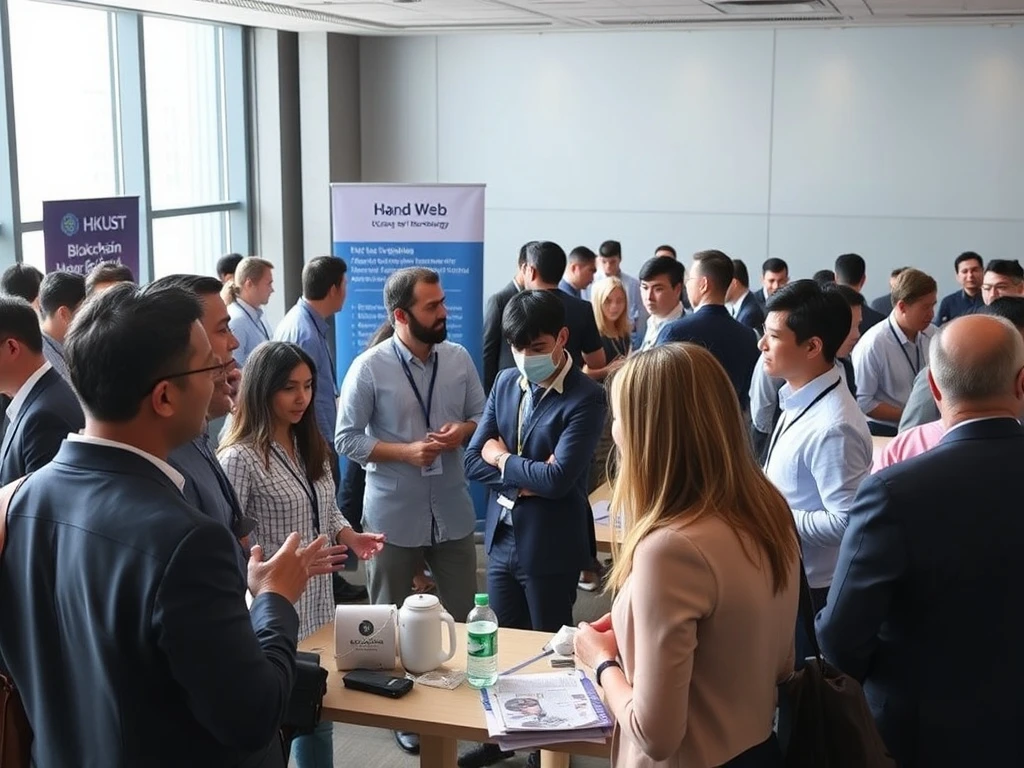
The intersection of artificial intelligence and decentralized technology will receive significant attention when Quack AI and the 0xU Hong Kong Blockchain Club co-host their specialized networking event during the Consensus Hong Kong 2026 conference. This focused gathering, scheduled for February 12 at the Hong Kong University of Science and Technology (HKUST), represents a strategic effort to connect builders and researchers at the forefront of technological convergence. The event’s timing and location position it as a crucial meeting point for professionals exploring practical applications of AI within Web3 frameworks.
Quack AI Web3 Builders Event Details and Strategic Timing
The “0xU – Quack AI The Campus: AI & Web3 Builders” event will occur from 6:00 a.m. to 10:00 a.m. UTC on February 12, 2026. This early morning scheduling allows participants to attend before the main Consensus Hong Kong 2026 conference sessions begin. Hong Kong has emerged as a significant hub for blockchain innovation in Asia, with the Hong Kong University of Science and Technology serving as an academic anchor for technological research. The university’s involvement provides institutional credibility and connects the event to academic research communities.
Consensus conferences, organized by CoinDesk, have established themselves as premier blockchain industry gatherings since their inception in 2015. The Hong Kong edition continues this tradition while adapting to regional technological developments. Side events like the Quack AI gathering have become increasingly important as they enable focused discussions that complement broader conference themes. These specialized sessions often produce more detailed technical exchanges and foster deeper professional connections.
Technical Focus Areas and Industry Relevance
The event agenda emphasizes several cutting-edge technological domains where AI and Web3 intersect. Autonomous agents represent systems that can operate independently within blockchain environments, executing complex tasks without constant human intervention. Zero-Knowledge Machine Learning (ZKML) combines privacy-preserving cryptographic techniques with machine learning algorithms, enabling verification of AI computations without revealing underlying data. This technology addresses growing concerns about data privacy in AI applications.
Privacy technology remains a persistent challenge in both AI and blockchain development. The integration of advanced privacy mechanisms with decentralized systems could enable new applications in sensitive domains like healthcare and finance. Practical system design focuses on implementing these theoretical concepts in real-world applications that users can actually utilize. The transition from research prototypes to production systems represents a significant hurdle that events like this aim to address through shared experiences.
Event Structure and Participant Engagement
The event will feature both structured and unstructured networking opportunities. A Curation Room will provide dedicated space for focused discussions on specific technical topics. Industry speakers will deliver presentations sharing practical insights and case studies from their work at the AI-Web3 intersection. This combination of formal knowledge sharing and informal networking creates multiple pathways for participant engagement and learning.
Bitget CEO Gracy Chen’s participation signals the event’s relevance to established cryptocurrency exchanges exploring AI integration. Her session will likely address how traditional crypto businesses are adapting to incorporate artificial intelligence technologies. This perspective from an exchange operator provides practical insights about market needs and implementation challenges that researchers and builders might otherwise overlook.
Sponsorship Ecosystem and Strategic Partnerships
The event’s sponsor list reveals the breadth of interest in AI-Web3 convergence. Bitget brings exchange infrastructure experience, while Noos Protocol represents protocol-layer innovation. Piggycell and Ave.ai contribute mobile and AI platform perspectives respectively. ELLIPAL provides hardware security expertise, and Fair Shares represents decentralized governance models. This diverse sponsorship base indicates that the AI-Web3 intersection attracts attention across multiple industry segments.
Crypto News Room’s participation as a media partner ensures coverage reaches broader blockchain and AI communities. Media involvement in technical events has increased as these technologies gain mainstream attention. Journalistic coverage helps translate complex technical discussions into accessible information for wider audiences while providing documentation of emerging trends and innovations.
Hong Kong’s Evolving Blockchain Ecosystem
Hong Kong has implemented progressive blockchain regulations since 2022, creating a supportive environment for Web3 development. The city’s strategic position as a global financial center with strong connections to mainland China makes it an ideal location for blockchain events. Academic institutions like HKUST have established research centers focusing on blockchain technology and artificial intelligence, creating talent pipelines that support industry growth.
The 0xU Hong Kong Blockchain Club has organized numerous educational and networking events since its formation, establishing itself as a community hub for local blockchain professionals. Their partnership with Quack AI combines community organizing expertise with technical specialization in AI-Web3 integration. This collaboration model leverages complementary strengths to create more valuable experiences for participants.
Broader Industry Context and Development Trends
The AI-Web3 convergence represents one of the most significant technological trends of the mid-2020s. According to industry analysts, investment in AI-blockchain projects increased by approximately 300% between 2023 and 2025. This growth reflects recognition that these technologies can address each other’s limitations—AI can enhance blockchain scalability and usability, while blockchain can provide transparency and decentralization to AI systems.
Autonomous agents on blockchain networks could revolutionize areas like decentralized finance, supply chain management, and content creation. These systems might execute complex financial strategies, optimize logistics in real-time, or create and monetize digital content without centralized platforms. The technical challenges involve creating agents that are both effective and secure within decentralized environments.
Educational Institutions as Innovation Catalysts
Universities like HKUST play crucial roles in technological innovation through research, education, and industry collaboration. Their involvement in events like the Quack AI gathering bridges academic research and industry application. Students and researchers gain exposure to real-world challenges and industry perspectives, while professionals access cutting-edge research and emerging talent. This bidirectional knowledge flow accelerates innovation and implementation.
Technical workshops and networking events hosted at academic institutions often feature more experimental content than commercial conferences. The academic environment encourages exploration of foundational technologies and long-term possibilities rather than immediate commercial applications. This balance between theoretical exploration and practical implementation makes university-hosted events particularly valuable for advancing emerging technological fields.
Conclusion
The Quack AI Web3 builders event at Consensus Hong Kong 2026 represents a strategic gathering point for professionals exploring the convergence of artificial intelligence and decentralized technologies. By focusing on practical implementation challenges and fostering connections between researchers, builders, and industry leaders, the event contributes to the development of more robust and usable AI-Web3 systems. As these technologies continue to evolve, focused networking opportunities will remain essential for translating theoretical possibilities into practical applications that deliver real value to users and communities.
FAQs
Q1: What is the main purpose of the Quack AI Web3 builders event?
The event aims to connect AI and Web3 professionals for networking and knowledge sharing, focusing on practical implementation of technologies like autonomous agents and ZKML in decentralized systems.
Q2: Who should attend this networking event?
The event targets AI and Web3 builders, researchers, developers, and industry professionals interested in the technical convergence of artificial intelligence and blockchain technology.
Q3: How does this event relate to Consensus Hong Kong 2026?
It functions as an official side event during the larger Consensus conference, providing specialized focus on AI-Web3 integration that complements the broader blockchain topics covered in the main conference.
Q4: What are the key technological areas discussed at the event?
Primary focus areas include autonomous agents, Zero-Knowledge Machine Learning (ZKML), privacy technology, and practical system design for AI-Web3 applications.
Q5: Why is Hong Kong University of Science and Technology hosting this event?
HKUST serves as an academic hub for blockchain and AI research in Asia, providing institutional credibility and connecting industry professionals with academic researchers and students in these fields.
Related News
- Critical Warning: Bitcoin Faces Institutional Exodus Without Swift Rebound, CryptoQuant CEO Analyzes
- Crypto Exchanges 2026: Essential Rankings Revealed as Q1 Market Dynamics Intensify
- Bitcoin Flash Crash: Sudden Plunge to 81.1M Won on Bithumb Exchange Sparks Market Alert