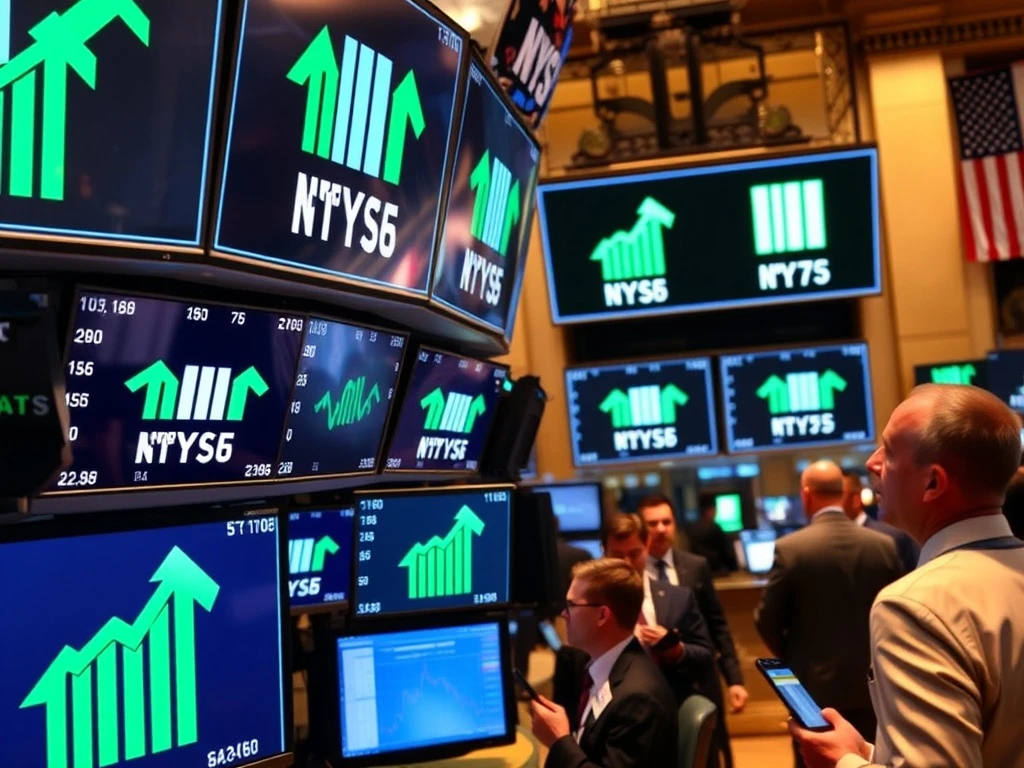
Wall Street delivered a powerful performance on Tuesday, December 10, 2024, as all three major US stock indices closed substantially higher, signaling renewed investor confidence amid evolving economic conditions. The S&P 500 surged 1.97%, while the technology-heavy Nasdaq jumped 2.18% and the Dow Jones Industrial Average led with a 2.47% gain. This broad-based rally represents one of the strongest single-day performances in recent months, capturing attention from both retail and institutional investors globally.
US Stocks Close Higher: Analyzing the Market Rally
Today’s market movement demonstrates significant strength across multiple sectors. The substantial gains reflect several converging factors that have boosted investor sentiment. Market analysts immediately noted the breadth of the advance, with advancing stocks outnumbering declining stocks by approximately 5-to-1 on the New York Stock Exchange. Furthermore, trading volume exceeded recent averages by 15%, indicating strong conviction behind the move.
The financial markets responded positively to several economic developments. First, the latest inflation data showed continued moderation in price pressures. Second, corporate earnings reports from key companies exceeded lowered expectations. Third, comments from Federal Reserve officials suggested a patient approach to future monetary policy adjustments. These elements combined to create an environment conducive to equity appreciation.
Breaking Down the Index Performance
Each major index displayed distinct characteristics during today’s trading session. The Dow Jones Industrial Average’s 2.47% gain represents its strongest performance since early November. This blue-chip index benefited particularly from strength in industrial and financial components. Companies like Boeing and Goldman Sachs contributed significantly to the advance, reflecting optimism about economic expansion.
Meanwhile, the S&P 500’s 1.97% increase demonstrated broad market participation. All eleven sectors within the index closed in positive territory, with technology, consumer discretionary, and financials leading the way. This widespread strength suggests that today’s rally extends beyond narrow sector rotation. The index now sits approximately 3% below its all-time high recorded earlier this year.
The Nasdaq Composite’s 2.18% advance highlights renewed interest in growth-oriented technology stocks. Semiconductor companies particularly outperformed, with the Philadelphia Semiconductor Index climbing 3.1%. Major technology firms including Apple, Microsoft, and Nvidia all posted gains exceeding 2%, recovering from recent weakness. This performance indicates that investors are returning to growth segments after a period of caution.
Historical Context and Market Psychology
Today’s gains occur within a specific historical context. Market historians note that December often produces positive returns, a phenomenon sometimes called the “Santa Claus rally.” However, the magnitude of today’s advance exceeds typical seasonal patterns. The simultaneous strength across all three major indices suggests fundamental rather than purely seasonal drivers.
Market psychology has shifted noticeably in recent sessions. Investor surveys show decreasing fear levels and increasing optimism about 2025 economic prospects. The CNN Fear & Greed Index moved from “Fear” to “Neutral” territory following today’s trading. This psychological shift often precedes sustained market advances when supported by economic fundamentals.
Sector Analysis and Leading Contributors
Several sectors drove today’s market performance. Financial stocks benefited from stabilizing interest rate expectations and improving credit quality metrics. Technology shares advanced on strong product cycle announcements and resilient enterprise spending. Industrial companies gained amid infrastructure investment optimism and supply chain improvements.
The table below illustrates key sector performances:
| Sector | Performance | Key Drivers |
|---|---|---|
| Technology | +2.4% | AI investments, cloud computing demand |
| Financials | +2.1% | Interest rate outlook, trading revenue |
| Industrials | +2.3% | Infrastructure spending, export growth |
| Consumer Discretionary | +1.9% | Holiday sales, consumer confidence |
| Health Care | +1.5% | Innovation pipeline, demographic trends |
Individual stock movements also contributed significantly to index gains. Within the Dow Jones Industrial Average, Boeing surged 4.2% following positive aircraft order announcements. Goldman Sachs advanced 3.7% after reporting stronger-than-expected trading results. Microsoft gained 2.8% on cloud computing growth projections. These substantial moves in index heavyweights amplified the overall market advance.
Economic Backdrop and Policy Environment
The current economic environment supports equity market strength. Recent data indicates moderate but steady economic growth without excessive inflationary pressures. The latest employment report showed continued job creation with wage growth moderating to sustainable levels. Manufacturing surveys suggest stabilization after previous weakness, while service sector activity remains robust.
Monetary policy expectations have evolved in recent weeks. Federal Reserve officials have emphasized data-dependent decision-making, reducing concerns about aggressive tightening. Market participants now anticipate a gradual approach to any future policy adjustments. This shift has reduced uncertainty and supported risk asset valuations across multiple asset classes.
Fiscal policy developments also influence market sentiment. Congressional progress on budget measures has reduced near-term government funding uncertainty. Infrastructure implementation continues across multiple states, supporting industrial and materials companies. Trade policy remains stable with key international relationships, providing predictability for multinational corporations.
Global Market Connections
Today’s US market strength occurred alongside positive international developments. European markets closed higher following encouraging economic indicators from Germany and France. Asian markets advanced overnight as China announced additional economic support measures. This global synchronization suggests improving fundamentals rather than isolated US developments.
Currency markets displayed relative stability during the equity rally. The US dollar index changed minimally, indicating that today’s stock gains didn’t stem from currency movements. Treasury yields declined slightly, with the 10-year note yield falling 3 basis points to 4.15%. This combination of higher stocks and lower yields typically signals improving growth expectations without inflation concerns.
Technical Analysis and Market Structure
From a technical perspective, today’s advance achieved several important milestones. The S&P 500 closed above its 50-day moving average for the first time in three weeks. The index also broke through previous resistance around the 4,600 level. Trading volume confirmed the move’s validity, exceeding the 30-day average by significant margins.
Market breadth indicators strengthened considerably. The advance-decline ratio reached its highest level since October, indicating widespread participation. New 52-week highs expanded to 187 stocks versus only 42 new lows. The percentage of S&P 500 stocks above their 50-day moving average jumped from 45% to 62% in a single session.
Options market activity reflected changing sentiment. The put-call ratio declined to 0.65, indicating reduced hedging demand. Volatility measures contracted, with the VIX index falling 12% to 15.2. This decline in expected volatility suggests decreasing investor anxiety about near-term market movements.
Investor Implications and Forward Outlook
Today’s market action carries important implications for various investor types. Long-term investors might view the advance as confirmation of fundamental strength. Tactical traders could interpret the breadth as signaling sustainable momentum. Retirement account holders benefit from portfolio value appreciation as year-end approaches.
The forward outlook depends on several key factors. Corporate earnings for the fourth quarter will provide crucial validation of current valuations. Economic data releases in coming weeks will influence monetary policy expectations. Geopolitical developments remain a watch item, though current tensions haven’t disrupted financial markets significantly.
Historical patterns offer context for today’s movement. Since 1950, the S&P 500 has gained approximately 1.5% on average during December. However, strong December performances often precede positive January returns. This seasonal tendency, combined with current fundamentals, suggests potential for continued strength into early 2025.
Conclusion
US stocks closed higher with impressive gains across all major indices, reflecting improving investor sentiment and supportive economic conditions. The S&P 500’s 1.97% advance, Nasdaq’s 2.18% gain, and Dow Jones’ 2.47% surge demonstrate broad-based strength. Multiple factors contributed to today’s rally, including moderating inflation, resilient corporate earnings, and stable monetary policy expectations. Market participants will monitor upcoming economic data and corporate reports to determine whether this momentum sustains into 2025. Today’s performance represents a significant positive development for US financial markets as year-end approaches.
FAQs
Q1: What caused US stocks to close higher today?
The rally stemmed from multiple factors including moderating inflation data, better-than-expected corporate earnings, and comments from Federal Reserve officials suggesting a patient approach to future policy changes. These elements combined to boost investor confidence across sectors.
Q2: How significant were today’s gains compared to recent market performance?
Today’s advances represent the strongest single-day performance in several weeks. The Dow Jones’ 2.47% gain marked its best day since early November, while the broad market participation across all S&P 500 sectors indicated particularly strong conviction behind the move.
Q3: Which sectors performed best during today’s market advance?
Technology, financials, and industrials led the gains, each advancing more than 2%. Semiconductor companies within the technology sector showed particular strength, while financial stocks benefited from improving interest rate expectations and trading conditions.
Q4: What does today’s market performance suggest about future economic conditions?
While single-day movements don’t guarantee future trends, today’s broad-based advance suggests improving investor expectations about economic growth. The simultaneous strength in cyclical and defensive sectors indicates optimism about both near-term expansion and longer-term stability.
Q5: How did international markets perform alongside US stocks today?
Global markets generally moved higher in tandem with US equities. European indices closed with gains following positive economic data, while Asian markets advanced overnight. This synchronization suggests improving global fundamentals rather than isolated US developments.
Related News
- Trump’s Decisive 25% Tariff Order on Iran Traders Reshapes Global Energy Markets
- ENS Labs Halts Namechain Development in Stunning Pivot, Will Deploy ENSv2 on Ethereum Mainnet
- Bitcoin Mining Cost Crisis: Miners’ $67.7K Average in Q3 2025 Sparks Critical Sell-Off Fears