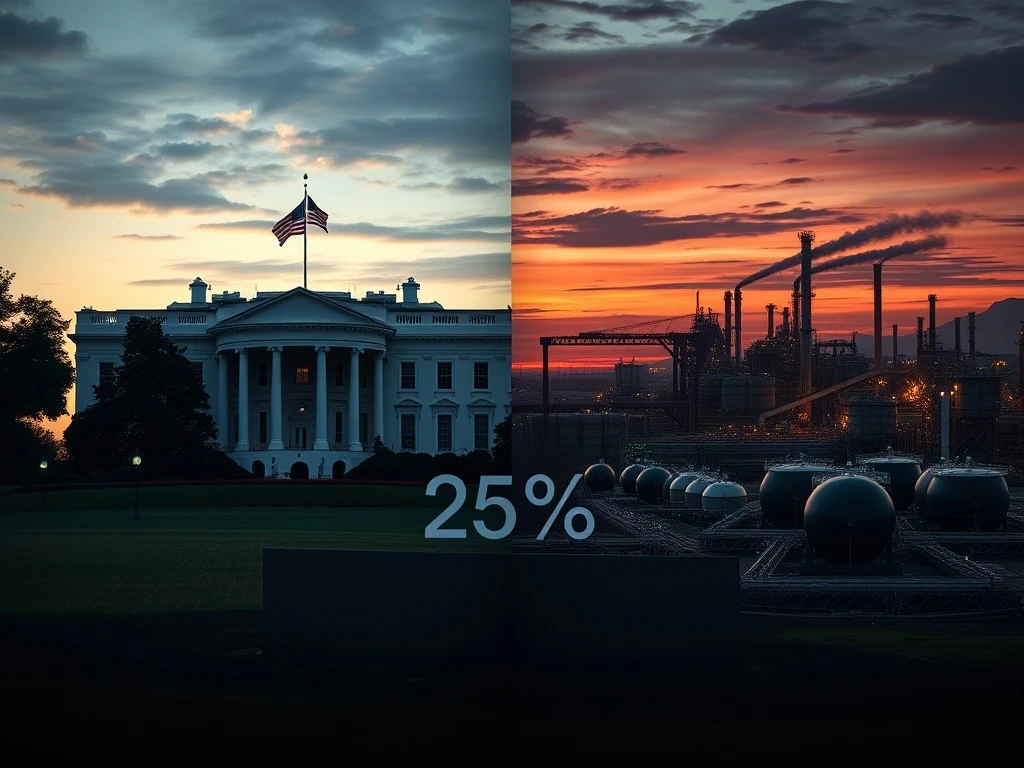
WASHINGTON, D.C., January 15, 2025 – President Donald Trump has signed a sweeping executive order authorizing 25% additional tariffs on any country engaging in trade with Iran, fundamentally altering global energy markets and diplomatic relations. This decisive move represents the most aggressive unilateral economic action against Iran since the 2018 withdrawal from the nuclear agreement.
Trump’s Iran Tariff Executive Order: Key Provisions
The executive order, signed in the Oval Office yesterday, establishes immediate consequences for nations maintaining commercial relationships with Tehran. Furthermore, the Treasury Department will implement these tariffs within 30 days. Consequently, affected countries must demonstrate compliance to avoid economic penalties.
The order specifically targets several critical sectors:
- Energy exports: All Iranian crude oil and petroleum products
- Industrial goods: Petrochemicals, metals, and manufacturing components
- Financial transactions: Banking relationships facilitating Iran trade
- Technology transfers: Dual-use technologies with potential military applications
| Policy Type | 2018 Sanctions | 2025 Tariff Order |
|---|---|---|
| Primary Mechanism | Secondary sanctions on entities | Direct tariffs on nations |
| Economic Impact | Targeted financial restrictions | Broad trade cost increases |
| Enforcement Scope | Selective waiver system | Universal application |
| Implementation Timeline | Phased reintroduction | Immediate 30-day window |
Global Energy Market Implications
Global energy markets reacted immediately to the announcement. Brent crude futures surged 4.2% in early trading. Meanwhile, shipping routes through the Strait of Hormuz face potential disruption. Consequently, alternative suppliers like Saudi Arabia and Russia may benefit significantly.
Asian economies face particular challenges. China imports approximately 500,000 barrels daily from Iran. Similarly, India receives 300,000 barrels each day. Therefore, both nations must reconsider their energy security strategies immediately. Additionally, European Union members must navigate conflicting policy objectives.
Expert Analysis: Geopolitical Ramifications
Dr. Elena Rodriguez, Senior Fellow at the Center for Strategic Studies, explains the broader implications. “This tariff policy represents a fundamental shift,” she notes. “Previously, sanctions targeted specific entities. Now, entire trading relationships face economic consequences.”
Rodriguez continues her analysis. “The 25% tariff creates immediate cost pressures. Furthermore, it forces nations to choose between Iranian partnerships and U.S. market access. Consequently, global supply chains will undergo significant realignment.”
Historical context illuminates this development. The Trump administration previously withdrew from the JCPOA in 2018. Subsequently, maximum pressure campaigns targeted Iranian oil exports. However, enforcement faced challenges through sanction waivers and alternative payment mechanisms.
Economic and Diplomatic Consequences
International reactions emerged rapidly. The European Union expressed “deep concern” about unilateral measures. Meanwhile, China’s Foreign Ministry criticized “economic coercion.” Conversely, regional allies welcomed the strengthened stance against Iranian influence.
Several specific impacts merit attention:
- Inflationary pressures: Higher energy costs may increase global inflation
- Currency fluctuations: Emerging market currencies face volatility
- Trade diversion: Alternative suppliers gain market share
- Diplomatic strain: Traditional alliances face testing moments
The timing coincides with broader geopolitical developments. Regional tensions have escalated recently. Additionally, nuclear negotiations remain stalled. Therefore, this tariff policy represents both economic and strategic signaling.
Legal and Implementation Framework
The executive order utilizes authority under several statutes. The International Emergency Economic Powers Act provides primary authority. Additionally, the National Emergencies Act supports the declaration. Consequently, legal challenges may emerge regarding presidential authority.
Implementation will proceed through established mechanisms. The Office of the U.S. Trade Representative will coordinate tariff application. Meanwhile, Customs and Border Protection will enforce collections. Furthermore, the Treasury Department will monitor compliance through financial channels.
Exemption procedures remain undefined currently. However, historical precedent suggests limited waiver possibilities. National security considerations may influence exceptions. Additionally, humanitarian trade could receive special treatment.
Market Response and Adaptation Strategies
Global corporations face immediate operational decisions. Energy companies must reassess supply contracts. Similarly, shipping firms must evaluate route alternatives. Consequently, operational costs will increase across multiple industries.
Financial institutions confront compliance challenges. Banking relationships with Iranian entities require reevaluation. Moreover, transaction monitoring systems need enhancement. Therefore, operational expenses will rise throughout the financial sector.
Alternative energy sources gain renewed attention. Renewable investments may accelerate. Additionally, traditional suppliers increase production capacity. Meanwhile, strategic petroleum reserves face potential drawdowns.
Conclusion
President Trump’s executive order imposing 25% tariffs on nations trading with Iran represents a transformative geopolitical development. This policy reshapes global energy markets fundamentally. Furthermore, it tests international diplomatic relationships. The coming months will reveal adaptation strategies across affected nations. Consequently, global economic stability faces significant challenges. Ultimately, this Trump Iran tariff policy will influence international relations throughout 2025 and beyond.
FAQs
Q1: Which countries face immediate impact from Trump’s Iran tariff order?
A1: China, India, Turkey, South Korea, and Japan face immediate consequences due to significant Iranian energy imports. European Union members also confront difficult policy choices regarding ongoing trade relationships.
Q2: How does the 25% tariff differ from previous Iran sanctions?
A2: Previous sanctions targeted specific entities and financial transactions, while the new tariff policy imposes direct costs on entire national economies engaging with Iran, creating broader economic pressure.
Q3: What legal authority supports this executive order?
A3: The order utilizes authority under the International Emergency Economic Powers Act and National Emergencies Act, similar to previous sanctions regimes, though legal challenges regarding presidential trade authority may emerge.
Q4: How will global oil markets respond to these Iran trade restrictions?
A4: Markets will likely experience price volatility, supply chain realignment toward alternative producers, and increased transportation costs as traders navigate restricted Iranian exports and potential retaliatory measures.
Q5: Can countries receive exemptions from the 25% tariff on Iran trade?
A5: The executive order doesn’t specify exemption procedures, though historical precedent suggests limited national security or humanitarian waivers might be possible through interagency review processes.
Related News
- Trump Predicts US Stock Market Will Double by End of His Term: Analyzing the Bold Economic Forecast
- XRP’s Revolutionary Leap: How Ripple’s XRPL Strategy Transforms It Into a Premier Institutional Settlement Asset
- Altcoin Season Index Plummets to 23, Signaling a Stark Bitcoin Dominance Era