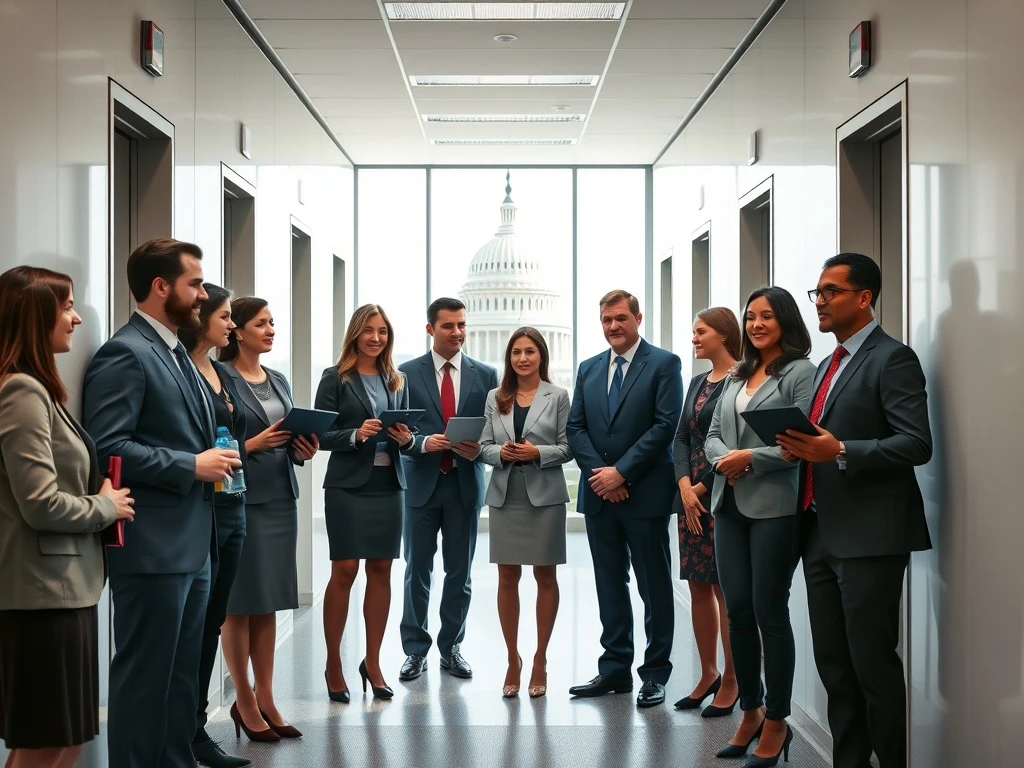
WASHINGTON, D.C., March 2025 – In a strategic move to bridge the widening knowledge gap between emerging technology and federal lawmaking, the American Innovation Project (AIP) has launched a pioneering fellowship program. This initiative will place recent graduates with expertise in cryptocurrency and blockchain directly within the offices of U.S. lawmakers. Consequently, this effort arrives as a Republican-led Congress actively advances the most comprehensive digital asset legislation in a decade, signaling a pivotal moment for regulatory clarity.
AIP Crypto Fellowship: Structure and Immediate Goals
The American Innovation Project, a prominent non-profit organization with backing from industry giants Coinbase and venture capital firm Andreessen Horowitz (a16z), formally announced the program this week. According to reporting by The Block, the fellowship represents a direct investment in human capital within the legislative branch. Initially, selected participants will undergo a multi-week, intensive online training course this spring. This curriculum extends beyond cryptocurrency to include artificial intelligence, biotechnology, and defense technologies, providing fellows with a holistic understanding of the national innovation landscape.
Following this academic preparation, fellows will receive one full year of hands-on, practical training. Specifically, they will be embedded in the offices of bipartisan members serving on two key House committees: Financial Services, and Agriculture. These committees hold primary jurisdiction over digital asset markets and commodity regulation, respectively. The program’s design ensures that fellows gain direct experience in the legislative process during a period of intense activity.
The Legislative Context: Why Now?
The fellowship’s launch is not coincidental. It directly responds to the current political environment. For instance, the 118th Congress has seen multiple major crypto bills move through committee markups and gain bipartisan support. Legislation like the Financial Innovation and Technology for the 21st Century Act and the Clarity for Payment Stablecoins Act aim to establish clear regulatory frameworks. Therefore, the demand for staffers who understand blockchain fundamentals, smart contracts, and decentralized finance (DeFi) has never been higher. Lawmakers require technically proficient aides to analyze complex proposals and draft effective amendments.
Bridging the Knowledge Gap in Congress
A persistent challenge in Washington has been the disconnect between the rapid pace of technological innovation and the slower, more deliberate pace of policy development. Many congressional staffers possess deep expertise in law, economics, or political science but may lack formal training in computer science or cryptographic systems. This fellowship directly addresses that deficit. By placing fellows with relevant educational backgrounds—such as computer science, finance, or engineering—into committee offices, the AIP aims to create a more informed legislative dialogue.
Furthermore, the program emphasizes a bipartisan approach. Fellows will work with members from both political parties on the House Financial Services and Agriculture Committees. This structure is crucial for fostering balanced perspectives and building consensus, which is essential for passing durable legislation. The hands-on training will involve drafting memos, conducting research, preparing for hearings, and engaging with constituents and industry stakeholders.
Expert Perspectives on the Initiative
Policy analysts and former congressional staffers have noted the program’s potential impact. “Educational initiatives like this are vital for effective governance in the digital age,” observed Dr. Sarah Chen, a technology policy fellow at the Brookings Institution. “When staff understand the technology they are regulating, they can craft rules that mitigate risks without stifling innovation.” Similarly, a former chief of staff to a senior House member stated, “The complexity of crypto assets means we can’t rely solely on outside lobbyists for information. Having in-house talent with technical credibility changes the dynamic entirely.”
Comparing Fellowship Models in Tech Policy
The AIP program joins a small but growing ecosystem of fellowships designed to inject technical expertise into government. However, its focus is notably specific. The following table contrasts it with other notable models:
| Fellowship Program | Primary Focus | Duration | Placement |
|---|---|---|---|
| AIP Crypto & Tech Fellowship | Cryptocurrency, AI, Biotech, Defense | 1 Year + Training | U.S. House Committee Offices |
| TechCongress Fellowship | Broad Technology Policy | 1 Year | Various Congressional Offices |
| AAAS Science & Technology Policy Fellowships | All STEM Fields | 1-2 Years | Executive & Legislative Branches |
| Open Web Fellowship (Mozilla) | Internet Health & Digital Rights | 10 Months | Global Civil Society Orgs |
As shown, the AIP fellowship is distinguished by its concentrated placement on financial and agricultural committees and its tailored curriculum for the current legislative agenda. This targeted approach may yield more immediate influence on pending crypto legislation.
Potential Impacts and Long-Term Implications
The immediate impact of the fellowship will be to augment the technical capacity of key congressional offices. In the short term, this could lead to more nuanced legislation with fewer unintended consequences. For example, a staffer who understands proof-of-work versus proof-of-stake consensus mechanisms can better evaluate the environmental and security implications of different regulatory approaches.
In the long term, the program seeks to cultivate a new generation of policy professionals. These individuals will possess hybrid skills in both technology and governance. Many alumni may remain in public service, while others might move into roles in regulatory agencies, think tanks, or ethical advocacy within the private sector. Ultimately, this creates a sustainable pipeline of talent that understands both the potential and the pitfalls of digital assets.
Key potential outcomes include:
- Improved Legislative Drafting: Technically accurate definitions and provisions in bills.
- Enhanced Oversight: More informed questioning during hearings with SEC, CFTC, and industry executives.
- Balanced Perspectives: Reduced reliance on one-sided advocacy from industry or skeptics.
- Career Pathways: Creating a recognized track for technologists in public policy careers.
Addressing Concerns and Ensuring Objectivity
Given the AIP’s backing from major crypto industry players, questions about objectivity are inevitable. The organization has stated that the fellowship curriculum is developed by independent academics and former regulators. Moreover, the selection process for fellows is managed by a panel that includes former members of Congress and civil servants. The program’s success will hinge on its ability to maintain a reputation for educational rigor and non-partisan, evidence-based analysis, rather than serving as a conduit for industry talking points.
Conclusion
The launch of the AIP crypto fellowship represents a significant and pragmatic step toward modernizing the U.S. legislative process. By embedding technology experts directly within Congress during a critical window for cryptocurrency legislation, the program aims to foster more informed, effective, and balanced policymaking. While the long-term effects will unfold over years, the immediate benefit is a much-needed infusion of technical literacy into the halls of power. As digital assets continue to integrate into the global financial system, such initiatives to bridge the gap between innovation and regulation will only grow in importance.
FAQs
Q1: What is the American Innovation Project (AIP)?
The American Innovation Project is a non-profit organization focused on advancing constructive policy for emerging technologies. It receives funding and support from various entities, including cryptocurrency exchange Coinbase and venture capital firm Andreessen Horowitz (a16z).
Q2: Who is eligible for the AIP crypto fellowship?
The fellowship targets recent college graduates with strong academic backgrounds and demonstrated interest or expertise in fields like cryptocurrency, computer science, financial technology, or related areas. The selection process is competitive and seeks individuals committed to public service.
Q3: Which congressional committees are involved in the fellowship?
Fellows will be placed with bipartisan members of the U.S. House of Representatives’ Financial Services Committee and the Agriculture Committee. These committees have primary jurisdiction over markets, securities, commodities, and thus, much of the proposed cryptocurrency legislation.
Q4: Why is there a focus on cryptocurrency knowledge in Congress now?
The current Congress is actively debating and advancing several major pieces of comprehensive crypto legislation. Lawmakers and their staff require a deeper technical understanding to properly evaluate risks, craft effective regulations, and provide oversight of regulatory agencies like the SEC and CFTC.
Q5: How does this fellowship differ from other tech policy fellowships?
This program is uniquely focused on the specific technological areas at the forefront of current legislative debates—primarily crypto and AI—and places fellows directly into the offices of the committee members who are drafting the relevant laws, offering highly targeted, hands-on experience.
Related News
- Bitcoin’s Remarkable Transformation: Evolving into a Stable Macro Asset, Report Reveals
- Altcoin Season Index Plummets to 25, Signaling a Critical Shift in Crypto Market Sentiment
- Crypto Fear & Greed Index Stagnates at 29, Revealing Persistent Market Anxiety