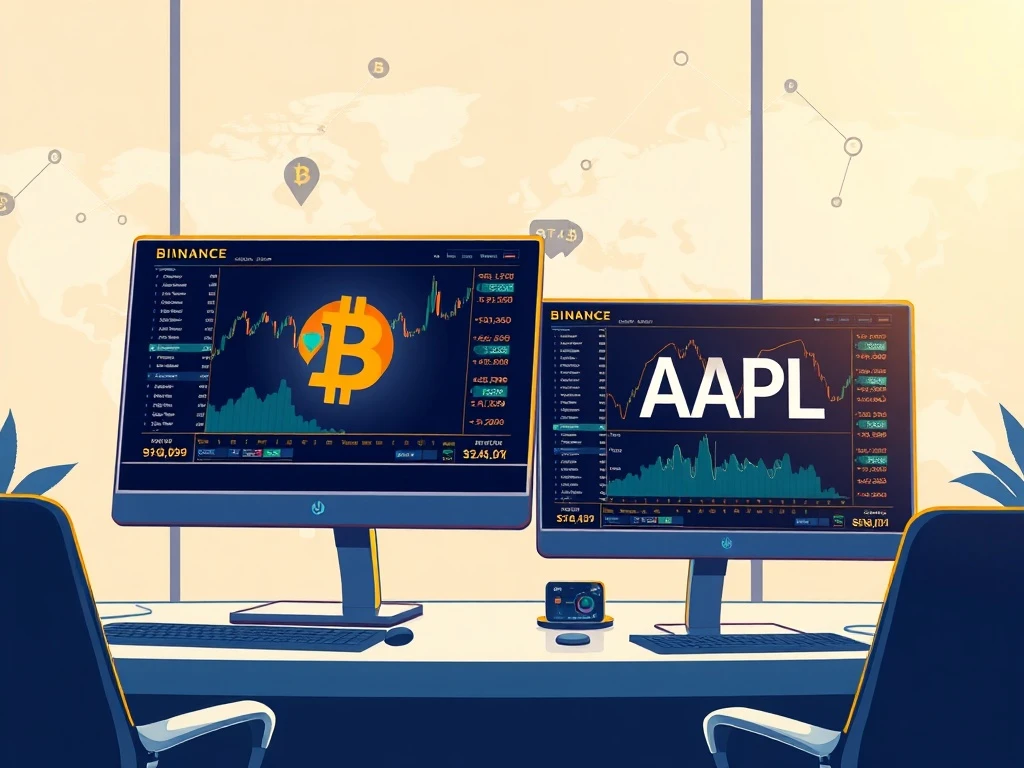
In a potentially significant development for the convergence of digital and traditional finance, cryptocurrency exchange giant Binance is reportedly considering the relaunch of its stock token trading service, according to a recent report from The Information. This move, if confirmed and executed, would mark a notable reversal of the platform’s 2021 decision to suspend the offering amid regulatory scrutiny. The consideration signals Binance’s ongoing ambition to bridge cryptocurrency markets with conventional equity investments, allowing users to gain exposure to price movements of major company stocks through blockchain-based digital tokens. This development arrives during a period of intense regulatory evolution and growing institutional interest in tokenized real-world assets (RWAs).
Understanding Binance Stock Tokens and Their Initial Launch
Binance first introduced its stock token product in April 2021, partnering with German financial firm CM-Equity AG and Swiss asset manager Digital Assets AG. These digital securities were designed as fully-backed, redeemable tokens that tracked the price of underlying equities on a 1:1 basis. For instance, a Tesla stock token represented a claim on a real Tesla share held by the partner. Consequently, investors could buy fractional portions of these tokens, enabling access to high-priced stocks with smaller capital outlays. The service initially featured blue-chip companies like Tesla, Coinbase, and Microsoft. However, the offering faced immediate regulatory headwinds. Notably, financial watchdogs in several jurisdictions, including the UK’s Financial Conduct Authority (FCA), raised concerns about the compliance of these products with local securities laws. In response, Binance suspended all stock token trading in July 2021, just three months after launch, citing an evolving regulatory landscape.
The Regulatory Landscape Then and Now
The 2021 suspension occurred amidst a broader global crackdown on cryptocurrency exchanges offering derivative and securities-like products without proper authorization. Regulators emphasized investor protection, market integrity, and the need for clear classification of such hybrid instruments. Since then, the regulatory framework for digital assets has advanced considerably, though fragmentation remains. Many jurisdictions, including the EU with its Markets in Crypto-Assets (MiCA) regulation and Hong Kong with its new licensing regime, are creating more defined pathways for regulated crypto services. A potential relaunch in 2025 would likely require Binance to navigate a more complex but potentially clearer compliance environment, possibly involving formal licensing as a securities broker in specific regions.
Market Impact and the Rise of Tokenized Assets
The reported consideration aligns with a powerful trend in 2025: the tokenization of real-world assets (RWAs). Financial institutions and blockchain projects are increasingly converting traditional assets—like bonds, real estate, and commodities—into digital tokens on blockchains. This process promises enhanced liquidity, fractional ownership, and faster settlement. A Binance stock token relaunch would directly tap into this growing sector. Furthermore, it could provide a familiar on-ramp for traditional equity investors curious about blockchain technology, while simultaneously offering crypto-native users easier access to conventional markets without leaving the Binance ecosystem. The move could intensify competition with other platforms exploring similar offerings, such as FTX’s former equity offerings and newer entrants in the decentralized finance (DeFi) space building synthetic stock protocols.
- Fractional Ownership: Allows investment in high-value stocks with smaller amounts of capital.
- 24/7 Trading Potential: Unlike traditional stock markets, crypto exchanges operate continuously.
- Unified Portfolio: Investors could manage crypto and equity exposures within a single platform interface.
- Regulatory Hurdles: Success hinges entirely on securing necessary approvals from financial authorities worldwide.
Expert Perspectives on the Challenges Ahead
Financial technology analysts point to several critical factors for a successful relaunch. First, the legal structure must be bulletproof, likely involving licensed third-party custodians holding the underlying shares. Second, transparency regarding fees, redemption mechanisms, and investor rights is paramount. Third, the exchange must implement robust know-your-customer (KYC) and anti-money laundering (AML) procedures commensurate with securities trading. “The core challenge isn’t technological; it’s regulatory,” notes a fintech compliance specialist cited in industry reports. “Binance would need to demonstrate to regulators that it can offer these products with the same level of investor protection as a traditional brokerage, which involves stringent operational controls.” The exchange’s ongoing efforts to secure licenses in key markets like the UAE and its settlement with U.S. authorities could be foundational to this process.
Comparative Analysis: Stock Tokens vs. Other Crypto Equity Products
It is crucial to distinguish Binance’s reported stock tokens from other crypto-based equity products. Unlike exchange-traded funds (ETFs) that hold a basket of assets, these tokens are tied to single stocks. They also differ from synthetic assets or derivatives that track price through algorithms without direct backing. The Binance model reportedly used actual share ownership held in custody, making it a digital depositary receipt. The table below outlines key differences:
| Product Type | Backing Mechanism | Regulatory Class | Primary Risk |
|---|---|---|---|
| Binance Stock Token (Reported) | Physically held underlying share | Security / Digital Asset | Counterparty & Regulatory |
| Cryptocurrency Equity ETF | Futures contracts or spot holdings | Investment Fund | Market & Tracking Error |
| Decentralized Synthetic Stock | Collateralized debt position (CDP) | Unclear / Evolving | Smart Contract & Collateral Liquidity |
| Traditional Stock via Broker | Direct share ownership | Security | Market & Broker Insolvency |
Conclusion
The potential relaunch of Binance stock token trading represents a fascinating test case for the maturation of the cryptocurrency industry. It underscores a strategic pivot towards regulated, bridge-building financial products that connect digital asset ecosystems with the multi-trillion-dollar traditional equity markets. Success depends overwhelmingly on navigating the intricate web of global securities regulations and rebuilding trust with financial watchdogs. If executed with full compliance, such a service could significantly broaden investment avenues for a global user base, further blurring the lines between conventional and decentralized finance. The market will watch closely for official confirmation from Binance and subsequent regulatory filings that would turn this reported consideration into a tangible 2025 offering.
FAQs
Q1: What exactly are Binance stock tokens?
Binance stock tokens are digital assets, each representing ownership in a fraction of a real, physically-backed share of a company like Tesla or Apple. They are designed to track the stock’s price on a 1:1 basis.
Q2: Why did Binance suspend stock tokens in 2021?
Binance suspended the service in July 2021 due to increased regulatory scrutiny from financial authorities worldwide who questioned whether the products complied with local securities laws and investor protection standards.
Q3: How would a 2025 relaunch be different?
A relaunch would likely occur in a more developed regulatory environment (e.g., under frameworks like MiCA in Europe) and would require Binance to obtain specific licenses as a securities broker or service provider in each jurisdiction it operates, ensuring full compliance from the outset.
Q4: Are stock tokens the same as buying real stocks?
While they track the price, stock tokens are a derivative product. You own a token representing economic exposure to the stock, not the share itself with its associated shareholder rights (like voting), unless specifically structured to include them.
Q5: What are the main benefits for investors?
The primary benefits include potential fractional ownership of expensive stocks, trading within a familiar crypto exchange interface, and the possibility of 24/7 market access, unlike traditional exchange hours.
Q6: What is the biggest challenge for Binance in relaunching?
The paramount challenge is regulatory compliance. Binance must secure explicit approvals from financial regulators in each target country, proving robust custody, investor protection, and anti-money laundering measures equal to those of traditional brokerages.
Related News
- Bitcoin Shatters $90,000 Barrier as Monumental $1.8B Options Expiry Unleashes Bullish Momentum
- Bitcoin Price Plummets Below $90,000: Analyzing the Sudden Market Shift
- Bitcoin Whale Transfer Stuns Market: 2,873 BTC Moves to Gemini in $260 Million Transaction