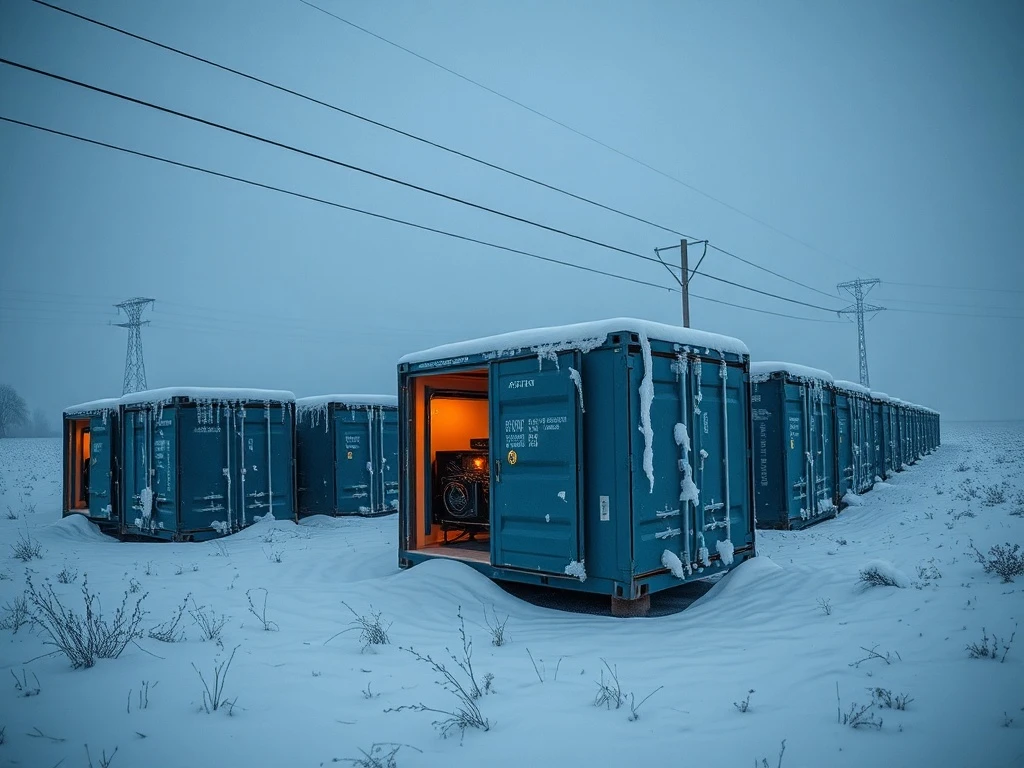
A severe winter storm sweeping across the United States in January 2025 has triggered a significant decline in the Bitcoin network’s hashrate, forcing major mining operations to reduce electricity consumption amid widespread power grid disruptions. This weather event demonstrates the growing vulnerability of cryptocurrency infrastructure to climate extremes while highlighting the complex relationship between energy networks and decentralized systems.
Bitcoin Hashrate Decline During Extreme Weather
The Bitcoin network experienced a measurable drop in computational power as winter storms battered multiple U.S. regions. According to data from blockchain analytics firms, the global hashrate decreased by approximately 15-20% during the storm’s peak intensity. This reduction directly resulted from American mining operations voluntarily curtailing their energy usage. Consequently, grid operators requested these reductions to prevent broader power outages affecting residential consumers.
Major mining hubs in Texas, New York, and Kentucky reported substantial operational slowdowns. For instance, mining facilities in West Texas reduced their power consumption by 40-60% during critical grid periods. These actions created a ripple effect throughout the entire Bitcoin ecosystem. Network data shows block generation times increased from the standard 10-minute target to approximately 12-14 minutes during the storm’s most severe phases.
Understanding Hashrate and Network Security
Bitcoin hashrate represents the total computational power securing the network. Miners use specialized hardware to solve complex mathematical problems, validating transactions and creating new blocks. The hashrate serves as a crucial security metric, indicating how difficult it would be for malicious actors to attack the network. Higher hashrate values generally correspond with greater network security and stability.
Several factors typically influence hashrate fluctuations:
- Energy availability and pricing – Mining profitability depends heavily on electricity costs
- Hardware efficiency – Newer mining rigs provide more hashing power per watt
- Geographic distribution – Operations spread across different regions provide stability
- Regulatory environments – Policy changes can force miners to relocate operations
The recent weather-related decline represents a temporary rather than structural change. However, it underscores how concentrated mining activity in specific geographic areas creates potential vulnerabilities. According to the Cambridge Bitcoin Electricity Consumption Index, the United States hosts approximately 38% of global Bitcoin mining capacity, making regional disruptions particularly impactful.
Historical Context of Mining Disruptions
This event follows previous weather-related impacts on cryptocurrency mining. In December 2022, Winter Storm Elliott caused similar reductions in Bitcoin mining activity across North America. During that event, Bitcoin’s hashrate dropped by nearly 30% over several days. The 2021 Texas winter storm also forced mining operations offline, though the industry has since implemented more robust contingency plans.
Energy experts note that Bitcoin miners have increasingly become flexible load resources for grid operators. Many mining operations participate in demand response programs, agreeing to reduce consumption during peak periods in exchange for compensation. This relationship benefits both parties: grids gain stability during stress events, while miners receive payments that offset lost revenue from paused operations.
Impact on Network Performance and Mining Economics
The temporary hashrate decline affected several key network metrics beyond just block times. Mining difficulty adjustments, which occur approximately every two weeks, will reflect this reduction in computational power. The Bitcoin protocol automatically adjusts difficulty to maintain consistent block production regardless of total hashing power. Following this weather event, the next difficulty adjustment will likely decrease, making mining slightly easier and more profitable for remaining operations.
| Metric | Normal Conditions | Storm Peak | Change |
|---|---|---|---|
| Global Hashrate | 550 EH/s | 440 EH/s | -20% |
| Block Time | 10 minutes | 12-14 minutes | +20-40% |
| US Mining Contribution | 38% of global | ~25% of global | -13 percentage points |
| Transaction Confirmation Time | 10-30 minutes | 15-45 minutes | +50% average |
Mining economics experienced immediate effects from the operational changes. Publicly traded mining companies reported temporary revenue reductions proportional to their decreased hashrate contributions. However, many had previously secured favorable energy contracts that include compensation for demand response participation. This financial cushion helped mitigate the storm’s economic impact on their operations.
Grid Stability and Energy Infrastructure Considerations
The winter storm tested the resilience of both energy grids and Bitcoin mining infrastructure. Grid operators in affected states activated emergency protocols as demand surged for heating while supply faced constraints from frozen natural gas pipelines and reduced renewable generation. Bitcoin miners, as large and flexible electricity consumers, became valuable partners in managing grid stability.
Several mining operations utilize sophisticated monitoring systems that automatically adjust power consumption based on grid signals. These systems can reduce load within seconds of receiving notification from grid operators. This rapid response capability proves particularly valuable during weather emergencies when traditional power plants might require hours to ramp up additional generation.
Energy analysts highlight the evolving relationship between cryptocurrency mining and grid management. As mining operations continue growing in scale and sophistication, their potential role as grid stabilizers increases correspondingly. Some operations now incorporate onsite generation, energy storage, or combined heat and power systems that enhance their resilience during extreme weather events.
Expert Perspectives on Infrastructure Resilience
Industry experts emphasize the importance of geographic diversification for mining operations. “While concentration in energy-rich regions makes economic sense, recent weather events demonstrate the risks of over-concentration,” notes Dr. Sarah Chen, energy researcher at Stanford University. “The most resilient mining operations maintain geographically distributed facilities with different weather and grid profiles.”
Mining company executives report implementing more robust contingency plans following previous weather disruptions. These plans include hardened infrastructure, backup power systems, and diversified geographic footprints. Some operations have relocated a portion of their hardware to regions less susceptible to extreme winter weather while maintaining presence in low-cost energy markets.
Long-Term Implications for Cryptocurrency Mining
This weather event highlights several emerging trends in cryptocurrency mining. First, the industry’s integration with traditional energy systems continues deepening. Mining operations increasingly function as flexible industrial loads that can support grid stability rather than simply consuming electricity. Second, climate resilience becomes a more significant consideration for mining infrastructure planning and investment decisions.
The Bitcoin network itself demonstrated robustness despite the temporary hashrate reduction. Transactions continued processing, albeit slightly slower, and network security remained intact. This resilience stems from Bitcoin’s global distribution of mining power, with operations across multiple continents providing redundancy when specific regions face disruptions.
Looking forward, mining operations will likely continue evolving their strategies for extreme weather events. Potential developments include:
- Enhanced grid integration – More sophisticated demand response capabilities
- Infrastructure hardening – Better protection against extreme temperatures
- Geographic diversification – Spreading operations across climate zones
- Renewable integration – Increased use of onsite solar and wind generation
Conclusion
The recent Bitcoin hashrate decline during severe U.S. winter weather illustrates the complex interplay between cryptocurrency infrastructure, energy systems, and climate events. While temporary reductions in computational power affected network performance metrics, the Bitcoin ecosystem demonstrated fundamental resilience through this stress test. Mining operations served as flexible grid resources during the emergency, highlighting their evolving role in energy markets. As extreme weather events potentially increase in frequency and severity, both cryptocurrency mining and energy infrastructure will continue adapting to maintain reliability and security. The Bitcoin hashrate will likely recover fully as weather conditions normalize and mining operations resume normal activity, but this event provides valuable insights for future infrastructure planning and risk management.
FAQs
Q1: What is Bitcoin hashrate and why does it matter?
Bitcoin hashrate measures the total computational power securing the network. Higher hashrate generally indicates greater security against attacks. The hashrate directly influences mining difficulty, block times, and network resilience.
Q2: How much did the Bitcoin hashrate decline during the winter storm?
Available data indicates approximately 15-20% reduction in global hashrate during the storm’s peak intensity. U.S.-based mining operations reduced their contributions significantly, with some facilities cutting power consumption by 40-60%.
Q3: Did the Bitcoin network stop working during the hashrate decline?
No, the network continued operating normally but with slightly longer block times. Transaction processing continued, and network security remained intact due to Bitcoin’s global distribution of mining power.
Q4: Why do Bitcoin miners reduce operations during grid emergencies?
Many miners participate in demand response programs, agreeing to reduce consumption during peak periods. This helps stabilize the grid, prevents broader outages, and often provides financial compensation to offset lost mining revenue.
Q5: How long does it take for Bitcoin hashrate to recover after such events?
Hashrate typically recovers within days as weather conditions normalize and mining operations resume full power consumption. The network’s next difficulty adjustment will account for the temporary reduction, rebalancing mining economics.
Q6: Are other cryptocurrencies affected by similar weather-related disruptions?
Proof-of-work cryptocurrencies with concentrated mining operations in affected regions could experience similar impacts. However, networks with different consensus mechanisms or more geographically distributed validation might be less affected by regional weather events.
Related News
- SEC CFTC Crypto Event: Critical Regulatory Harmonization Talks Postponed to January 29
- BlackRock Bitcoin ETF Filing Reveals Strategic Masterstroke: Dual-Purpose Fund Targets Both Growth and Income
- Data Breach Nightmare: 149 Million Login Credentials Exposed, Including 420,000 Binance Accounts